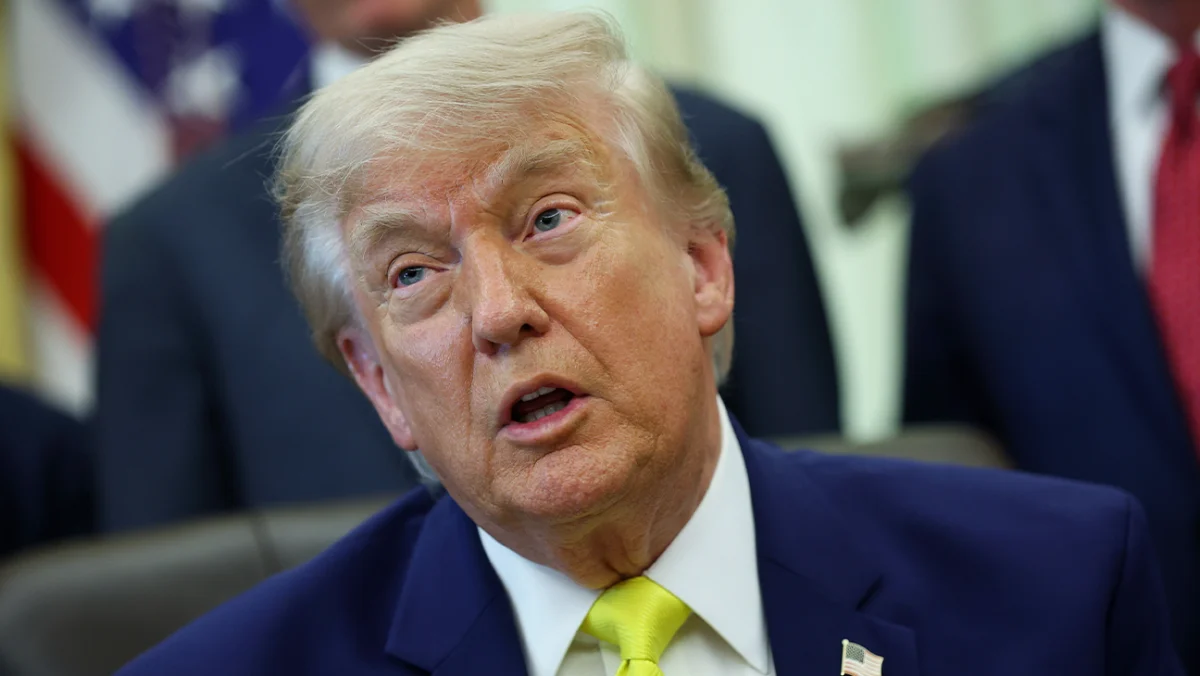
Former President Donald Trump’s primetime address on Thursday night, intended to highlight alleged irregularities in the 2020 election, inadvertently underscored a significant shift in the relationship between the White House and major broadcast networks, leading Trump to denounce the situation as part of a “plot.” The address, which focused on unsubstantiated claims of voting machine vulnerabilities linked to China and Venezuela, was notably declined by two of the "Big Four" networks for live, primetime coverage, a decision that drew immediate criticism from Trump and fueled ongoing debates about media gatekeeping and presidential access to national airwaves.
The Declining Deference to Presidential Addresses
Historically, presidential addresses from the Oval Office or similar high-profile settings were treated by major broadcast networks—ABC, CBS, NBC, and Fox—as sacred, often preempting regularly scheduled programming without question. Moments of national crisis or profound significance, such as Ronald Reagan’s eulogy after the Challenger disaster, George H.W. Bush’s address marking the beginning of the Gulf War, or even Jimmy Carter’s introspective "crisis of confidence" speech, commanded universal airtime. These instances forged a shared national experience, with millions tuning in simultaneously to hear directly from the nation’s leader, underscoring the networks’ perceived role as conduits for essential public information and national unity.
However, the media landscape has undergone a dramatic transformation in recent decades, leading to increased scrutiny and selectivity regarding presidential requests for primetime access. The proliferation of cable news, streaming services, and digital platforms has fragmented audiences, reducing the monolithic power of broadcast networks. Moreover, the line between urgent national address and political campaigning has become increasingly blurred, prompting networks to weigh journalistic integrity and public interest against the commercial impact of preempting popular shows. This evolving dynamic has created a more contentious environment for presidential communication, where automatic deference is no longer guaranteed, challenging long-held traditions and perceptions of media responsibility.
A Shifting Precedent: From Obama to Trump
The selective nature of network coverage for presidential addresses is not without recent precedent. In 2014, all four major broadcast networks notably declined to carry an address by then-President Barack Obama on immigration reform. Citing the overtly political nature of the speech, they opted to stick with their entertainment lineups, which included popular shows like Grey’s Anatomy and The Biggest Loser. This decision marked a significant departure from past practices, signaling a new era where networks were willing to make independent judgments about the perceived newsworthiness and non-partisan urgency of a presidential message.
Paradoxically, just five years later, in 2019, these same networks reversed course for a different political address. They all carried President Trump’s primetime speech on border security and the proposed wall, preempting shows such as Black-ish and FBI. This inconsistency highlighted the complex and often criticized decision-making process within network boardrooms, raising questions about political bias, commercial pressures, and the criteria used to determine national significance. Critics argued that the networks’ choices often appeared arbitrary, or worse, politically motivated, contributing to public skepticism about media neutrality. The fluctuating standards underscored the difficult tightrope networks walk between fulfilling a civic duty and managing their commercial interests in an intensely competitive media environment.
The Latest Network Snub and Trump’s “Plot” Claim
The recent Thursday night address by former President Trump once again brought these tensions to the forefront. While Trump presented his speech as an urgent exposé on election fraud, two of the "Big Four" broadcast networks, NBC and ABC, opted not to interrupt their regularly scheduled programming. NBC aired a rerun of its nature series, The Americas, while ABC proceeded with a new episode of the Elizabeth Banks-hosted game show Press Your Luck, where contestants vie for cash prizes while avoiding the dreaded "Whammy." This decision was a stark rejection of the traditional expectation that presidential addresses command immediate and universal airtime, leading to Trump’s assertion of a "plot" against him.
The former president, known for his prolific use of social media to voice grievances, denounced the network snub during his speech, framing it as part of a larger conspiracy. He expressed frustration that major outlets were not giving full attention to his claims regarding the 2020 election. This narrative of a "plot" or coordinated effort against him by media entities has been a consistent theme throughout Trump’s public career, resonating with a segment of his base that views mainstream media as inherently biased. The network decisions, therefore, not only impacted the reach of his message but also reinforced a narrative of victimhood and perceived unfairness that has long defined his relationship with the press.
The Split Coverage: Fox and CBS vs. NBC and ABC
The landscape of coverage for Trump’s address highlighted the growing polarization within American media. While NBC and ABC declined live primetime coverage, Fox News, a network generally supportive of Trump, carried the entirety of the speech live and in "livid color," as described by some observers. This full commitment from Fox News solidified its position as a primary outlet for Trump’s message, catering to an audience already predisposed to his narrative.
CBS, another major broadcast network, also decided to preempt its programming, a rerun of the Young Sheldon spinoff Georgie and Mandy’s First Marriage, for a special report anchored by Tony Dokoupil. The decision by CBS was particularly notable given its recent ownership changes. The network is now controlled by David Ellison, son of Oracle co-founder and Trump ally Larry Ellison, with Bari Weiss serving as editor-in-chief of CBS News. This new leadership has signaled a potential shift in editorial direction, and the decision to carry Trump’s address live, even with a special report framing, sparked discussion about the influence of ownership on news coverage. The split between networks underscored the fragmented nature of media consumption in the U.S., where audiences often gravitate towards outlets that align with their political views, further deepening societal divisions.
Cable News: A Predictable Echo Chamber
The coverage on cable news channels provided a stark illustration of the predictable partisan divides that characterize contemporary American media. On CNN, known for its critical stance towards Trump, Kaitlan Collins hosted a panel of pundits who analyzed the speech as it played off-screen, primarily focusing on debunking or questioning its claims. This approach allowed CNN to cover the event without granting the former president an uninterrupted platform, instead framing his address within a broader critical discussion.
MSNBC, another network often at odds with Trump, aired the initial 17 minutes of the speech before cutting away for an "outraged discussion" among its hosts and guests. This editorial decision reflected a clear stance against amplifying what they likely perceived as unsubstantiated or dangerous rhetoric, opting instead to provide immediate counter-narratives and critical analysis. Only Fox News, consistent with its long-standing support for Trump, remained with the former president until the very end, carrying the full speech live. This stark contrast in cable news coverage solidified the perception of an increasingly balkanized media landscape, where audiences receive information filtered through distinct ideological lenses, further exacerbating political polarization rather than fostering a common understanding of events.
The Absence of a Formal White House Request
Adding another layer of complexity to the network decisions was the apparent lack of a customary formal request from the White House for airtime. Typically, when a president wishes to deliver a primetime address, the White House communicates with the major networks, formally requesting the preemption of scheduled programming. This process allows networks to assess the nature and urgency of the message and make an informed decision based on their editorial policies and public interest considerations.
In this instance, it appears Trump simply declared his intention to announce "really big news," seemingly assuming that the networks would automatically rearrange their lineups to accommodate him. This presumed expectation, without the traditional formal request, could have contributed to the networks’ reluctance to preempt their shows. It raised questions about whether the Trump administration, or the former president himself, underestimated the autonomy of modern broadcast networks or simply chose to bypass traditional protocols. This procedural oversight further complicated the narrative, allowing networks to justify their decisions based on a lack of standard communication, rather than solely on the content or political nature of the speech, intensifying the debate over media access and presidential communication strategies.
Broader Implications for Media and Democracy
The events surrounding Trump’s primetime address have significant implications for the future of media, presidential communication, and democratic discourse. The declining deference of broadcast networks to presidential requests signals a powerful shift in the media landscape. Networks are increasingly asserting their editorial independence, viewing presidential addresses not as automatic public service obligations but as content that must meet certain criteria for newsworthiness and non-partisanship. This trend reflects a broader societal challenge: the erosion of a shared national narrative and the rise of partisan media bubbles.
For presidents, this means rethinking communication strategies. The days of relying on universal broadcast access for a unified national message may be largely over. Instead, presidents must navigate a fragmented media environment, tailoring messages for specific platforms and understanding that a significant portion of the audience will consume information through ideologically aligned channels. The "plot" narrative, frequently invoked by Trump, further weaponizes these media decisions, painting dissenting outlets as biased conspirators rather than independent journalistic entities. This, in turn, deepens public distrust in mainstream institutions and exacerbates political polarization. The debate over who controls the airwaves, what constitutes essential public information, and how presidents can effectively communicate with a diverse and fragmented populace will continue to shape the contours of American democracy in the years to come, posing enduring challenges for both media organizations and political leaders.