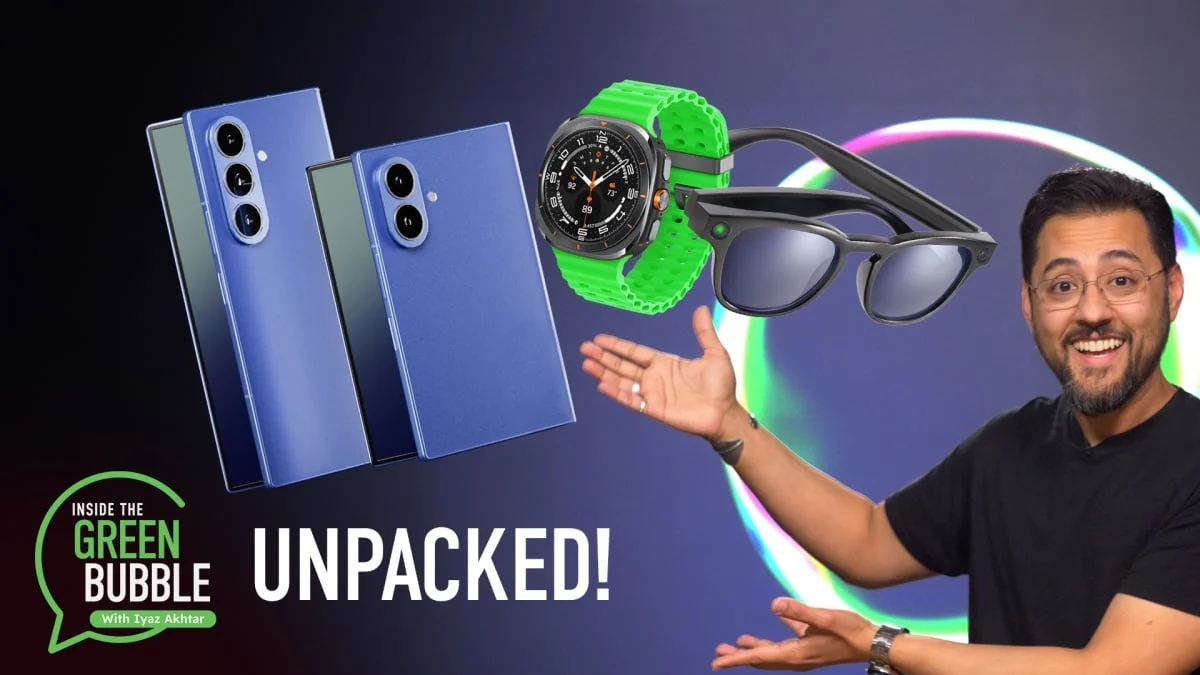
Samsung Electronics officially unveiled its latest suite of mobile innovations at the Samsung July Unpacked 2026 event, signaling a major shift toward spatial computing and refined foldable technology. The global technology leader, headquartered in Suwon, South Korea, utilized the mid-year showcase to introduce the Galaxy Z Fold 8, a new generation of smartwatches, and the highly anticipated debut of its first consumer-grade augmented reality (AR) glasses. These announcements come at a pivotal moment for the consumer electronics industry, as manufacturers pivot away from traditional smartphone form factors toward more immersive, AI-driven hardware ecosystems.
The Samsung July Unpacked 2026 event was broadcast globally from a high-tech venue in San Jose, California, reflecting the company’s deepening ties with Silicon Valley partners. Central to the presentation was the narrative of "Ambient Intelligence," where devices function seamlessly in the background to assist users through advanced sensors and machine learning. The hardware revealed during the keynote represents the culmination of a multi-year development cycle aimed at reclaiming market share in the premium segment and establishing a foothold in the emerging extended reality (XR) space.
Industry analysts observed that the timing of this Unpacked event is strategic, occurring just weeks before the 2026 Summer hardware cycle begins for its primary competitors. By launching the Galaxy Z Fold 8 and its new wearable lineup in July, Samsung aims to capture back-to-school demand and establish a dominant position ahead of the traditional autumn product releases from Apple and Google. The inclusion of the new glasses, in particular, marks Samsung’s official entry into a category that many believe will eventually succeed the smartphone as the primary personal computing device.
Evolution of the Foldable Market: The Galaxy Z Fold 8
The centerpiece of the Samsung July Unpacked 2026 presentation was undoubtedly the Galaxy Z Fold 8, which features the most significant design overhaul in the series since its inception. Engineers have achieved a breakthrough in hinge technology, resulting in a device that is nearly 15% thinner than its predecessor while maintaining structural integrity. The "Zero-Gap" hinge mechanism has been refined to include a new carbon-fiber composite, reducing weight and improving the tactile experience of opening and closing the internal display.
The Galaxy Z Fold 8 introduces the "Infinity-Flex Pro" display, which utilizes a new ultra-thin glass (UTG) formulation that is significantly more resistant to creasing. Samsung representatives stated that the internal 7.9-inch screen now features a peak brightness of 3,200 nits, making it one of the brightest mobile displays on the market. Furthermore, the external cover screen has been widened slightly to mirror the aspect ratio of a standard flagship smartphone, addressing a long-standing critique regarding the narrowness of previous Fold models.
Under the hood, the Galaxy Z Fold 8 is powered by a custom-designed chipset optimized for multitasking and generative AI processes. This silicon, developed in collaboration with leading foundry partners, enables real-time language translation, advanced photo editing, and proactive scheduling without relying on cloud-based servers. The integration of "Galaxy AI 3.0" allows the device to learn user habits more efficiently, optimizing battery life and processing power for the most frequently used applications.
Expanding the Wearable Ecosystem with Galaxy Watch 9
Following the foldable reveal, the Samsung July Unpacked 2026 stage shifted focus to the company’s latest health-tracking innovations. The Galaxy Watch 9 and Watch 9 Ultra were introduced as the most advanced health monitors the company has ever produced. These devices feature the "BioActive Sensor 2.0," which offers improved accuracy for heart rate monitoring, blood oxygen levels, and, for the first time in a mass-market wearable, non-invasive glucose trend tracking for wellness purposes.
The Galaxy Watch 9 Ultra is specifically targeted at outdoor enthusiasts and professional athletes, featuring a titanium Grade 5 chassis and a sapphire crystal lens. It offers an extended battery life of up to four days on a single charge, a feat achieved through a new dual-layer display technology that switches to a low-power monochromatic mode when the watch is not in active use. This model also includes dual-frequency GPS for precise tracking in dense urban environments or remote wilderness areas.
Software integration remains a core pillar of the Samsung wearable strategy. The new watches run on the latest version of Wear OS, co-developed with Google, ensuring deep integration with the Android ecosystem. New features include "Predictive Health Insights," which uses AI to analyze sleep patterns and activity levels to warn users of potential illness or fatigue before symptoms appear. This proactive approach to health management is expected to be a major selling point for the 2026 holiday season.
Entering the Era of Spatial Computing: Samsung XR Glasses
The most anticipated moment of the Samsung July Unpacked 2026 event was the unveiling of the Samsung XR Glasses. Developed in partnership with Google and Qualcomm, these glasses represent Samsung’s first dedicated foray into the augmented reality hardware market. Unlike bulky VR headsets, the Samsung XR Glasses are designed to look like traditional eyewear, weighing less than 80 grams while housing a sophisticated array of cameras, sensors, and micro-OLED projectors.
The glasses connect wirelessly to Galaxy smartphones, offloading heavy processing tasks to the phone’s chipset to maintain a slim profile and prevent overheating. The primary function of the glasses is to overlay digital information onto the physical world, such as turn-by-turn navigation, real-time message notifications, and interactive work environments. The "Spatial Workspace" feature allows users to project multiple virtual monitors into their physical surroundings, effectively creating a portable office that can be accessed anywhere.
Samsung’s entry into the AR space is seen as a direct challenge to the Apple Vision Pro and Meta’s Quest line. However, by focusing on a lightweight, glasses-first approach rather than an enclosed headset, Samsung is betting that consumers prefer a device that can be worn comfortably throughout the day. The company announced a robust developer program to encourage the creation of third-party apps, ranging from immersive gaming to industrial maintenance tools, ensuring that the hardware is supported by a rich ecosystem of software from day one.
Impact on the Global Tech Industry and Supply Chain
The technological advancements showcased at the Samsung July Unpacked 2026 event have significant implications for the global supply chain. The mass production of the Galaxy Z Fold 8’s new hinge and the XR Glasses’ micro-OLED displays requires specialized manufacturing processes that are currently limited to a few high-tech hubs. Samsung’s decision to move forward with these products suggests a stabilization in the semiconductor market and a renewed confidence in consumer spending for high-end electronics.
Market analysts predict that the introduction of the Samsung XR Glasses will trigger a new wave of competition among component manufacturers. Demand for miniaturized sensors, high-capacity micro-batteries, and lightweight optical lenses is expected to surge. This shift could lead to increased investments in R&D across the broader electronics sector, as other firms race to catch up with the hardware standards set during the July Unpacked event.
Furthermore, the emphasis on local, on-device AI processing reflects a growing trend toward data privacy and security. By minimizing the amount of data sent to the cloud, Samsung is positioning its new devices as more secure alternatives for enterprise users and privacy-conscious consumers. This architectural choice may influence how future government regulations approach the intersection of AI and personal data, as hardware-based privacy becomes a more prominent feature in consumer marketing.
Public Reaction and Market Expectations
Early reactions from tech enthusiasts and industry observers following the Samsung July Unpacked 2026 event have been largely positive, particularly regarding the refinements made to the foldable lineup. The Galaxy Z Fold 8 is being praised for its more ergonomic design, which many believe will finally push foldables into the mainstream. The reduction in the screen crease and the improved outer display are seen as the final hurdles to widespread adoption of the format.
However, the Samsung XR Glasses have sparked the most debate. While the lightweight design is impressive, some critics question whether the battery life and current software library will be enough to justify the premium price tag. Despite these concerns, the sheer novelty of the product and the backing of Google’s software ecosystem have generated considerable buzz. Retailers have reported high levels of inquiry for pre-orders, suggesting that there is a significant appetite for a more wearable form of spatial computing.
The financial community is also watching closely to see how these launches affect Samsung’s bottom line. With the smartphone market reaching a point of saturation, the success of high-margin products like the Galaxy Z Fold 8 and the new AR glasses is crucial for the company’s long-term growth. If Samsung can successfully transition its user base to these new categories, it will solidify its position as the primary alternative to the Apple ecosystem in the premium hardware space.
Future Outlook for the Galaxy Ecosystem
As the Samsung July Unpacked 2026 event concluded, it became clear that the company is no longer just a smartphone manufacturer but a comprehensive provider of integrated digital experiences. The synergy between the Fold 8, the Watch 9, and the XR Glasses creates a cohesive ecosystem where each device enhances the functionality of the others. For example, the watch can act as a controller for the glasses, while the Fold 8 serves as the primary processing hub for mobile productivity.
The move toward AR and more sophisticated wearables indicates that the next decade of personal computing will be defined by how well digital information is integrated into our physical reality. Samsung’s heavy investment in these technologies suggests a belief that the "screen" as we know it is evolving. Whether it is a screen that folds in your pocket or a virtual one projected in front of your eyes, the July 2026 announcements have set the stage for a new era of interaction.
In the coming months, the performance of these devices in the real world will be the ultimate test of Samsung’s vision. As units begin to ship to global markets in late July and August, the tech industry will be monitoring adoption rates and user feedback. Regardless of the immediate sales figures, the Samsung July Unpacked 2026 event will likely be remembered as the moment when the company fully committed to a future beyond the traditional smartphone, setting a new benchmark for what is possible in the palm of your hand—or on the bridge of your nose.