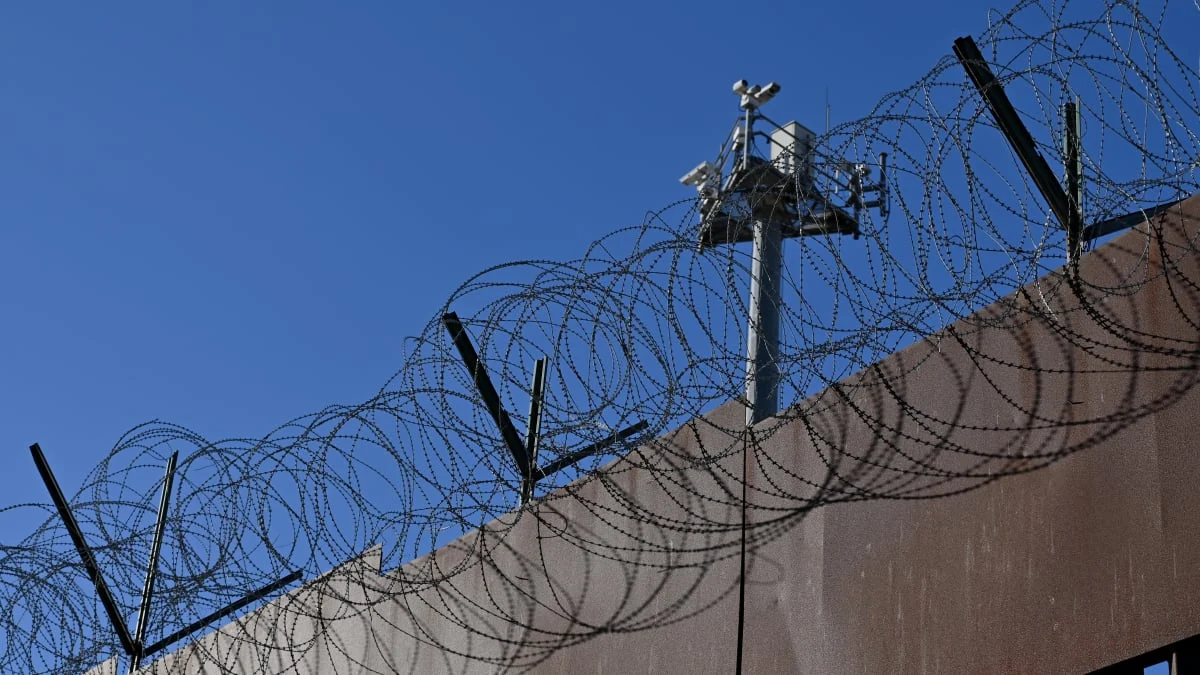
The Department of Homeland Security (DHS) is moving forward with an expansive initiative to fortify the United States’ perimeter through a massive increase in high-tech monitoring installations. According to recent government assessments and budgetary filings, the federal government intends to erect more than 1,000 new surveillance towers along the northern and southern borders. This technological surge is part of a broader shift toward a "smart wall" strategy that prioritizes digital detection over traditional physical barriers.
The ambitious expansion of the Integrated Surveillance Tower (IST) program is projected to cost approximately $1 billion over the next decade. Upon the scheduled completion in 2034, the United States will operate a total of 2,300 surveillance towers, nearly tripling the current fleet of roughly 830 units. This transition marks one of the most significant infrastructure investments in the history of Customs and Border Protection (CBP), reflecting a long-term commitment to autonomous enforcement technologies.
The Financial Blueprint for Billion-Dollar AI-Powered Border Surveillance
The fiscal framework for this initiative is already being integrated into federal budget cycles. In the 2025 and 2026 fiscal years, more than $240 million was allocated specifically for the IST program to begin the procurement and installation phases. The 2027 budget proposal steered an additional $97 million toward the construction of 95 new towers, signaling a steady ramp-up in production and deployment.
Government officials describe the billion-dollar investment as a necessary evolution in border security. By automating the detection process, the agency hopes to maximize the efficiency of its workforce, allowing agents to respond to verified threats rather than patrolling vast, empty stretches of land. This financial commitment covers not only the physical construction of the towers but also the software integration and long-term maintenance required to keep the AI systems operational in harsh environments.
Industry analysts suggest that the $1 billion price tag reflects the sophisticated nature of the hardware involved. These are not standard observation posts; they are high-performance computing hubs equipped with long-range cameras, thermal sensors, and radar systems. The cost also accounts for the "central system" architecture that allows data to be streamed from remote locations to command centers in real-time.
Technological Foundations of the Smart Wall System
At the heart of the Trump administration plans for billion-dollar, AI-powered border surveillance is the concept of autonomous detection. Unlike older surveillance models that required human operators to monitor video feeds around the clock, these new towers utilize "computer vision" and machine learning algorithms. The software is trained to distinguish between animals, environmental movement, and "items of interest," such as vehicles or individuals crossing the border illegally.
When the AI identifies a potential security threat, it automatically alerts CBP agents, providing precise GPS coordinates and visual confirmation. This "sensor fusion" technology combines data from multiple sources to create a comprehensive picture of border activity. By reducing the number of false alarms caused by wildlife or shifting shadows, the system aims to streamline the workload for agents in the field.
CBP Commissioner Rodney Scott emphasized the dual nature of modern border infrastructure during recent testimony before lawmakers. He noted that modern border security is no longer just about physical barriers, but about the technology built into and around those structures. This "virtual wall" provides a layer of situational awareness that traditional fencing cannot achieve, especially in mountainous or remote regions where physical construction is difficult.
Role of the Integrated Surveillance Tower (IST) Program
The IST program serves as the umbrella for several different types of tower technologies, including fixed towers and relocatable units. These systems are designed to be "vendor-agnostic," meaning the government can integrate hardware from various defense contractors into a single, unified software interface. This flexibility is intended to prevent the agency from becoming overly dependent on a single supplier while allowing for rapid software updates as AI capabilities improve.
The program also focuses on interoperability, ensuring that the data gathered by a tower in a remote part of the Arizona desert can be accessed by agents in a different sector if necessary. This networked approach is a cornerstone of the DHS’s broader data-sharing initiative. It allows for a more coordinated response to smuggling operations that often span multiple geographic regions.
Advancements in Autonomous Detection and Response
The autonomy of these systems is a key selling point for the DHS. Traditional surveillance often suffers from "operator fatigue," where human attention spans wane after hours of watching static monitors. AI-powered surveillance towers do not suffer from this limitation, providing 24/7 vigilance without a decrease in accuracy.
Furthermore, the towers are increasingly being equipped with solar arrays and satellite uplinks, making them entirely self-sufficient in areas without existing power or telecommunications infrastructure. This allows the CBP to "darken" previously unmonitored gaps in the border, creating a continuous digital net. The goal is to reach a state of "total situational awareness," where every mile of the border is under some form of electronic observation.
Implementation Milestones for AI-Powered Border Surveillance
The timeline for the expansion is aggressive but structured over several phases. The current focus is on the southern border, particularly in sectors with high volumes of traffic. However, the plan also includes significant upgrades for the northern border with Canada, where the terrain is often more wooded and difficult to patrol on foot.
By 2030, the DHS expects to have the majority of the new towers in place, with the final four years of the plan dedicated to refining the AI software and integrating the systems into a "system of systems." This long-term approach is designed to avoid the pitfalls of previous high-tech border projects, which were often criticized for being rushed and failing to meet technical requirements.
The Government Accountability Office (GAO) will play a continuous role in monitoring the progress of the IST program. Early assessments have focused on the agency’s ability to manage the massive influx of data and the reliability of the AI in different weather conditions. As the number of towers grows from 830 toward the 2,300 goal, the focus will shift toward the cost-effectiveness of the maintenance contracts.
Impact on Border Communities and Civil Liberties
The expansion of AI-powered border surveillance has sparked significant debate regarding privacy and the rights of those living in border regions. While the primary focus of the towers is the international boundary, their sensors often have a range of several miles, extending into nearby American towns and private property. This has raised concerns about the "persistent surveillance" of U.S. citizens who live and work in these areas.
Privacy advocacy groups, such as the Electronic Frontier Foundation, have pointed out that the data gathered by these towers—referred to as "intel-gathering"—is often stored in centralized databases accessible by multiple law enforcement agencies. There are concerns that this technology could be used for purposes beyond border enforcement, such as domestic policing or the monitoring of lawful protests.
Concerns Over "Items of Interest" Categorization
One of the more controversial aspects of the program is how the AI defines "items of interest." Critics argue that the algorithms could potentially exhibit bias or misidentify individuals, leading to unnecessary and potentially dangerous confrontations with law enforcement. There is also the question of "function creep," where a system designed to catch smugglers is eventually used to track the daily movements of border residents.
In response to these concerns, the DHS has stated that the towers are focused on "border-related activities" and that strict data-governance policies are in place. However, the lack of transparency regarding the specific algorithms used in the AI systems remains a point of contention for civil liberties organizations. They argue that without public oversight of the software, there is no way to ensure that the technology is being used ethically.
Economic and Cultural Effects on Border Regions
The physical presence of 2,300 towers will also have a visual and cultural impact on the borderlands. For many residents, the towers are a constant reminder of the militarization of their communities. Conversely, some local leaders in high-crime areas have welcomed the increased security, arguing that the technology provides a deterrent to criminal organizations that operate in the shadows.
From an economic perspective, the construction of these towers brings temporary jobs to rural areas, but the long-term benefits are largely concentrated in the hands of the major defense and tech firms that win the billion-dollar contracts. The shift toward automation also means that the demand for human Border Patrol agents may stabilize or decrease in certain sectors, potentially altering the economic landscape of towns that rely on the agency’s presence.
The Future of the "Virtual Wall" and National Security
As the Trump administration plans for billion-dollar, AI-powered border surveillance move toward the 2034 completion date, the definition of border security continues to evolve. The integration of these towers is just one component of a larger ecosystem that includes drones, ground sensors, and biometric scanning at ports of entry. This multi-layered approach is designed to create a "defense in depth" that makes illegal crossings increasingly difficult.
Proponents of the plan argue that AI is the only way to effectively manage a border as long and diverse as that of the United States. They contend that the technology is a force multiplier that provides better security at a lower long-term cost than building a physical wall across every mile of the frontier. The ability of AI to learn and adapt to new smuggling tactics is seen as a vital asset in an ongoing technological arms race with transnational criminal organizations.
The success of the program will likely depend on the reliability of the technology and the ability of the DHS to maintain public support. As the 2,300-tower network becomes a reality, the "smart wall" will represent one of the most sophisticated surveillance states in the world. Whether this digital barrier achieves its goal of a more secure border or creates new challenges for privacy and civil rights remains a central question for the next decade of American policy.