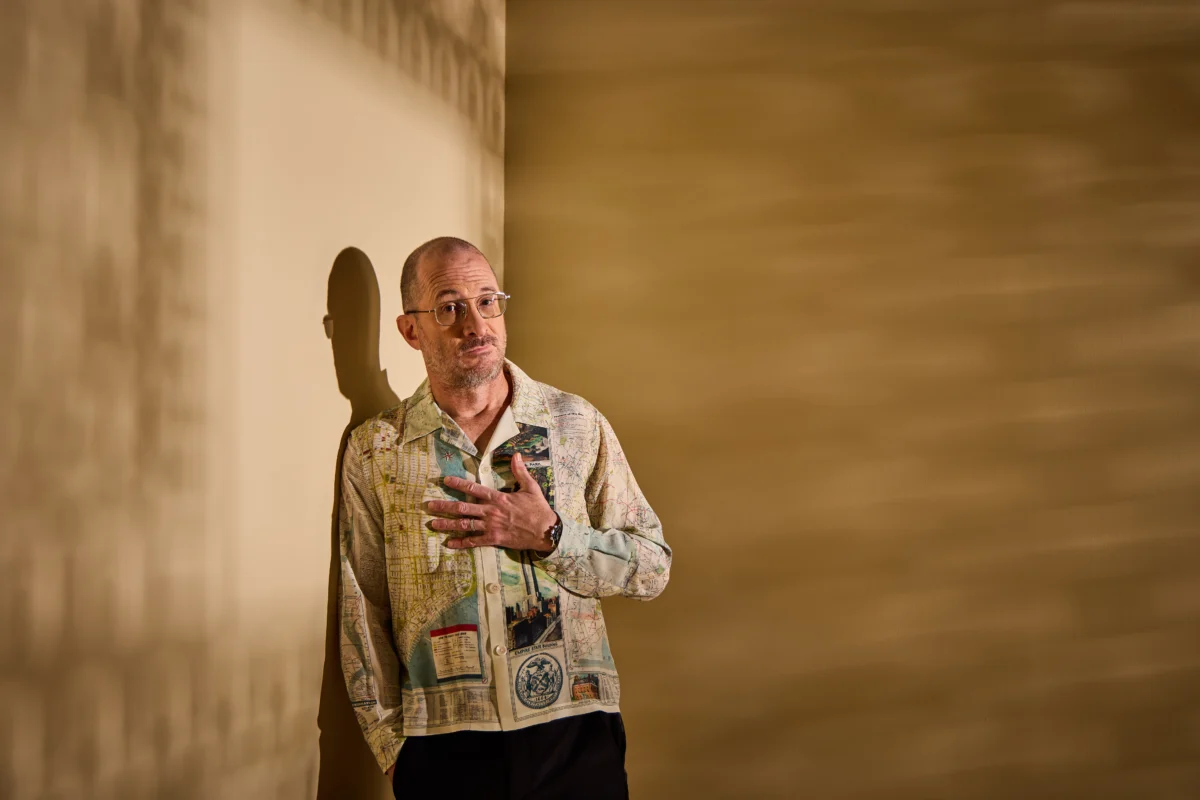
Filmmaker Darren Aronofsky’s ambitious artificial intelligence-driven film and content studio, Primordial Soup, is in the process of securing significant capital, with a recent filing indicating a $15 million equity raise. The studio, which Aronofsky co-founded, aims to leverage advanced AI technologies to revolutionize content creation across various media, from feature films and television series to digital-first creator content and branded productions.
According to documents filed earlier this month with the Securities and Exchange Commission (SEC), Primordial Soup Labs, Inc., which lists Aronofsky and his producing partner Dylan Golden as executive officers, initiated the $15 million equity offering. The filing revealed that the company has already successfully sold just over $11 million of the total, with the first sale taking place on July 1. This substantial influx of capital underscores a determined push to scale operations and accelerate content development within the rapidly evolving landscape of generative AI.
The Genesis of Primordial Soup
Primordial Soup launched just over a year ago, establishing its presence with the evocative tagline "make soup not slop," a clear statement of intent regarding the quality and artistic integrity Aronofsky aims to maintain in an AI-driven production environment. The studio immediately forged a non-exclusive filmmaking partnership with Google DeepMind, providing Aronofsky and his team with direct access to cutting-edge AI tools and models for creative experimentation. This collaboration allowed the studio to explore the nascent capabilities of artificial intelligence in storytelling and visual generation from its inception.
Aronofsky’s foray into AI filmmaking did not begin in a vacuum. The director, known for critically acclaimed works such as The Whale, Black Swan, and Requiem For a Dream, has consistently demonstrated a keen interest in pushing technological boundaries within storytelling. His engagement with cutting-edge tech dates back years, making him an early pioneer in the virtual reality (VR) space. In 2018, he produced Spheres, a three-part VR project from filmmaker Eliza McNitt, which garnered significant attention. More recently, Aronofsky captivated audiences with Postcard from Earth, a bespoke cinematic experience created for The Sphere in Las Vegas, further solidifying his reputation as a visionary unafraid to embrace new platforms and production methodologies.
Strategic Capital Infusion and Expansion
While the specific allocation of the newly raised capital has not been publicly disclosed, Primordial Soup’s official website offers strong indicators of its immediate strategic priorities. The company appears to be in the midst of an aggressive hiring spree, advertising numerous open positions that reflect a broad expansion of its creative and operational capabilities. These roles include "generative artists," social media strategists, a chief of staff, and crucially, a "Head of Studio."
The job description for the Head of Studio role particularly highlights the ambitious scale of Primordial Soup’s endeavor. The individual hired for this senior position will be tasked with overseeing content strategy and studio operations, demonstrating the intent to build a fully functional, high-volume production house. The description specifies responsibilities ranging from "the development, production and commercialization of our slate, including digital-first creator content, feature films, television series, and branded content." This comprehensive mandate suggests that Primordial Soup is poised to become a multifaceted content factory, extending beyond traditional film and television projects to include commercial ventures and AI-generated creator content designed for various digital platforms.
Aronofsky’s Trajectory in Cutting-Edge Tech
Aronofsky’s journey into AI filmmaking builds upon a foundation of technological exploration. His earlier work with VR, particularly Spheres, showcased an early understanding of immersive storytelling’s potential. This experience, combined with his recent spectacle at The Sphere in Las Vegas, positioned him as a natural leader in integrating advanced technology with artistic vision. His commitment to innovation is not merely about using new tools but about understanding how they can serve narrative and emotional depth.
Ancestra, a 45-minute featurette and the first in a planned trilogy, emerged from Primordial Soup’s partnership with Google DeepMind. Co-produced with Eliza McNitt, the film explores themes of motherhood and memory, debuting at Tribeca in 2025. At its premiere, Aronofsky, alongside McNitt and a DeepMind executive, articulated his core interest: "There are a lot of ways to use these models. I’m mostly interested in figuring out how to use these models to tell stories." This statement encapsulates his approach – viewing AI as a powerful instrument for narrative expression rather than an end in itself.
Navigating the Evolving Landscape of AI Filmmaking
Aronofsky has become a high-profile proponent of AI filmmaking, a stance that has not been without controversy. This past winter, he premiered On This Day, a series of live-action shorts centered on the American Revolution, which utilized AI generations of historical figures. The project immediately faced significant backlash from critics, many of whom cited "uncanny-valley vibes" – the unsettling feeling generated by AI-created images that closely resemble humans but fall short of true realism. Despite initial critiques, the quality of the work showed refinement as the series progressed.
In response to the reception, Aronofsky announced a strategic pivot for the series last month, opting for an animated approach. This creative shift quickly materialized in an anime-inspired episode featuring Thomas Jefferson engaging in a boxing match with King George III, complete with anachronistic and provocative dialogue such as "Kneel before this, bitch." This move demonstrated Aronofsky’s willingness to experiment, adapt, and even embrace the more outlandish possibilities of generative AI to create unique and engaging content, even if it challenges conventional sensibilities.
Broader Industry Embrace of AI
Aronofsky is not alone in Hollywood’s growing fascination with artificial intelligence. A rising number of industry traditionalists are actively exploring or integrating AI into their workflows. Legendary director Martin Scorsese, for instance, has reportedly utilized the technology for storyboarding, streamlining an essential pre-production phase. Similarly, a veteran Doctor Who director is developing an animated AI film, showcasing the versatility of the technology across different genres and formats.
Major studios are also forging strategic alliances. Companies like A24, known for its critically acclaimed independent films, and Lionsgate have established creative partnerships with AI companies, signaling a broader industry-wide acknowledgment of AI’s potential to transform production pipelines, creative processes, and even audience engagement. These collaborations range from enhancing visual effects and automating mundane tasks to aiding in script development and personalized content delivery. The trend suggests that AI is moving beyond a niche interest to become an integral component of future filmmaking.
The Future of Content Creation
While AI filmmaking offers the promise of significant cost reductions compared to traditional production methods, it is crucial to recognize that the process still entails substantial financial investment. The consultation of seasoned department heads, the engagement of voice actors for sophisticated performances, and most importantly, the invaluable time dedicated by writers and directors to meticulously shape narratives all incur costs. The capital raised by Primordial Soup is therefore essential to fund the production of an expanded volume of diverse content, enabling the studio to continue pushing the creative and technical envelope.
The $15 million equity raise positions Primordial Soup to become a significant player in the burgeoning AI content sector. By attracting top talent for its ambitious hiring spree and investing in advanced generative technologies, Aronofsky’s studio is poised to not only create a substantial slate of projects but also to potentially set new industry standards for AI-assisted creative production. The studio’s commitment to "make soup not slop" will be continually tested as it navigates the complex interplay between technological innovation and artistic integrity, aiming to deliver compelling stories in a rapidly changing media landscape.
Financial Realities and Creative Aspirations
The financial backing secured by Primordial Soup reflects a broader investor confidence in the future of AI-driven media. Despite the ongoing debates within creative communities regarding AI’s impact on employment and intellectual property, venture capitalists and institutional investors are increasingly recognizing the disruptive potential and efficiency gains offered by these technologies. The significant portion of the $15 million target already raised demonstrates that Aronofsky’s vision resonates with those looking to capitalize on the next wave of technological innovation in entertainment.
Primordial Soup’s expansion plans, from generative artists to a comprehensive studio head, indicate a strategy to build an end-to-end AI-first production ecosystem. This integrated approach aims to control the entire creative pipeline, from concept generation to final distribution, allowing for rapid iteration and experimentation. The success of this model could provide a blueprint for other aspiring AI studios, further accelerating the integration of artificial intelligence into the global entertainment industry.
Looking Ahead: Primordial Soup’s Ambitious Vision
The silence from Aronofsky and his spokesperson regarding the capital raise is typical of private fundraising efforts, but the SEC filing speaks volumes about Primordial Soup’s trajectory. With substantial funding secured and a clear mandate for expansion, the studio is poised to significantly impact the conversation surrounding AI in creative industries. Aronofsky’s willingness to embrace both critical acclaim and public backlash for his AI projects underscores a commitment to exploring the full spectrum of possibilities that artificial intelligence offers for storytelling. As Primordial Soup continues to develop its slate of feature films, television series, and digital content, the industry will be watching closely to see how Aronofsky’s vision unfolds and what new forms of "soup" emerge from his ambitious AI film studio.