In France, the situation remains particularly dire in the southwestern Gironde region, where approximately 197,000 people have been forced to abandon their homes and vacation rentals. The city of Bordeaux, a global hub for the wine industry, has seen tens of thousands of residents from its western suburbs flee as thick plumes of smoke darken the midday sky. In Spain, the interior ministry confirmed that 70,000 people have been evacuated from central regions, as the government took the unprecedented step of declaring a national emergency specifically for a wildfire event.
Unprecedented Evacuations in Southwestern France and the Gironde Region
The French interior ministry has described the current efforts as "probably" the largest peacetime evacuation the country has ever coordinated. In the Gironde region, the scale of the fire has surpassed all historical benchmarks, with the regional prefect, Sophie Brocas, stating that the blaze has reached an "unprecedented magnitude." The fire’s rapid advancement toward the Bordeaux metropolitan area has forced police to conduct door-to-door notifications, often giving residents only minutes to gather essential belongings before fleeing.
The tactical response in France has evolved into a massive military-civilian hybrid operation. More than 1,500 soldiers have been deployed to assist the hundreds of local firefighters who have been working without rest for days. To combat the suffocating air quality, the government has rushed 1.5 million face masks to the affected zones to protect civilians and emergency workers from smoke inhalation. The logistics of the operation are being supported by the Airbus A400M Atlas, a massive military cargo plane, which has joined a fleet of 18 other aircraft in a desperate attempt to drop water and retardant on the advancing flames.
In some coastal towns, the geography of the fire forced unconventional escape routes. As flames cut off primary roads, hundreds of residents and tourists were forced to flee by boat, utilized by local authorities to ferry people to safety across bays and inlets. French Prime Minister Sébastien Lecornu noted that the intensity of the Gironde fire is so great that it has begun to create its own localized wind patterns, making it nearly impossible for traditional firebreaks to hold.
Spain Declares Historic National Emergency Amid Merging Blazes
South of the Pyrenees, the Spanish government is grappling with a crisis of similar proportions. For the first time in the nation’s history, a national emergency was declared specifically due to the threat of wildfires. The move allows the central government to bypass regional bureaucracies and mobilize the full resources of the Spanish military and national treasury. The primary concern for Spanish authorities has been the erratic nature of high-altitude winds, which caused two major fires to merge on Friday, creating a massive wall of flame that proved impossible to stop.

In Madrid, the impact of the fires is being felt even in areas not directly threatened by flames. Health Minister Monica Garcia issued a public directive for residents of the capital to remain indoors and avoid physical activity as smoke and ash from distant blazes degraded air quality to hazardous levels. "Avoid physical activity and staying outdoors," Garcia stated in a public safety message. "If you go outdoors and there is smoke or ash, use a mask."
Spanish Prime Minister Pedro Sánchez visited affected regions on Saturday, noting that a slight dip in temperatures had provided a "window of opportunity" for ground crews. However, he cautioned that the relief might be temporary. Sánchez reported that fires have already consumed 130,000 hectares (approximately 321,000 acres) of forest this year, a figure that is roughly one-third higher than the country’s annual average. The economic impact on rural communities, particularly those reliant on timber and seasonal tourism, is expected to be felt for decades.
The Climate Crisis and Record-Breaking Heatwaves as Primary Drivers
Scientists and environmental experts point to a clear catalyst for the fact that more than 250,000 people flee wildfires in France and Spain: the intensifying climate crisis. Europe is currently warming at about twice the global average rate, leading to a phenomenon described by climatologists as "sucking the soils dry." Back-to-back heatwaves have stripped the landscape of moisture, turning ancient forests and agricultural lands into highly combustible tinder.
The current drought conditions in Europe are among the most severe in centuries. Without the historical levels of groundwater to provide a natural buffer, the vegetation has become hyper-sensitive to any ignition source, whether natural or man-made. The European Union’s Earth observation program has noted that the thermal anomalies across the continent this summer are consistent with long-term models of climate breakdown, which predict more frequent and more extreme weather events.
This environmental degradation has direct human costs beyond the immediate threat of fire. Authorities have linked the extreme heat to thousands of excess deaths across the continent this summer. In France alone, more than 5,700 excess deaths were recorded during a single June heatwave. The wildfires are seen as a secondary but equally deadly symptom of this broader atmospheric shift, displacing populations and destroying the ecosystems that local economies depend upon.
International Aid and the European Response Mechanism
As the scale of the fires exceeded the capacity of national agencies, the European Union’s mutual aid protocols were activated. The EU Commission President, Ursula von der Leyen, confirmed that the "rescEU" fleet has been fully mobilized to support the Mediterranean front. This collective response includes water-dumping aircraft and specialized ground teams from Italy, Greece, the Netherlands, Portugal, Croatia, Slovakia, and the Czech Republic.
"Europe stands alongside France and Spain in the face of the devastating wildfires ravaging them," von der Leyen said. The deployment includes five planes and two helicopters currently operating in French airspace, with an additional four planes arriving in Spain to bolster the aerial assault. This level of international cooperation is rare but has become increasingly necessary as individual nations find their emergency budgets and equipment stockpiles exhausted by the sheer frequency of "once-in-a-generation" fire seasons.
The logistics of this international effort are complex. Coordinating pilots from half a dozen different nations, all flying in the low-visibility, high-turbulence conditions created by the smoke, requires a centralized command structure. Trench digging, the use of chemical retardants, and the strategic back-burning of forest tracts are all being utilized in a coordinated attempt to save the Bordeaux metro area and central Spanish villages.
Long-Term Environmental and Economic Consequences
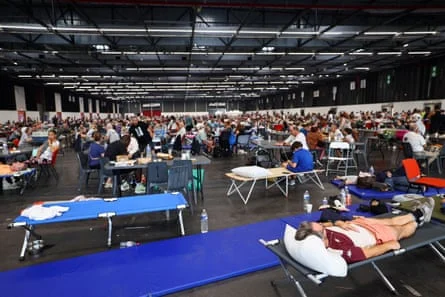
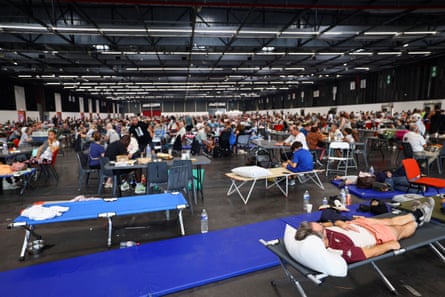
While no deaths have been reported among the civilian populations in France or Spain so far—a testament to the effectiveness of the massive evacuation orders—the toll on emergency responders has been significant. Dozens of French firefighters have sustained injuries, ranging from smoke inhalation to burns and exhaustion. The psychological impact on the 250,000 displaced individuals is also expected to be a long-term challenge for social services, as many families remain in temporary shelters like the Bordeaux-Lac exhibition center, unsure if their homes still stand.
The environmental damage is equally staggering. In France, the interior minister noted that the 98,000 hectares burned this year represent a "historic record." The loss of biodiversity, the destruction of carbon-capturing old-growth forests, and the subsequent risk of soil erosion and flash flooding in the burned-out areas present a secondary set of crises that will require years of management.
For the wine regions of France, the "smoke taint" on grapes could potentially ruin entire vintages, even in vineyards that were not directly touched by fire. In Spain, the destruction of grazing lands is threatening the livelihoods of livestock farmers already struggling with the rising cost of feed. As the fires continue to burn, the focus remains on the immediate protection of human life, but the conversation is rapidly shifting toward how these two nations—and the rest of Europe—will adapt to a future where such mass displacements are no longer anomalies, but seasonal expectations.