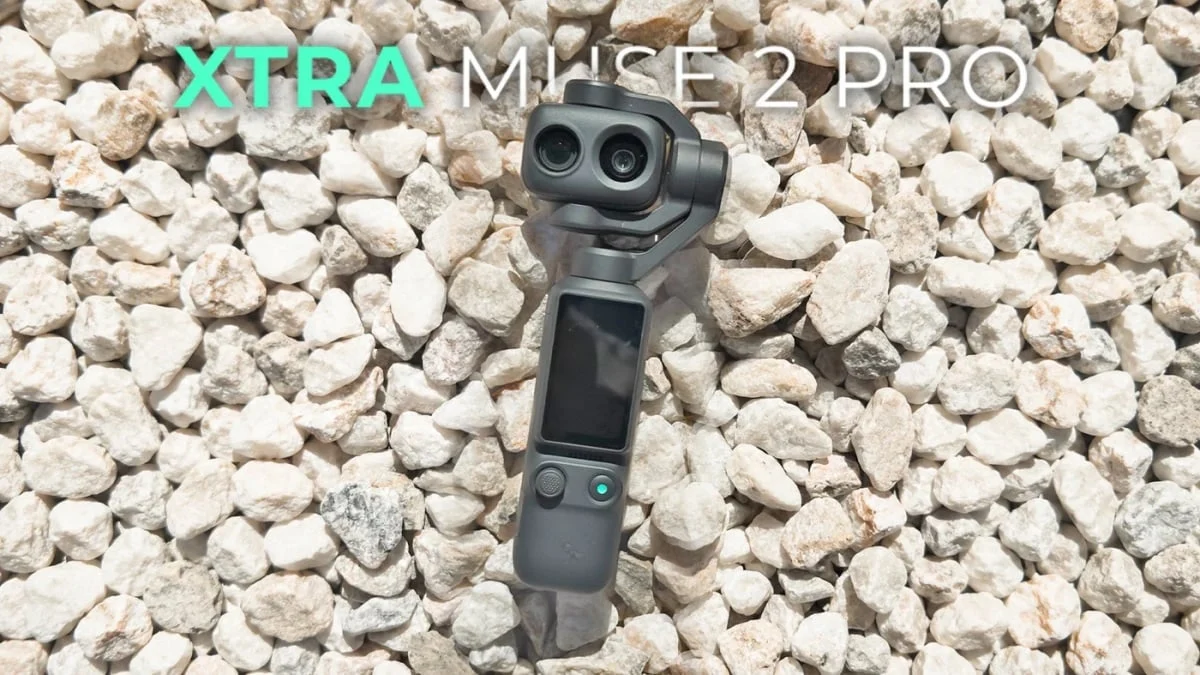
The burgeoning camera manufacturer Xtra has abruptly suspended all preorders and initiated a comprehensive refund program for its highly anticipated Muse 2 Pro gimbal camera, a move that comes amid escalating federal scrutiny into the company’s corporate origins. In a statement released to customers and posted on its official website, Xtra cited "product and launch readiness" as the primary reason for pausing its Early Bird program. The company further acknowledged that it is currently unable to provide a reliable timeline for when, or if, the device will reach the United States market, leading to the decision to return all reservation deposits.
The cancellation affects thousands of customers who had participated in a promotional "Early Access" campaign. Under the terms of this program, consumers paid a $20 reservation fee to secure a $60 discount on the final retail price of the Xtra Muse 2 Pro. While the company is issuing full refunds for these deposits, it is also offering a 10 percent discount coupon for its existing product line as a gesture of goodwill. However, the lack of transparency regarding the hardware’s future has left many in the tech community questioning the company’s long-term viability in the American market.
Despite the official narrative of logistics and readiness, the timing of the suspension aligns with a major crackdown by the Federal Communications Commission (FCC). The regulatory body recently launched investigations into eight separate technology firms, including Xtra, over allegations that they are operating as "front companies" for DJI, the Chinese drone and camera giant that has been effectively blacklisted by the U.S. government. These investigations have already resulted in financial penalties, and the threat of a total import ban looms over Xtra’s entire product catalog.
Federal Investigations Halt Xtra Muse 2 Pro Launch
The primary catalyst for the sudden reversal appears to be a direct intervention by federal regulators. The FCC has levied a $25,000 fine against Xtra and seven other entities for failing to respond to inquiries regarding the origins of their technology. Under current U.S. policy, companies are required to disclose if their hardware utilizes components or designs from entities on the national security "Entity List." Xtra’s failure to provide this information led the FCC to conclude that the company was obstructing an investigation into potential violations of the Secure Equipment Act.
The investigation seeks to determine if Xtra is a "white-label" front for DJI, designed specifically to bypass the bans placed on the Chinese firm. DJI has been under intense pressure from U.S. lawmakers since late 2020, when the Department of Commerce added the company to its trade blacklist, citing concerns over data privacy and potential surveillance capabilities. While existing DJI products can still be operated by American consumers, the government has blocked the certification and importation of any new devices, creating a significant vacuum in the high-end gimbal camera market.
Industry analysts have noted that Xtra appeared on the scene almost immediately after the DJI ban took full effect. The company’s marketing strategy and product release cycle mirrored DJI’s historical patterns, leading to widespread speculation on social media and tech forums. The FCC’s current investigation is focused on whether Xtra’s corporate structure is a legal fiction intended to mask the continued sale of DJI-engineered hardware under a different brand name.
The Link Between Xtra and the Banned DJI Osmo Pocket 4 Pro
The controversy surrounding the Xtra Muse 2 Pro is rooted in its striking physical and technical resemblance to the DJI Osmo Pocket 4 Pro, a camera that has not been approved for sale in the United States. Side-by-side comparisons of the two devices reveal nearly identical silhouettes, sensor specifications, and gimbal stabilization mechanisms. Aside from minor cosmetic changes to the chassis and the placement of certain buttons, the Muse 2 Pro appears to be a direct clone of the banned DJI flagship.
This technological parity has raised red flags not only with federal regulators but also with legal experts specializing in intellectual property. Historically, DJI has been aggressive in defending its patents, recently filing lawsuits against competitors like Insta360 for alleged infringements on its gimbal and action camera designs. Curiously, DJI has remained silent regarding Xtra’s products, despite the fact that Xtra’s designs are far more similar to DJI’s own intellectual property than those of any other competitor. This lack of litigation has reinforced the theory that Xtra and DJI are operating in coordination rather than as rivals.
Online sleuths and investigative journalists have uncovered further links between the two entities. Shipping manifests and corporate filings suggest that Xtra’s supply chain is deeply integrated with manufacturers that have long-standing exclusive contracts with DJI. Furthermore, software teardowns of existing Xtra cameras have revealed code strings and firmware architectures that are virtually identical to those used in DJI’s proprietary ecosystem. These findings suggest that the Muse 2 Pro is not merely a clone, but a rebranded version of the DJI Osmo Pocket 4 Pro, utilizing the same internal hardware and software.
National Security Concerns and the FCC Ban
The ban on DJI and its alleged subsidiaries is part of a broader geopolitical struggle over telecommunications and data security. The U.S. government maintains that high-tech cameras and drones manufactured by Chinese-linked firms pose a risk to national security. The concern is that these devices, which often require companion apps and cloud connectivity, could be used to harvest sensitive location data or visual information and transmit it to foreign intelligence services.
The FCC’s investigation into Xtra is an extension of the Secure and Trusted Communications Networks Act. This legislation empowers the commission to identify and prohibit the use of equipment that poses an "unacceptable risk" to the security of the United States. If the FCC determines that Xtra is indeed a shell company for DJI, the consequences could be catastrophic for the brand. The commission is already exploring the possibility of retroactively revoking the authorizations for Xtra’s currently available products, which would effectively render them illegal to sell or import into the country.
This regulatory environment has made it nearly impossible for Xtra to guarantee a delivery date for the Muse 2 Pro. Without FCC certification, the cameras would likely be seized by U.S. Customs and Border Protection at the port of entry. By canceling preorders and issuing refunds now, Xtra may be attempting to mitigate its legal exposure and avoid a scenario where it holds millions of dollars in consumer funds for a product that it cannot legally deliver.
Impact on the Gimbal Camera Market and Consumers
The sudden removal of the Xtra Muse 2 Pro from the market has left American videographers and content creators in a difficult position. The "pocket gimbal" category, popularized by the original DJI Osmo Pocket series, has become an essential tool for social media influencers, travel vloggers, and independent filmmakers who require professional-grade stabilization in a compact form factor. With DJI’s latest models banned and Xtra’s alternatives under investigation, the options for U.S. consumers have narrowed significantly.
This market contraction has benefited other manufacturers who are not subject to the same level of federal scrutiny. Insta360, a company based in China but with a different corporate profile and supply chain, has seen its Luna Ultra model gain traction as the primary alternative to the banned DJI and Xtra hardware. Unlike Xtra, Insta360 has successfully navigated the U.S. regulatory landscape, though it remains involved in separate patent disputes with DJI.
For consumers who had pinned their hopes on the Xtra Muse 2 Pro, the refund process is a small consolation for the loss of a highly anticipated piece of technology. Many users took to social media to express frustration over the lack of communication from Xtra in the months leading up to the cancellation. The company had accepted $20 deposits for nearly a year without providing a single update on the manufacturing status or the looming FCC investigation, leading to accusations of a lack of transparency.
Future Outlook for Xtra and Regulatory Oversight
The future of Xtra in the United States remains highly uncertain as the FCC continues its probe. The $25,000 fine is considered a preliminary measure, and the commission has signaled that more severe penalties could follow if the company continues to withhold information about its corporate ties. If a retroactive ban is implemented, Xtra could be forced to pull all its products from American shelves, effectively ending its presence in the market.
This case serves as a landmark moment for federal oversight of the consumer electronics industry. It demonstrates the government’s willingness to look past branding and examine the underlying corporate and technological structures of companies entering the U.S. market. As the "cat and mouse" game between foreign tech giants and U.S. regulators intensifies, other companies may find themselves under similar scrutiny if their products appear to be clones of restricted hardware.
For now, Xtra’s website continues to list other products for sale, but the shadow of the Muse 2 Pro cancellation hangs over the brand. The 10 percent discount coupons offered to disgruntled preorder customers may find few takers, as consumer confidence in the company’s ability to remain operational has been severely shaken. The tech industry will be watching closely to see if Xtra can provide the necessary documentation to clear its name or if it will become the latest casualty in the ongoing trade and security conflict between the United States and Chinese technology firms.