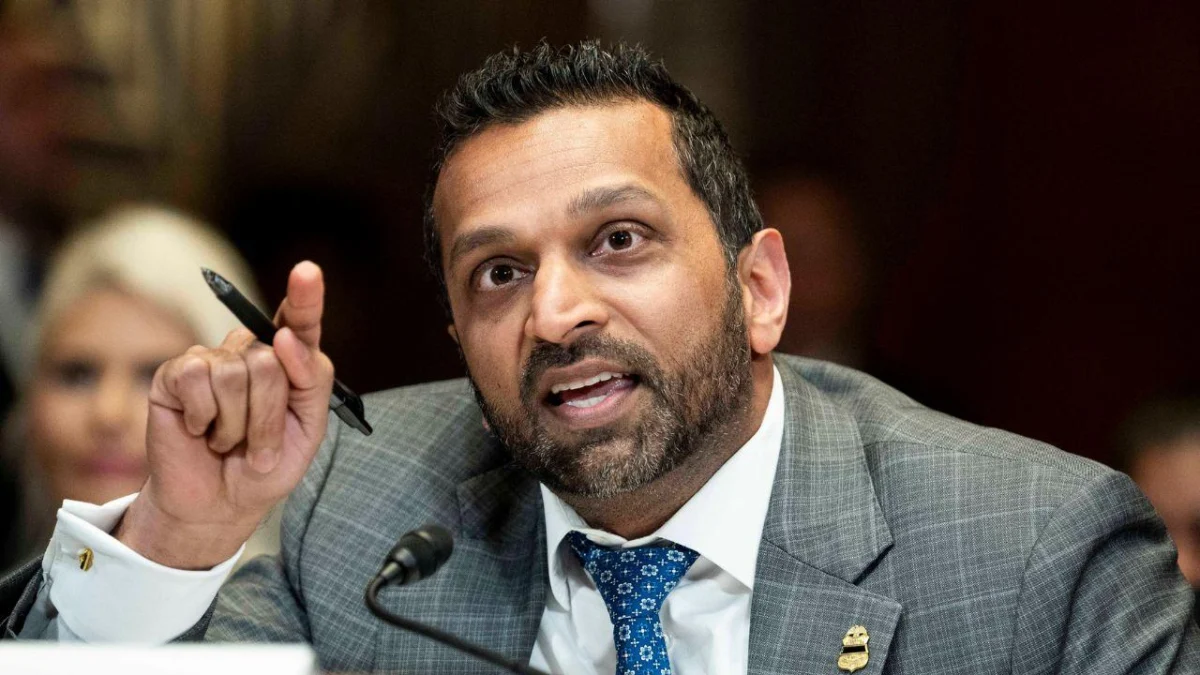
A federal court has dismissed the high-profile defamation lawsuit brought by former FBI official Kash Patel against online blogger Jim Stewartson, nullifying a quarter-million-dollar default judgment previously awarded to Patel and the Kash Foundation. The ruling, issued on July 25, hinged on the court’s determination that Nevada lacked personal jurisdiction over Stewartson, who successfully argued he had insufficient ties to the state.
A Closer Look at the Dismissal
U.S. District Judge Andrew Gordon delivered the decisive ruling, siding with Stewartson’s assertion that the Nevada court lacked the legal authority to hear the case. The dismissal effectively voids the $250,000 default judgment that had been entered in favor of Patel in August 2025, a decision made after Stewartson initially failed to respond to the legal complaint. Judge Gordon emphasized that while Patel and the Kash Foundation are Nevada residents, Stewartson’s online posts, which formed the basis of the lawsuit, did not specifically target a Nevada audience.
"The plaintiffs’ allegations arise out of Stewartson’s allegedly defamatory posts on X and Substack, which are about the plaintiffs, who are Nevadan residents," Gordon wrote in his ruling. However, he concluded that "Tagging Patel, who happens to be a Nevadan resident, in posts that have nothing to do with Nevada activities or entities does not target a Nevadan audience, and therefore does not create a contact between Stewartson and Nevada." This distinction proved critical in the court’s assessment of personal jurisdiction.
The Initial Allegations and Legal Action
Kash Patel, a prominent figure in conservative political circles and a former aide in the Trump administration, initiated the lawsuit in June 2023. Patel, who has held various significant roles including Chief of Staff to the Acting United States Secretary of Defense and a top official on the House Intelligence Committee, sought $10 million in damages from Stewartson. The lawsuit specifically targeted a series of online posts made by Stewartson on platforms like X (formerly Twitter) and Substack.
Stewartson’s contentious posts accused Patel of being a "Kremlin asset," engaging in "sedition," and actively participating in the planning of the January 6th attack on the U.S. Capitol. Furthermore, the blogger alleged that Patel helped ensure the Capitol remained "undefended" during the riot. In addition to these serious claims, Stewartson also used derogatory language, referring to Patel as a "blatantly incompetent chud" who deserved to be in custody. These accusations fueled Patel’s legal challenge, aiming to protect his reputation and that of the Kash Foundation.
The Procedural Hurdles: Jurisdiction and Service in the Kash Patel Defamation Lawsuit
The dismissal of Patel’s case underscores the fundamental importance of proper legal procedure, particularly concerning personal jurisdiction and service of process. Personal jurisdiction refers to a court’s authority to make decisions binding on the specific individuals or entities involved in a lawsuit. For a court to assert personal jurisdiction over a defendant, that defendant must have sufficient "minimum contacts" with the state where the lawsuit is filed, such that defending the suit there would not offend traditional notions of fair play and substantial justice.
In this instance, Stewartson, who is not a Nevada resident, successfully argued that his online activities, while addressing a public figure who resides in Nevada, did not demonstrate an intent to specifically target or interact with the Nevada market or audience. The court found that merely mentioning or "tagging" a Nevada resident in general online commentary, without other Nevada-specific connections or content, was insufficient to establish the requisite "minimum contacts" for jurisdiction.
The issue of proper service was also a factor. Stewartson initially did not respond to the lawsuit, leading to the default judgment. However, he later moved to dismiss the case, claiming he had not been properly served with the legal documents, a critical step that ensures a defendant is formally notified of a lawsuit against them. Without proper service, a court cannot legally compel a defendant to appear or respond, and any subsequent judgments can be challenged on those grounds.
Expert Commentary on Legal Competence
Legal scholars have weighed in on the implications of the dismissal, particularly the procedural missteps identified by the court. Robert J. McWhirter, a constitutional scholar, attorney, and author of Fixing the Framers’ Failure, characterized the outcome as a "procedural issue." He critically observed, "But, it underscores the incompetency of Kash Patel and his attorneys. A basic thing any lawyer should know, especially Mr. Patel as FBI Director, is how to properly serve a lawsuit in the correct jurisdiction."
McWhirter’s comments highlight a critical aspect of legal practice: the foundational requirement for attorneys to correctly identify the appropriate venue and ensure that defendants are properly notified. For a high-profile case involving a significant public figure and substantial damages, such fundamental errors can be costly, both in terms of legal fees and public perception. The miscalculation of jurisdiction meant that even if Patel’s defamation claims had merit, the Nevada court was not the appropriate forum to hear them.

The Evolving Landscape of Online Defamation and Free Speech
The Kash Patel defamation lawsuit dismissal also brings into sharp focus the complex and evolving challenges of adjudicating online speech in a geographically boundless digital environment. The internet’s global reach makes it difficult to pinpoint a single "locus" for harm in defamation cases, as content published online can be accessed anywhere. This presents unique jurisdictional puzzles for courts attempting to apply traditional legal standards to modern digital interactions.
Courts often employ tests like the "effects test" (from Calder v. Jones) to determine if personal jurisdiction exists in defamation cases. This test asks whether the defendant intentionally directed their conduct at the forum state, knowing that the "brunt" of the injury would be felt there. In Patel’s case, Judge Gordon explicitly stated that merely being a Nevada resident was not enough; Stewartson’s posts did not demonstrate an intent to target Nevada as a specific audience or market. This ruling serves as a reminder that simply having a plaintiff residing in a state does not automatically grant that state’s courts jurisdiction over an out-of-state defendant for online speech.
This ruling contributes to the broader legal discourse on balancing the constitutional right to free speech, particularly online, with an individual’s right to protect their reputation from false and damaging statements. The internet provides a powerful platform for commentary, criticism, and investigative journalism, but it also lowers the barrier for potentially libelous content to spread rapidly. Defining the boundaries of jurisdiction in this digital realm is crucial for both plaintiffs seeking redress and defendants asserting their First Amendment protections.
Implications for Public Figures and Online Critics
The outcome of the Kash Patel defamation lawsuit carries significant implications for both public figures considering legal action against online critics and for bloggers and commentators themselves. For public figures, it reinforces the necessity of strategic forum shopping – carefully choosing the jurisdiction where a lawsuit is filed based on established legal precedents for personal jurisdiction. Simply suing where the plaintiff resides is often insufficient, especially when the defendant’s online activities do not specifically target that state.
For online critics and bloggers like Jim Stewartson, the ruling offers a degree of protection against being sued in distant, inconvenient forums, particularly when their content is general commentary rather than specifically aimed at a local audience in a plaintiff’s home state. This jurisdictional barrier can prevent what are sometimes perceived as Strategic Lawsuits Against Public Participation (SLAPPs), which can be used to silence critics through the burden of legal defense. However, it does not absolve online speakers from the responsibility of factual accuracy, nor does it preclude lawsuits being filed in appropriate jurisdictions where minimum contacts can be established.
Broader Context: Kash Patel’s Public Profile and Controversies
Kash Patel rose to prominence during the Trump administration, known for his staunch loyalty and involvement in several high-stakes political controversies. His career trajectory includes serving as a prosecutor, a legal advisor to the House Intelligence Committee under then-Chairman Devin Nunes, and later within the National Security Council. He played a key role in efforts to discredit the investigation into Russian interference in the 2016 election and was deeply involved in the administration’s responses to various national security issues.
His proximity to former President Trump and his involvement in critical events, including the transition period following the 2020 election and the events leading up to January 6th, have made him a frequent target of criticism and scrutiny from political opponents and media commentators. Patel has often been portrayed by his critics as a political operative rather than a neutral government official, further intensifying the nature of online discourse surrounding him. This background provides essential context for understanding why a blogger like Stewartson might target him with strong accusations and why Patel, in turn, felt compelled to pursue a defamation claim.
Jim Stewartson’s Role as an Online Commentator
Jim Stewartson operates as an independent online commentator, utilizing platforms like X and Substack to share his views and criticisms, often focusing on political figures and events from a progressive perspective. His content frequently involves strong opinions and pointed accusations, indicative of the highly polarized nature of contemporary online political discourse. His audience, while not explicitly confined to any single state, engages with his content across various geographic locations. This type of broad, national-level online commentary is precisely what makes jurisdictional questions so challenging for defamation plaintiffs. Stewartson’s public statements following the dismissal underscore his defiant stance and commitment to his critical online presence.
Reactions and Future Prospects
Following the court’s decision, Jim Stewartson took to X to celebrate his victory, demonstrating no hesitation in continuing his provocative commentary against Patel. He posted, "PSA: Now that my case is settled, you are free to refer to Kash Patel as a ‘chud,’ a ‘googly-eyed Kremlin b—h,’ and a ‘traitor’ without fear of legal repercussions! You’re welcome." This defiant message highlights the immediate impact of the ruling on Stewartson’s ability to express his views without legal constraint from Patel in Nevada.
While the current lawsuit has been dismissed, the procedural nature of the ruling means that Kash Patel could theoretically refile his defamation case in a different jurisdiction where personal jurisdiction over Stewartson could be established. However, doing so would require his legal team to demonstrate Stewartson’s sufficient "minimum contacts" with that new state, a hurdle that proved insurmountable in Nevada. Refiling would also entail significant additional legal costs and resources for Patel, potentially signaling a prolonged and arduous legal battle. The dismissal marks a significant setback for Patel’s attempt to use the courts to silence his online critic, underscoring the complexities of legal action in the age of internet free speech.