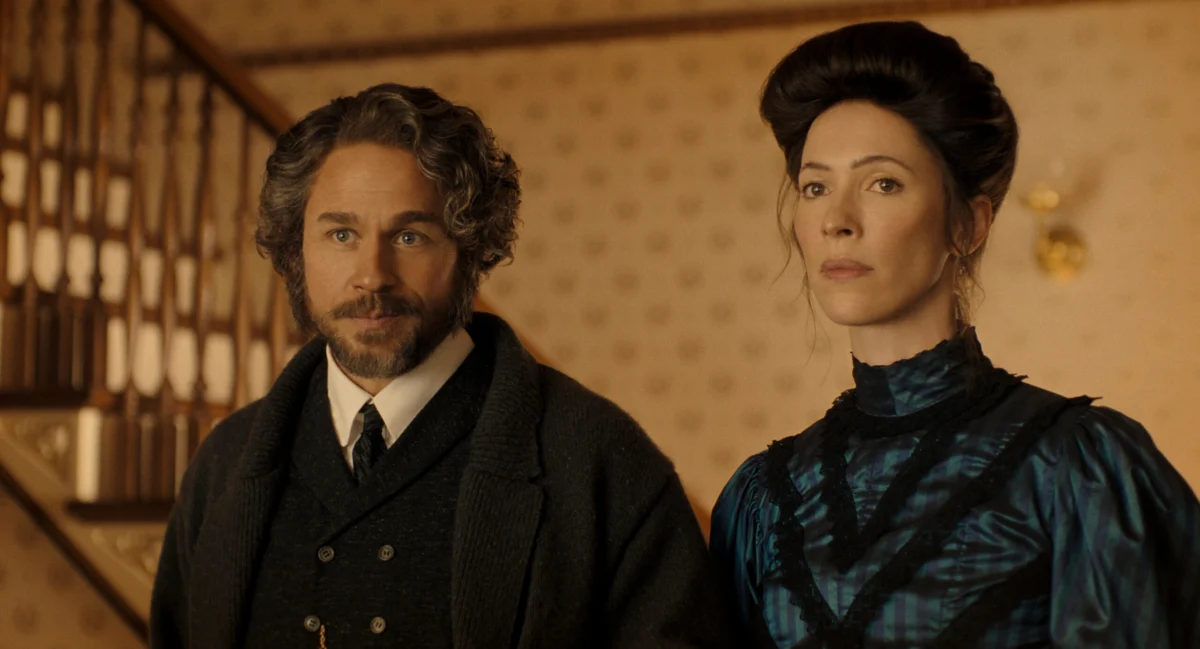
The global box office dominance of Christopher Nolan’s latest epic, The Odyssey, has triggered an unexpected cultural phenomenon: a massive resurgence in viewership and critical appreciation for the 2004 film Troy. As Nolan’s interpretation of Homer’s epic poem shatters records across the globe, audiences are returning to the previous major Hollywood adaptation of the Trojan Cycle. This renewed interest has pushed the Wolfgang Petersen-directed blockbuster back into the cultural zeitgeist, climbing streaming charts and sparking intense debates across social media platforms regarding its place in cinematic history.
Christopher Nolan’s The Odyssey has quickly established itself as one of the most significant theatrical releases of the decade. The film, which follows the Greek hero Odysseus on his arduous ten-year journey home following the fall of Troy, debuted with a staggering $264.1 million worldwide. This figure represents the largest global opening of Nolan’s storied career, surpassing his previous benchmarks. The momentum continued into its second weekend, where it earned an additional $90 million domestically. By its twelfth day of release, the film had generated a total of $727.9 million globally, cementing its status as a commercial juggernaut and a frontrunner for the year’s top-grossing film.
The Digital Resurgence of Wolfgang Petersen’s ‘Troy’
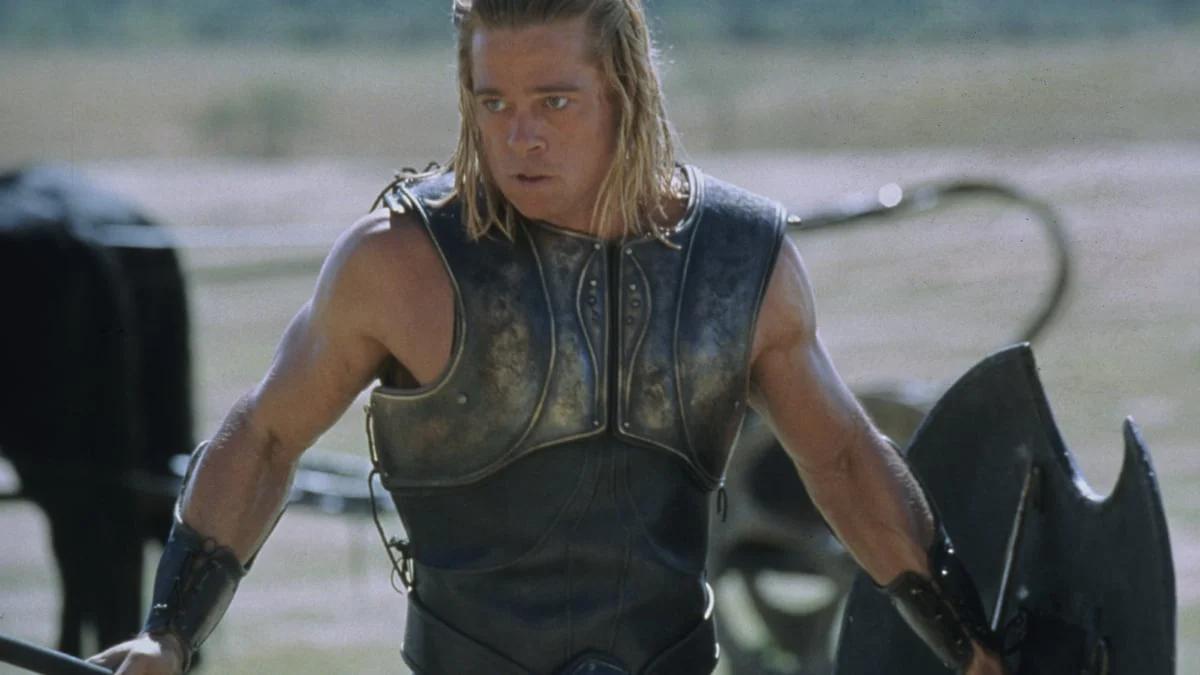
While The Odyssey occupies the top spot in theaters, Brad Pitt’s Troy is having a moment 22 years later, thanks to ‘The Odyssey’ providing a narrative bridge for modern viewers. Data from major film databases and streaming services indicate a sharp spike in interest for the 2004 film. As of late July, Troy climbed to the 12th position on IMDb’s list of most popular movies and reached 23rd on the social film platform Letterboxd. In the United States, the film ascended to the No. 2 spot on the AMC+ streaming service, trailing only the promotional materials and anticipation surrounding Nolan’s work.
Social media has become a primary hub for this retrospective appreciation. Clips of the film’s high-stakes battle sequences, specifically the meticulously choreographed duel between Brad Pitt’s Achilles and Eric Bana’s Hector, have gone viral. Users are increasingly comparing the 2004 film’s aesthetic and execution to Nolan’s 2026 production. While The Odyssey focuses on the psychological and supernatural journey of a single man, Troy serves as the historical and action-heavy prelude that many viewers now feel compelled to revisit for context.
A Critical Re-evaluation of the 2004 Epic
When Troy was originally released in May 2004, it entered a marketplace saturated with historical and fantasy epics. The massive success of Ridley Scott’s Gladiator in 2000 and the conclusion of Peter Jackson’s The Lord of the Rings trilogy in 2003 had set an incredibly high bar for the genre. At the time, critics were lukewarm toward Petersen’s adaptation. The film currently holds a 53 percent "Rotten" rating on Rotten Tomatoes, with the critical consensus suggesting that while the film was a visual spectacle, it lacked the emotional depth of its literary source material.
However, the perspective of 2026 audiences appears to be shifting. Modern viewers are praising the film for elements that were once dismissed as conventional. The decision to remove the Greek gods and supernatural interventions—a move criticized in 2004 for stripping the story of its "Homeric" soul—is now being viewed as a bold attempt to create a grounded, gritty war movie. Fans on social media have pointed to the film’s use of practical sets, thousands of extras, and weathered costume design as a refreshing alternative to the heavy reliance on digital effects in contemporary blockbusters.
Comparing the Narrative Scope of ‘Troy’ and ‘The Odyssey’
The current discourse highlights the distinct thematic differences between the two films. Troy is fundamentally a war movie, focusing on the politics of Agamemnon’s invasion, the tragic heroism of Hector, and the existential rage of Achilles. It culminates in the physical destruction of a civilization. In contrast, The Odyssey is a story of survival and the long-term consequences of that same war. By watching them in tandem, audiences are finding a more complete experience of the Trojan Cycle.
The performances in Troy are also receiving a second look. While Brad Pitt’s physical transformation and "movie star" presence were the primary talking points in 2004, current discussions are highlighting the supporting cast. Eric Bana’s portrayal of Hector is being lauded as the emotional heart of the film, while the late Peter O’Toole’s performance as King Priam is being recognized as a masterclass in gravitas. Even the casting of Sean Bean as Odysseus in the 2004 film has become a point of fascination, as viewers compare his brief but pivotal role to the expanded version of the character in Nolan’s new film.
The Connection Between Christopher Nolan and the ‘Troy’ Production
One of the most compelling aspects of this resurgence is the historical link between Christopher Nolan and the Troy production. In the early 2000s, before Wolfgang Petersen was finalized as director, Warner Bros. had originally tapped a young Christopher Nolan to helm the project. At the time, Nolan was a rising star following the success of Memento and Insomnia.
The project shifted back to Petersen after his planned Batman vs. Superman film was shelved by the studio. Nolan eventually moved on to direct Batman Begins, a film that revolutionized the superhero genre and established the long-standing partnership between Nolan and Warner Bros. Nolan later reflected on this period, noting that the world of Homer never truly left his mind. He expressed a specific interest in how he would have handled the Trojan Horse and the psychological toll of the decade-long siege. Two decades later, Nolan has finally realized his vision of the Homeric world, albeit through the lens of the sequel rather than the original conflict.
Cast Perspectives and the Irony of Success
The renewed popularity of Troy comes with a layer of irony, as several of the film’s lead actors have expressed mixed feelings about the project over the years. Brad Pitt has been candid about his involvement, stating in a 2019 interview with The New York Times that he felt "obligated" to do the movie due to a contractual agreement with the studio after another project fell through. Pitt noted that the experience of making a massive, studio-driven blockbuster like Troy influenced his later decision to pursue more auteur-driven projects through his production company, Plan B.
Similarly, Orlando Bloom, who played the controversial role of Paris, has expressed a lack of nostalgia for the film. In 2024, Bloom remarked that he had largely "blanked out" the experience, citing his discomfort with playing a character who was often viewed as cowardly or unheroic. Despite these reservations from the stars themselves, the audience’s appetite for the film has only grown. The $497 million it earned during its original run—much of it from international markets—demonstrated a global appeal that has clearly endured into the streaming era.
The Enduring Appeal of the Bronze Age Epic
The "moment" Troy is experiencing in 2026 suggests a broader trend in audience preferences. In an era dominated by shared universes and franchise sequels, there is a visible hunger for standalone, large-scale historical epics. The technical craftsmanship of the early 2000s, characterized by expansive physical sets and high-stakes stunt work, provides a tactile quality that many viewers find missing in modern cinema.
As The Odyssey continues its record-breaking run in IMAX and 70mm theaters, the shadow of Troy remains significant. The two films, separated by 22 years of technological advancement and shifting cinematic trends, now exist as two halves of a massive cultural dialogue. For Wolfgang Petersen’s film, the journey to critical and cultural acceptance has been almost as long as Odysseus’s journey home. While it may have taken over two decades, Troy has finally secured its place as a definitive, if once-misunderstood, pillar of the historical epic genre.