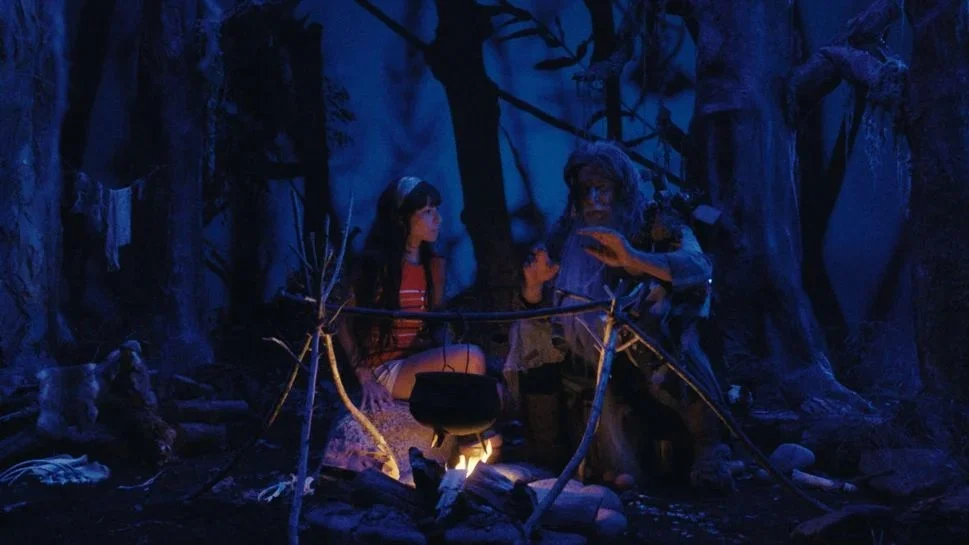
Chilean filmmakers Cristóbal León and Joaquín Cociña, acclaimed for their distinctive animated features The Wolf House and The Hyperboreans, are set to world premiere their highly anticipated third feature film, Donkey Princess (Princesa Burro), at the 79th Locarno Film Festival. The film will debut on Friday, August 7, as part of the prestigious international competition program, marking a significant moment for the duo known for their boundary-pushing cinematic narratives and their collaborative work with director Ari Aster. This new endeavor promises another ambitious journey into an "envelope-pushing fairy tale," continuing their exploration of mutable realities and psychological landscapes within a live-action format.
The Visionary Duo Behind Donkey Princess
Cristóbal León and Joaquín Cociña have carved out a unique niche in contemporary cinema, often blurring the lines between animation, horror, and social commentary. Their debut feature, The Wolf House (2018), garnered widespread critical acclaim for its unsettling stop-motion animation, which meticulously transformed everyday objects and environments into a living, breathing, and decaying nightmare. The film, which subtly allegorized the atrocities of the Pinochet dictatorship in Chile through the lens of a German cult, established their signature style: a blend of folk horror, psychological distress, and a relentless, often disturbing, visual metamorphosis. Its critical success positioned them as significant voices in avant-garde cinema, demonstrating their capacity to create deeply resonant and viscerally impactful narratives through unconventional means.
Following The Wolf House, the duo continued their experimental streak with The Hyperboreans (2024), a more abstract and philosophical exploration that further delved into the instability of reality and the human psyche. While perhaps less widely distributed than its predecessor, The Hyperboreans solidified their reputation for challenging traditional cinematic structures and engaging audiences on a profound intellectual and emotional level. Their distinctive aesthetic and thematic concerns have also attracted the attention of prominent international figures, notably director Ari Aster, for whom they contributed animated segments to his acclaimed film Midsommar. This collaboration underscored their growing influence and the recognition of their unique artistic contributions within the global film community. Donkey Princess represents their first foray into a fully live-action feature, a notable departure from their stop-motion roots, yet promising to retain the thematic depth and visual innovation that defines their work.
A Prestigious Platform for Innovation: Locarno Film Festival
The selection of Donkey Princess for the international competition at the Locarno Film Festival is a testament to its artistic merit and the directors’ esteemed standing. The Locarno Film Festival, established in 1946, is one of the oldest and most respected film festivals globally, renowned for its commitment to discovering and championing independent, experimental, and auteur-driven cinema. Held annually in Locarno, Switzerland, the festival provides a crucial platform for filmmakers to showcase innovative works that often challenge conventional storytelling. Its Pardo d’oro (Golden Leopard) award is a highly coveted honor, having recognized masterpieces from directors like Roberto Rossellini, Stanley Kubrick, and Jim Jarmusch over the decades.
For León and Cociña, premiering Donkey Princess in such a competitive and prestigious environment not only elevates the film’s profile but also reinforces Locarno’s reputation as a launchpad for groundbreaking cinematic experiences. The festival’s programming often reflects a global sensibility, featuring films that are culturally rich, politically resonant, and artistically daring. The inclusion of Donkey Princess signals the festival’s confidence in the film’s ability to captivate and provoke its discerning international audience, setting the stage for potential critical acclaim and global distribution. The August 7 premiere will be closely watched by cinephiles and industry professionals eager to witness the latest evolution of the Chilean duo’s distinctive vision.
Unpacking the Narrative: Diana’s Multiverse Quest in Donkey Princess
At its core, Donkey Princess is an ambitious fairy tale centered on Diana, a princess from an ancient kingdom whose life is rigidly controlled by her father, King Arthur. The king, described as having "forbidden love," exerts a paternalistic and authoritarian influence over Diana’s personal life. When Diana falls in love with Lalo, her father’s immediate response is to banish the young suitor, demonstrating the king’s absolute power and his refusal to allow his daughter personal autonomy or emotional fulfillment. This act of banishment serves as the catalyst for Diana’s extraordinary journey, transforming a traditional romantic narrative into an epic quest for love and self-discovery.
Equipped with a "magical bracelet," Diana embarks on a perilous odyssey across "other worlds" in pursuit of her banished love. This magical artifact not only facilitates her interdimensional travel but also symbolizes her burgeoning agency and defiance against her father’s decree. As Diana navigates these diverse realities, a deeper, more insidious truth comes to light: her father has been actively "manipulating her decisions." This revelation transforms her quest from a simple search for Lalo into a profound confrontation with her own destiny and the oppressive forces that have shaped her existence. The synopsis emphasizes that Diana "must face her fears and change her destiny," indicating a narrative arc focused on empowerment and liberation. This layered plot structure promises a film that transcends the conventional fairy tale, delving into themes of manipulation, free will, and the complex dynamics of familial power.
A Kaleidoscope of Cinematic Styles in Donkey Princess
The narrative device of Diana traveling through parallel worlds is not merely a plot mechanic but a foundational element for the directors to explore a rich tapestry of cinematic history and genre. As León and Cociña explain in a directors’ note on the Locarno website, "Diana travels through parallel worlds where each universe transforms the film’s genre." This ambitious concept suggests a film that will constantly mutate its aesthetic and narrative language, shifting from one cinematic style to another as Diana moves between realities. This approach allows the filmmakers to engage in a meta-cinematic dialogue, paying homage to and deconstructing various film periods and genres, potentially encompassing everything from classic Hollywood romances to gritty film noirs, vibrant musicals, or even stark science fiction and horror.
The directors further elaborate that "the film brings this constant mutation of realities into live action, where fantasy reshapes everything." This statement is particularly intriguing given their background in stop-motion animation, where the material world is inherently fluid and constantly reconfigured. Translating this concept of "constant mutation" into a live-action format suggests innovative visual techniques and a fluid directorial style that will challenge audience expectations. It implies that the film’s genre will not simply be a backdrop but an active participant in Diana’s journey, reflecting her evolving psychological state, the challenges she faces, and the shifting nature of her reality. This genre-bending approach is a hallmark of avant-garde cinema and aligns perfectly with León and Cociña’s established reputation for pushing the boundaries of conventional storytelling.
Revisiting a Classic Fairy Tale with a Modern Lens
A crucial piece of background for understanding Donkey Princess lies in its inspiration: the classic French fairy tale Donkeyskin (Peau d’Âne), first recorded in writing by Charles Perrault in 1695. This lesser-known but deeply resonant tale tells of a king who, upon the death of his wife, vows to marry only a woman more beautiful than she – a vow that leads him to propose to his own daughter. To escape this incestuous proposition, the princess, advised by her fairy godmother, makes impossible demands for dresses (the color of the sky, the moon, the sun) and finally, the skin of her father’s magical donkey, which produces gold and jewels. Disguised in the donkey skin, she flees to another kingdom, working as a scullery maid until a prince discovers her true beauty and marries her.
The tale was famously adapted for the screen by French director Jacques Demy in his 1970 musical fantasy film, Peau d’Âne, starring Catherine Deneuve. Demy’s adaptation is celebrated for its opulent visual style, enchanting musical numbers, and its whimsical yet poignant treatment of the dark fairy tale. León and Cociña’s statement that Donkey Princess is "loosely inspired by the tale Donkeyskin, as recorded in writing by [Charles] Perrault and later adapted for the screen by Jacques Demy," offers significant insight into their approach. While their film shifts the father’s motive from incestuous desire to mere "manipulation" and "forbidden love," the core elements of a princess escaping a controlling father and embarking on a transformative journey remain. The "donkey" element, which gives the film its title, could be a metaphorical representation of Diana’s disguise, her perceived lowly status, or even a symbolic burden she carries, rather than a literal animal skin. By referencing both Perrault and Demy, the directors position Donkey Princess within a rich lineage of fantasy storytelling, signaling their intent to engage with and reimagine this tradition through their distinctive, modern, and often unsettling lens.
Crafting the Multiverse: Key Collaborators
Bringing the intricate vision of Donkey Princess to life required a skilled and collaborative team. The cast is led by Antonia Giesen, a prominent figure in Chilean cinema, whose performance as Diana is central to navigating the film’s complex emotional and stylistic shifts. She is joined by Andrew Bargsted and Francisco Melo, both experienced actors who contribute to the film’s dramatic fabric. The screenplay, a crucial component for a narrative that weaves through multiple worlds and genres, was co-written by Alejandra Moffat alongside the directors, Cristóbal León and Joaquín Cociña, indicating a shared creative process in crafting the story’s unique structure and thematic depth.
Behind the camera, the film boasts cinematography by Benjamín Echazarreta, whose work will undoubtedly be instrumental in translating the directors’ vision of mutating realities into compelling visuals. The editing process, particularly complex for a film designed to constantly shift genres and realities, was a collaborative effort involving Soledad Salfate, Maria Salazar, and the two directors themselves, highlighting the meticulous attention to detail required to assemble such an ambitious project. International sales for Donkey Princess are being handled by Bendita Film Sales, an indication of the film’s global appeal and the intent to distribute it to audiences beyond the festival circuit. This ensemble of talent underscores the significant effort invested in realizing the directors’ audacious cinematic experiment.
Redefining Fantasy and Authorial Cinema
Donkey Princess arrives at a time when the fantasy genre is undergoing a significant re-evaluation, moving beyond traditional heroic narratives to explore more complex psychological, social, and philosophical themes. León and Cociña’s declared aim to "reimagine the history of fantasy cinema" suggests a film that actively critiques and innovates within the genre, much as their previous works redefined animation and horror. By presenting "our own vision of the genre," they position Donkey Princess as a potentially transformative work that could influence future fantasy filmmaking.
Their previous films, The Wolf House and The Hyperboreans, have consistently explored "worlds where dreams and nightmares dominate the materiality of space, generating universes in constant construction, mutation and destruction." In Donkey Princess, they explicitly state that they are adapting these core ideas into a "fiction feature film performed entirely by actors." This represents a fascinating evolution of their artistic methodology, applying their abstract, fluid, and often unsettling approach to a live-action narrative. The film’s genre-bending structure, its psychological depth, and its reimagining of a classic fairy tale position it as a significant contribution to authorial cinema, further solidifying León and Cociña’s status as visionary filmmakers who are consistently pushing the boundaries of cinematic expression.
Anticipation and the Audience Experience
The world premiere of Donkey Princess at the Locarno Film Festival is generating considerable anticipation among film critics, industry professionals, and cinephiles worldwide. Given the directors’ track record of producing visually striking, intellectually challenging, and emotionally resonant films, expectations for their latest work are high. The exclusive trailer released by THR offers a tantalizing glimpse into the film’s unique aesthetic and narrative ambition, promising an experience that is both captivating and thought-provoking.
For audiences accustomed to conventional narratives, Donkey Princess is poised to offer a refreshing and potentially disorienting journey through its mutable realities and shifting genres. The film is likely to appeal to those who appreciate experimental cinema, psychological dramas, and art-house productions that invite active engagement and interpretation. Its deep roots in classic fairy tales, combined with its contemporary and deconstructive approach, suggest a film that will resonate on multiple levels, sparking discussion and analysis long after the credits roll. As León and Cociña continue to build a formidable body of work, Donkey Princess stands as a pivotal new chapter, showcasing their unparalleled ability to craft compelling narratives that blur the lines between reality and imagination, dream and nightmare, and ultimately, redefine what cinema can be.