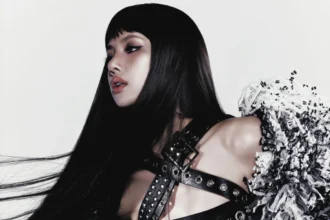
The meteoric rise of New Jersey-born artist Audrey Nuna, a genre-bending musician who seamlessly fuses rap, pop, alternative, and R&B, has been a defining narrative in the contemporary music landscape. Her recent immersion into the global phenomenon of the animated film KPop Demon Hunters has catapulted her into a new stratosphere of recognition, prompting a deliberate period of recalibration and artistic redefinition. Nuna is now poised to share her evolved sound, aiming to bridge the gap between her established fanbase and the millions newly captivated by her vocal contributions to the film.
From Underground to Global Acclaim: The KPop Demon Hunters Phenomenon
Audrey Nuna’s breakthrough moment arrived not through a traditional artistic trajectory, but via a wildly successful animated feature. She lent her distinctive voice to Mira, the rebellious lead dancer of the fictional K-Pop group HUNTR/X in KPop Demon Hunters. The film’s impact resonated far beyond the silver screen, spawning a soundtrack that dominated the Billboard 200 and delivered multiple Billboard Hot 100 hits. Among these were the top 10 success "How It’s Done" and the Grammy and Oscar-winning chart-topper "Golden."
The commercial success of "Golden" has been staggering, amassing over 971.8 million official on-demand U.S. streams, according to Luminate data. The accompanying soundtrack has also achieved remarkable longevity, spending an impressive 54 weeks and counting at number one on the Top Soundtracks chart, with total streams exceeding four billion. This unprecedented success propelled Nuna, along with fellow HUNTR/X vocalists EJAE and Rei Ami, into a year-long whirlwind of high-profile appearances. The period was marked by late-night television debuts, extensive media interviews, elaborate photoshoots, and a relentless schedule of performances, placing Nuna firmly in the global spotlight.
Recalibrating the Artistic Compass: Lessons from the Spotlight
The intensity of the KPop Demon Hunters experience, while exhilarating, has prompted Nuna to seek a period of deliberate recalibration. Her current focus is on harmonizing the influx of new fans with her existing audience, while simultaneously deepening her understanding and appreciation for the craft of pop music. This introspective phase is crucial for her artistic evolution, allowing her to integrate the lessons learned from her recent global exposure.
Speaking with Billboard following a performance at Iowa’s Hinterland Music Festival, Nuna reflected on the transformative impact of her involvement with the animated film. "The biggest thing KPop Demon Hunters taught me is that it’s okay to fail and struggle through making your art," she stated. This acknowledgment signifies a departure from a purely intuitive creative process towards a more structured approach.
Nuna elaborated on this shift, explaining, "As an artist, I’ve always tried to get things to feel good to me, but KPop Demon Hunters taught me structure and that, sometimes [when creating], there is a right answer, and we need to get to it. Almost like design-based thinking." This newfound appreciation for intentionality and precision in creation has revitalized her passion for pop music’s underlying principles. "That experience reinvigorated my love for pop, and the ideals and philosophies behind it," she added.
A Sonic Evolution: From Trench to "SuperHuman"
Prior to the KPop Demon Hunters phenomenon, Nuna’s artistic output presented a stark contrast to the polished, pop-centric sound of the soundtrack. Her last pre-film project, Trench, released in 2024, showcased a more experimental and at times dissonant soundscape. The debut album navigated a complex terrain, featuring collaborations with artists like Teezo Touchdown and interpolating Brandy and Monica’s iconic hit "The Boy Is Mine." This resulted in a sonic tapestry that effortlessly oscillated between light and shadow. Trench itself followed her 2021 release, A Liquid Breakfast, an album that emerged during the challenging early stages of the COVID-19 pandemic and included a notable collaboration with Jack Harlow on the track "Comic Sans."
Now operating under the umbrella of Republic Records, Nuna is ushering in a new artistic chapter with the release of "SuperHuman." This track represents a significant sonic pivot, returning to the raw, rap-forward energy that characterized her earlier work. Described as a high-octane, dance-infused rap banger, "SuperHuman" was meticulously crafted in collaboration with Grammy-winning superproducer Cirkut. The song also marks Nuna’s second partnership with Riot Games, the creators of the popular tactical first-person shooter Valorant.
"SuperHuman" will serve as an official track for the 2026 Valorant Champions Tour Pacific, scheduled to take place in Busan, South Korea. This collaboration highlights Nuna’s ability to connect with diverse audiences and integrate her artistry into dynamic cultural moments. It also signifies her first solo release since Trench, offering a clear indication of her current creative direction.
The Genesis of "SuperHuman": A Message of Resilience
The creative process behind "SuperHuman" was deeply intertwined with the overwhelming success of KPop Demon Hunters. Nuna describes her second session with Cirkut, during which the song was conceived, as occurring "when all of the KPop Demon Hunters stuff was going absolutely bonkers." She views Trench as a period of introspection, a look "from underground up at the sun," while the film’s reception represented a significant "rise and redemption."

However, Nuna’s intention with "SuperHuman" extended beyond mere celebration. She conveyed a desire to articulate a profound message of resilience and humanity amidst overwhelming external forces. "At the same time, I told Bava and Madison Love – who I was also working with on the writing side – that I wanted to illustrate this longing to stay human through it all," she explained. The core sentiment of the song is encapsulated in her aspiration: "I want to help people remember that our most important quality and biggest superpower is being human."
The writing session for "SuperHuman" was remarkably efficient, with a solid demo completed by the end of the first day, the entire song crafted in just three hours. Nuna found a unique creative synergy with Cirkut, whose approach to music production she describes as possessing a "weird, quirky angle." Their shared passion for artists like Daft Punk and their mutual appreciation for the artistic sensibilities of groups like Gorillaz fostered a deep connection. Cirkut’s enthusiastic reaction to Nuna’s string quartet remix of Björk’s "Hyperballad" further cemented their shared musical language.
Reimagining the Live Experience: A Fusion of Eras
Nuna’s current festival sets reflect a deliberate effort to breathe new life into her diverse catalog. Audiences are treated to renditions of songs from Trench and A Liquid Breakfast, alongside a selection from KPop Demon Hunters, specifically "How It’s Done." The inclusion of "SuperHuman" in her live performances allows her to gauge the audience’s reception to her new material in real-time, creating a dynamic feedback loop for her ongoing creative development.
Bridging Worlds: "SuperHuman" as a Sonic Bridge
When asked if "SuperHuman" serves as a reset or palate cleanser for newer fans, Nuna articulated a more nuanced perspective. She views the track as a "bridge," designed to connect the different facets of her artistic identity. The transition from her early, alternative-leaning music to the global success of KPop Demon Hunters has been a significant journey.
Nuna feels a profound connection to Mira, the character she voiced, noting their inherent similarities. However, she emphasizes the distinction: "I am not Mira, and we’re not the same exact person." The overarching goal of "SuperHuman" is to facilitate a seamless integration for listeners, allowing them to connect the vocal qualities they admired in Mira with Nuna’s authentic voice and artistic message.
Sonically, "SuperHuman" represents a deliberate synthesis. It retains the "hard, dissonant [energy]" of Trench while incorporating the "pop sensibilities" that were ignited by her experience working on KPop Demon Hunters. This fusion creates a sound that is both familiar and refreshingly new, appealing to a broad spectrum of listeners.
The Evolving Sonic Landscape: Embracing Imperfection and Humanity
Nuna’s current sonic exploration is characterized by an interest in "reharmonization," achieving a balance between harmonic brightness and darkness. Her upbringing in the Catholic church has also influenced the harmonic structures of "SuperHuman," evoking a sense of returning to childhood fundamentals. This introspective journey has inspired her to revisit formative childhood films and their scores, seeking to understand the initial spark of her artistic passion.
Initially, Nuna believed her new project was primarily about reintroducing herself to the world. However, her perspective has evolved: "I’ve realized it’s actually more important for this to be a reintroduction of myself to myself." Her ambition is to transition from being perceived as an "aesthetic artist" to becoming a storyteller capable of crafting narratives that resonate deeply with listeners on a human level.
The forthcoming project is envisioned to be profoundly human in its sonic presentation. Nuna desires to incorporate audible imperfections, such as "mouth sounds in the background" and the natural nuances of her voice, to underscore the human authorship of the music. This deliberate embrace of authenticity reflects a commitment to a more organic and time-honored approach to music creation, where the process itself is valued. She is actively experimenting with different studios and investing in analog gear to explore its impact on her sound, acknowledging that "music takes time."
The Valorant Connection: Fueling Virtual and Visceral Worlds
The choice to align "SuperHuman" with Valorant stems from Nuna’s belief in its power to enhance the gaming experience. She envisions the track as a motivational anthem for players, stating, "If I were a 14-year-old kid playing Valorant and doing these crazy missions, I would just go so hard and get my high score of all time if I heard this song." The song’s impact on her own physical performance, even motivating her to exceed her usual workout limits, underscores its energetic potency. Nuna aims to forge a tangible link between the virtual realms of gaming and the visceral experience of physical music.
The Importance of Rest and Self-Discovery
As an self-proclaimed introvert, Nuna prioritizes periods of solitude and quiet reflection. For her, true rest involves "sitting there doing nothing," emphasizing the profound beauty and necessity of spending time with oneself. This introspective practice is complemented by physical well-being, including therapeutic massage, which helps alleviate the physical tension accumulated from touring and performance. Her journey of self-discovery and artistic evolution is intrinsically linked to her ability to find balance and recharge.