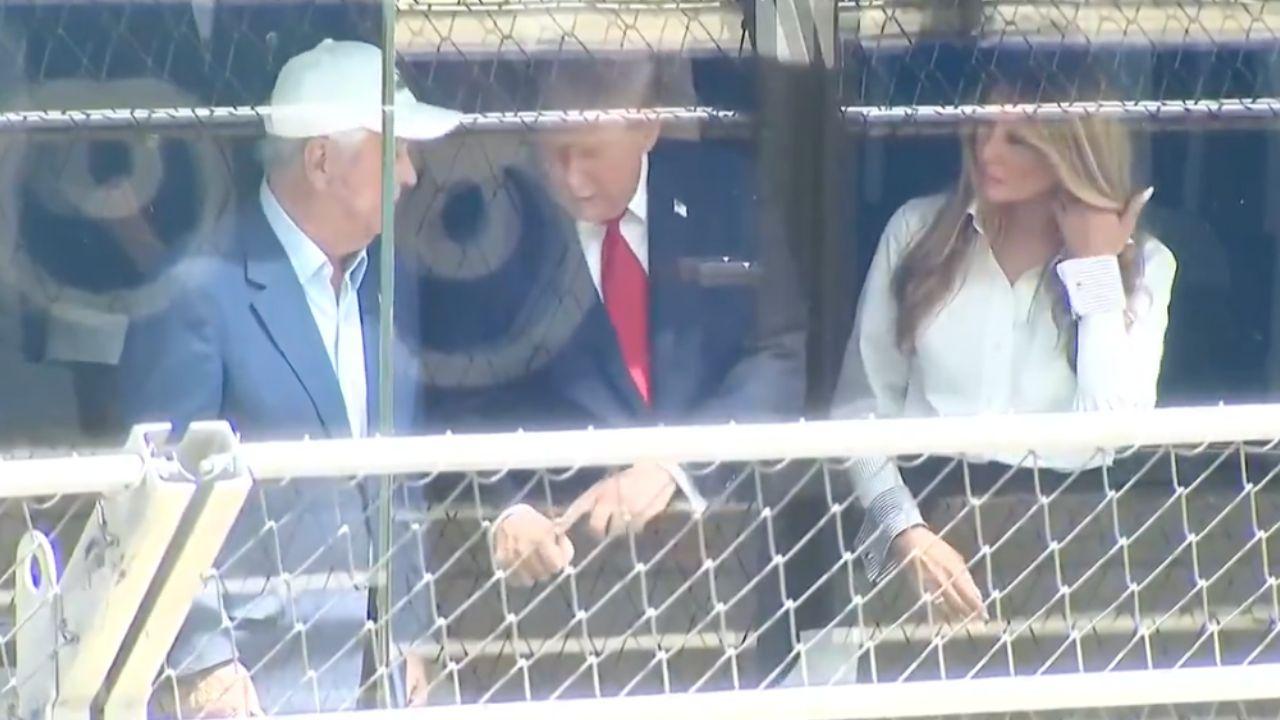
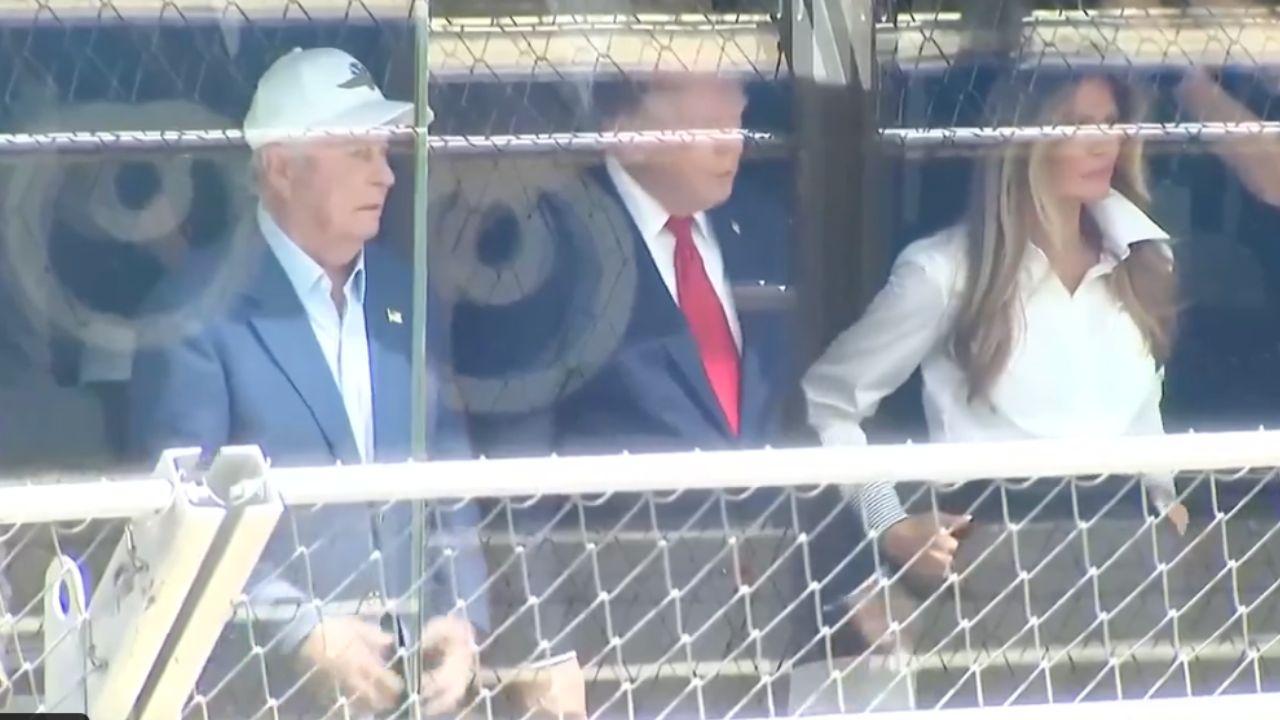
Former President Donald Trump’s appearance at the recent Freedom 250 Grand Prix in Washington, D.C., alongside his wife Melania, drew significant public attention after he was observed pointing to a visibly discolored hand, prompting widespread discussion and health concerns across social media platforms. The incident, captured in viral video clips, reignited ongoing speculation about the health of the 80-year-old former commander-in-chief, particularly given his advanced age and high-profile political future.
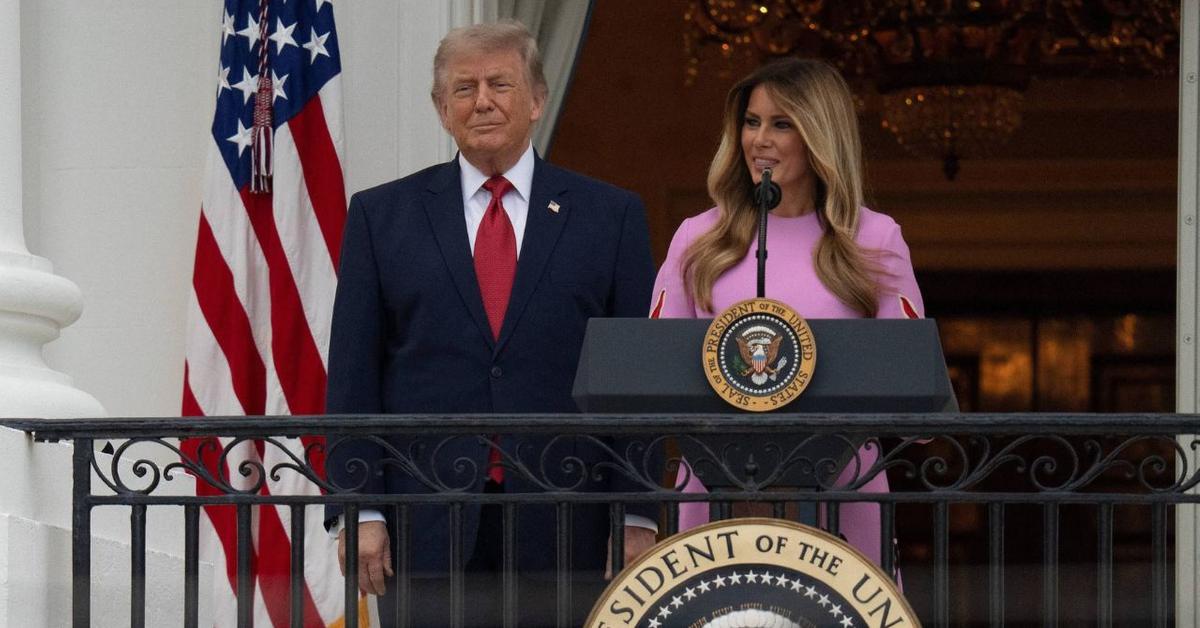
The event, a high-octane racing spectacle, saw the Trumps engaging with fellow attendees. However, it was a particular gesture by Donald Trump that quickly became the focal point of online discourse. Footage shared extensively showed the former president gesturing toward his right hand, which appeared bruised and notably darker than his surrounding skin. Melania Trump was also present during this interaction, observed by many as the discussion around his hand unfolded.
Social media users immediately amplified the images and videos, dissecting the visual evidence and offering a range of interpretations. Comments varied from genuine expressions of concern for his well-being to more speculative theories regarding the timing of such a visible health indicator. One common sentiment expressed was the need for the former president to seek medical attention, with some observers describing the appearance of the hand as "looking bad." Others suggested the public display might be a deliberate move to garner sympathy ahead of upcoming political events, though such claims remain purely speculative.

This is not the first instance where Donald Trump’s hands have become a subject of public scrutiny. Over recent years, various images and reports have noted what appeared to be bruising, swelling, or discoloration on his palms and fingers. These observations have consistently fueled public and media discussions about his overall health, especially in the context of his age and his continued presence in national politics. The intensity of this focus often escalates during periods of high visibility, such as public events or campaign rallies.
Official explanations for previous instances of such hand conditions have been offered. White House Press Secretary Karoline Leavitt, in response to earlier inquiries, attributed bruising on Donald Trump’s hands to his demanding schedule, stating that he is "constantly working and shaking hands all day every day." This explanation suggests that the physical demands of his public life contribute to minor trauma and subsequent bruising, which might be more pronounced due to other factors.

Further context for understanding Donald Trump’s discolored hand comes from his own statements regarding his daily medication regimen. He has publicly discussed taking 325 mg of aspirin daily, a practice he attributes to being "a little superstitious" about blood thinning. He reportedly believes that aspirin helps maintain "nice, thin blood pouring through my heart." While aspirin is commonly used for its anticoagulant properties to prevent cardiovascular events, a known side effect is an increased propensity for bruising, as it inhibits blood clotting. This effect can make even minor impacts result in more noticeable discoloration.
Adding another layer to the discussion is a prior medical diagnosis. In July of an unspecified year, the White House announced that Donald Trump had been diagnosed with chronic venous insufficiency (CVI). This condition, prevalent among older individuals, impairs the veins’ ability to effectively return blood to the heart. As a result, blood can pool in the veins of the arms and legs, leading to symptoms such as swelling, pain, skin discoloration, and in some cases, a higher susceptibility to bruising and skin changes. For an individual with CVI and on a blood-thinning regimen like aspirin, visible bruising and discoloration on the hands could be a more frequent occurrence, even from routine activities.
The health of presidential candidates and former presidents, particularly those of advanced age, is a perennial topic of public interest and media scrutiny in the United States. Historically, voters often consider a candidate’s physical and mental fitness as a crucial component of their ability to perform the rigorous duties of the office. For an 80-year-old figure like Donald Trump, who remains a prominent political force and potential future candidate, any visible health concern is inevitably amplified and analyzed through a political lens. The current political climate, characterized by intense partisan divides, further exacerbates the scrutiny, with supporters often downplaying concerns and critics highlighting them.
The observed interaction at the Grand Prix also drew comments regarding Melania Trump’s reaction. Some social media users interpreted her demeanor as somewhat detached or even critical, noting that she reportedly turned away after observing her husband’s hand. Such interpretations, while purely speculative and based on brief visual cues, reflect the public’s tendency to analyze every aspect of high-profile figures’ interactions, especially when health is a perceived issue. The dynamics of public appearances for political couples are often subject to intense, sometimes unwarranted, examination.
Medical experts, speaking generally and not specifically about Donald Trump’s case, emphasize that chronic venous insufficiency is a manageable condition. Treatment often involves lifestyle changes, compression therapy, and sometimes medication or minimally invasive procedures to improve blood flow. While it can cause discomfort and visible symptoms, it is not typically life-threatening in itself, though it can indicate broader circulatory health considerations. The combination of CVI and blood thinners does, however, make individuals more prone to visible bruising, which can appear quite dramatic even from minor bumps or pressure.
The incident at the Freedom 250 Grand Prix underscores the persistent public fascination with the health of prominent political figures. As Donald Trump continues to navigate the public sphere, often with an eye toward future political endeavors, his physical well-being will undoubtedly remain a subject of intense media coverage and public debate. The discolored hand observation serves as a potent reminder of how personal health can intersect with public image and political narratives, influencing perceptions of leadership and fitness for high office. In an era of instant information and pervasive social media, even a minor physical observation can quickly become a major talking point, shaping public discourse and fueling ongoing speculation about those in the political spotlight.