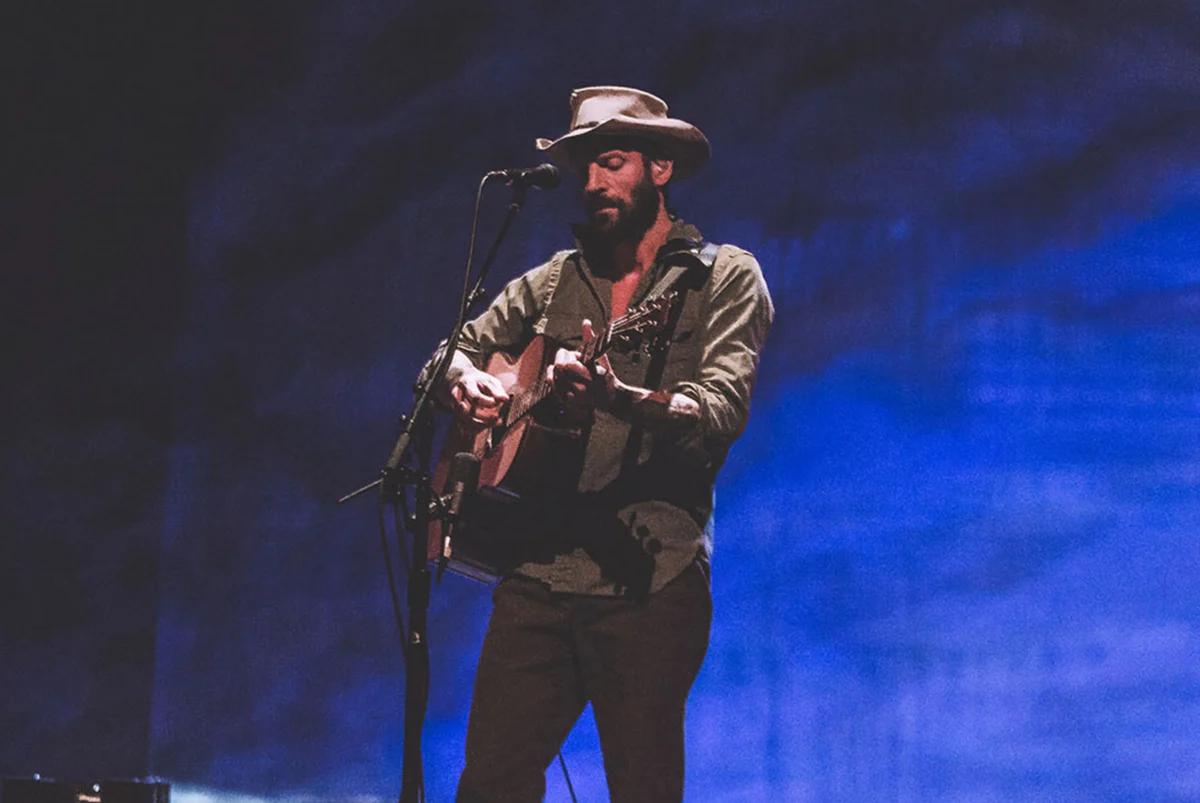
Grammy Award-winning artist Ray LaMontagne is reportedly in good health and recovering after experiencing a collapse during a recent performance in Nashville. The incident, which occurred over the weekend at the iconic Ryman Auditorium, has been attributed to heat-related dehydration, a concern amplified by unseasonably high temperatures in the region.
LaMontagne, 53, was in the midst of his set, performing his 2004 track "Jolene," when he appeared to be overcome. Fan-captured video circulating on social media shows the singer-songwriter slowly falling backward on stage. Members of his crew were observed immediately rushing to his assistance, indicating a swift response to the medical emergency.
Following the event, representatives for LaMontagne released a statement confirming his well-being. "He’s in good hands with the local EMS (emergency medical services)," the statement read, as reported by outlets like Consequence of Sound. "He’s doing well now and is grateful for everyone’s understanding." Billboard has also reached out to LaMontagne’s management for further comment.
The incident highlights the potential dangers of extreme weather conditions, even for seasoned performers. Nashville, in particular, has been grappling with an intense heatwave. September 5th, the date of LaMontagne’s performance, saw temperatures soar past 100 degrees Fahrenheit, marking one of the hottest starts to September in the city’s recorded history. The National Weather Service had issued a "Heat Alert" for the Nashville area, underscoring the severity of the heat.
Touring Amidst Record Heat
LaMontagne is currently embarked on a United States tour celebrating the 20th anniversary of his critically acclaimed debut album, Trouble. The tour, which features special guests The Weather Station, was scheduled to continue with a performance on Tuesday night, September 8th, at The Oncenter Crouse Hinds Theatre in Syracuse, New York. The ongoing heatwave poses a challenge for outdoor events and can impact indoor venues not equipped with robust cooling systems.
The debut album Trouble, originally released through RCA, has been reissued for its 20th anniversary, a testament to its enduring impact on the music landscape. Upon its release, Trouble immediately announced LaMontagne as a significant new voice, blending Americana, folk, rock, and soul with a distinctive, mature sound that resonated deeply with audiences and critics alike.
LaMontagne himself has spoken about the profound significance of Trouble in shaping his artistic trajectory. In a 2025 interview with Billboard’s Behind the Setlist podcast, he stated, "This record is important to me for that reason. It’s the record that pointed me in this direction, and I know that’s just what I was supposed to do."

A Career of Critical Acclaim and Chart Success
Since the release of Trouble, Ray LaMontagne has released eight additional studio albums. His most recent, Long Way Home, arrived in 2024 and was released under his own Liula Records imprint. His significant contributions to contemporary folk music were recognized with a Grammy Award for Best Contemporary Folk Album in 2011 for God Willin’ & the Creek Don’t Rise.
Beyond his album work, LaMontagne has made a notable presence on Billboard’s charts. He achieved one entry on the Billboard Hot 100 with his 2008 single "You Are The Best Thing," which peaked at number 90. His album career has seen greater success, with nine titles charting on the Billboard 200. Among these, three albums reached the top 10, all peaking at number 3: Gossip In The Grain (2008), God Willin’ & the Creek Don’t Rise (2010), and Supernova (2014).
The Ryman Auditorium, where the incident occurred, is a historic venue often referred to as the "Mother Church of Country Music." Its storied past and intimate setting make it a coveted stage for artists across genres. Performing in such a venue, especially during demanding weather conditions, requires careful attention to artist and audience well-being.
The Impact of Extreme Weather on Live Performances
The incident involving Ray LaMontagne serves as a stark reminder of the physical demands placed on performers and the unpredictable environmental factors that can affect live shows. Artists often push their bodies to the limit during demanding tour schedules, and extreme heat can exacerbate existing vulnerabilities or lead to acute conditions like dehydration and heatstroke.
Venues and tour promoters are increasingly aware of the need for robust health and safety protocols, especially in the face of climate change and more frequent extreme weather events. This includes ensuring adequate hydration stations, effective cooling systems, and trained medical personnel on-site. For artists, pacing themselves and prioritizing their health are crucial for maintaining longevity and delivering consistent performances.
The outpouring of support from fans and the swift medical attention provided underscore the collaborative effort involved in ensuring artist safety during live events. While LaMontagne’s immediate recovery is positive news, the incident prompts a broader conversation about the challenges of touring in a changing climate and the importance of preparedness in the live music industry. As LaMontagne continues his tour, audiences will likely be keeping a close watch, hoping for his continued well-being and successful performances.