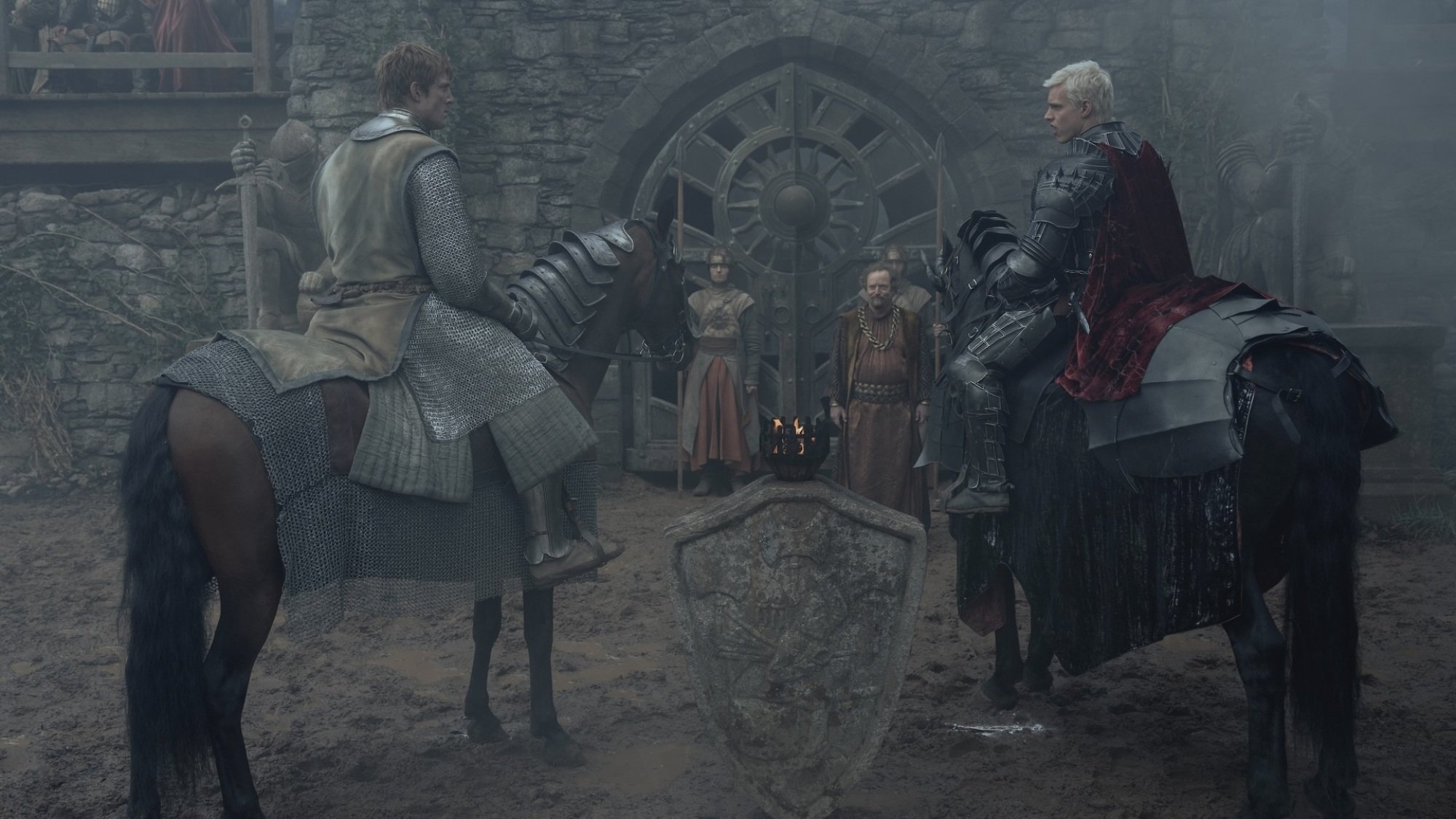
The latest installment of HBO’s "A Knight of the Seven Kingdoms" has officially introduced viewers to the "Trial of Seven," an ancient and brutal form of judicial combat that raises the stakes for the series’ protagonist, Ser Duncan the Tall. In the fourth episode, titled "Seven," the traditional one-on-one trial by combat—a staple of the "Game of Thrones" universe—is set aside in favor of a rare Andal custom that requires fourteen combatants to settle a legal dispute. This escalation not only threatens the life of the knight known as Dunk but also creates a significant political rift within the Targaryen dynasty.
The Trial of Seven is presented as a religiously significant event, rooted in the theology of the Faith of the Seven. Unlike a standard duel, this format requires each side to field seven champions, based on the belief that the gods are more likely to intervene and demonstrate divine justice when their sacred number is honored on the field of battle. For Ser Duncan, played by Peter Claffey, the demand for such a trial represents a nearly insurmountable hurdle as he attempts to defend his honor against the royal family.
The Legal Catalyst and the Accusations Against Ser Duncan
The conflict reached a breaking point following a violent altercation at the Ashford Meadow tourney. Ser Duncan was arrested after intervening to stop Prince Aerion Targaryen, portrayed by Finn Bennett, from assaulting a group of innocent puppeteers. While Duncan’s actions were rooted in the chivalric code of protecting the defenseless, the physical assault on a royal prince is considered a capital offense in the Seven Kingdoms.
Aerion Targaryen, seeking to humiliate the hedge knight rather than simply execute him, invoked the right to a Trial of Seven. The prince’s motivations appear twofold: to ensure a spectacle that asserts Targaryen dominance and to exploit Duncan’s lack of political connections. Without seven knights to stand by his side, Duncan would be found guilty by default, facing the loss of a hand or death.
Further complicating the legal proceedings is a secondary accusation from Prince Daeron Targaryen. Daeron, played by Henry Ashton, accused Duncan of kidnapping the young Prince Aegon, who has been traveling incognito as Duncan’s squire, "Egg." Although Egg (Dexter Sol Ansell) has repeatedly attempted to clarify that he joined Duncan of his own volition, the royal word carries more weight in the eyes of the law, forcing the trial to proceed under a cloud of alleged treason.

The Composition of the Trial of Seven Champions
The assembly of fourteen knights represents a cross-section of Westerosi society, ranging from high-born lords to disgraced princes and desperate hedge knights. The rosters for both the prosecution and the defense highlight the deep-seated tensions currently simmering within the realm.
On the side of the prosecution, Prince Aerion has secured a formidable lineup of veteran warriors. Leading the charge is his father, Prince Maekar Targaryen, played by Sam Spruell. Maekar’s involvement adds a layer of familial duty and stern discipline to the proceedings, though he remains visibly frustrated by his son’s erratic behavior. Prince Daeron is also slated to fight, though he has privately signaled a lack of enthusiasm for the combat, even suggesting to Duncan that he might intentionally fall early to avoid serious bloodshed.
The royal side is bolstered by three members of the Kingsguard: Ser Donnel of Duskendale, Ser Roland Crakehall, and Ser Willem Wylde. The presence of the White Cloaks signifies the official backing of the Iron Throne, making the trial an institutional effort to punish the accused. The final member of Aerion’s team is Ser Steffon Fossoway, a character whose last-minute betrayal of Duncan for the promise of a lordship serves as a stark reminder of the political opportunism prevalent in the capital.
The Defense: Ser Duncan’s Quest for Seven Champions
Ser Duncan’s struggle to find six men willing to risk their lives against the royal family forms the emotional core of the episode. With the help of his squire, Egg, Duncan manages to recruit a motley crew of knights who are motivated by a mix of personal vendettas and genuine respect for Duncan’s character.
Ser Lyonel Baratheon, known as "The Laughing Storm" and played by Daniel Ings, was the first to volunteer. A renowned warrior who relishes the chance for a historic brawl, Baratheon’s involvement provides Duncan with much-needed martial credibility. Joining him are Ser Humfrey Hardyng and his brother-in-law, Ser Humfrey Beesbury. Hardyng seeks personal retribution against Aerion after the prince intentionally maimed his horse and injured him during a previous jousting match.
The defense also includes Ser Robyn Rhysling, a one-eyed knight who explicitly states that his loyalty to the gods and the concept of justice outweighs his loyalty to a corrupt crown. In a surprising turn of events, Raymun Fossoway—the cousin of the treacherous Steffon—demanded to be knighted on the spot so he could fight for Duncan and restore his family’s honor.

The most shocking addition to the Trial of Seven, however, is Prince Baelor "Breakspear" Targaryen. As the heir to the Iron Throne and the Hand of the King, Baelor’s decision to fight on the side of a common hedge knight against his own brother and nephews is a massive political gamble. Baelor, portrayed by Bertie Carvel, cites Duncan’s inherent goodness and the necessity of upholding true knighthood as his primary reasons for intervening.
Historical and Religious Significance of the Trial of Seven
The Trial of Seven is a rarity in Westerosi history, with the show noting that such an event has not occurred in over a century. Its inclusion in "A Knight of the Seven Kingdoms" serves to deepen the world-building by showcasing the influence of the Faith of the Seven during this era. Unlike the later periods seen in "Game of Thrones," the era of Dunk and Egg is characterized by a more overt integration of religious tradition into the legal system.
The concept of "seven against seven" is designed to mirror the seven aspects of the deity: the Father, the Mother, the Warrior, the Maiden, the Smith, the Crone, and the Stranger. In the narrative, the trial functions as a crucible for the characters, forcing them to choose between institutional loyalty and moral righteousness.
Historians within the world of George R.R. Martin’s literature often point to this specific Trial of Seven as a turning point for the Targaryen dynasty. The outcome of the battle at Ashford Meadow has long-standing implications for the line of succession and the public’s perception of the royal family’s stability. By bringing this event to the screen, HBO is highlighting a moment where the "divine right" of kings is directly challenged by the principles of common justice.
Production and Cultural Impact of the Series
"A Knight of the Seven Kingdoms" marks a tonal shift for the "Game of Thrones" franchise. While "House of the Dragon" focuses on grand-scale civil war and dragon warfare, this series offers a more intimate, "boots-on-the-ground" perspective of Westeros. The introduction of the Trial of Seven is a centerpiece of this approach, focusing on the individual choices of knights and the consequences of personal honor.
The series is based on George R.R. Martin’s "Tales of Dunk and Egg," specifically the first novella, "The Hedge Knight." Fans of the source material have praised the show’s commitment to the specific details of the trial, including the armor designs and the distinct personalities of the fourteen combatants. The production’s focus on the Ashford Meadow tourney grounds provides a vibrant, yet grounded, backdrop for the impending violence.

As the series moves toward the actual combat, the public anticipation reflects a continued interest in the lore of Westeros. The Trial of Seven is not just a fight; it is a narrative device that explores the flaws of the feudal system and the rare instances where the "little man" is given a platform to stand against the powerful.
The Road Ahead for the Ashford Meadow Trial
With the fourteen champions finalized, the stage is set for a confrontation that will determine the future of Ser Duncan and Prince Aegon. The tension between the two branches of the Targaryen family—represented by the brothers Baelor and Maekar—is expected to reach a boiling point during the melee.
The consequences of the trial will likely resonate through the remainder of the season, impacting the relationship between Duncan and his squire. As the "Trial of Seven" commences, the series prepares to deliver one of the most significant action sequences in the history of the franchise, one where the survival of a single knight could change the fate of the Seven Kingdoms.
"A Knight of the Seven Kingdoms" continues to air on HBO and is available for streaming on Max, with new episodes released on Sunday evenings. The resolution of the Trial of Seven is expected to be a major talking point for viewers as the first season reaches its climax.