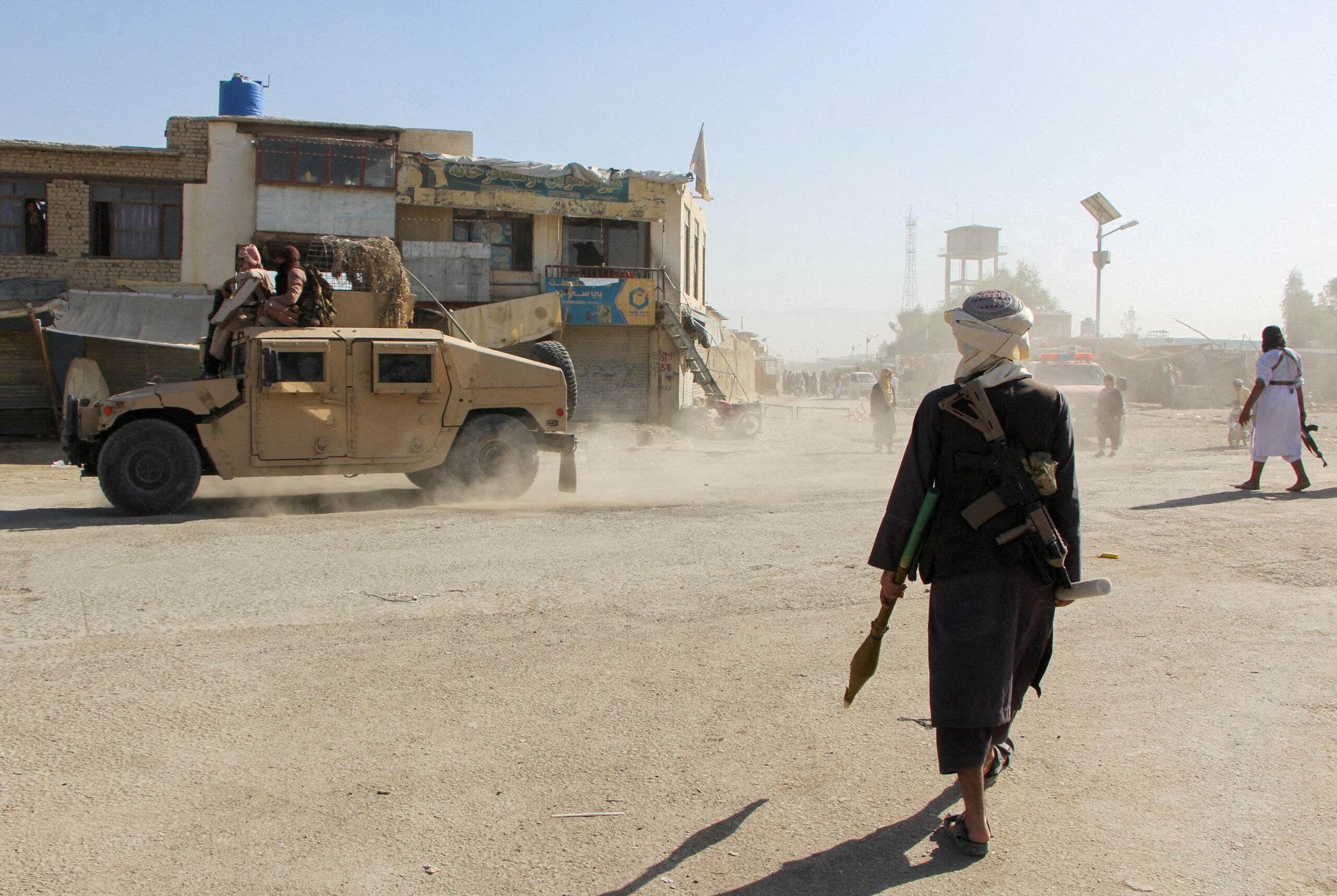
Afghanistan has launched significant military operations against Pakistani positions along their shared border, a move explicitly stated by Taliban authorities as retaliation for recent Pakistani airstrikes. The escalation marks a dangerous new phase in the increasingly fraught relationship between the two neighboring countries, raising concerns about regional stability.
Border Clashes Erupt Following Pakistani Airstrikes
The Taliban’s military corps in eastern Afghanistan announced late Thursday that "heavy clashes" had commenced. This offensive was described as a direct response to Pakistani airstrikes carried out last week in Afghanistan’s Nangarhar and Paktia provinces. The Taliban’s assertion of initiating these operations signifies a decisive shift in their posture, moving from defensive statements to offensive action.
Taliban government spokesman Zabihullah Mujahid confirmed the offensive operations in a post on the social media platform X. He stated that these actions were in "response to repeated provocations and violations by Pakistani military circles." Mujahid elaborated that "large-scale offensive operations have been launched against Pakistani military positions and installations along the Durand Line." The Durand Line, the disputed border stretching over 2,600 kilometers, has long been a point of contention, with Afghanistan not formally recognizing it.
Following the initial retaliatory strikes, Mujahid reported further successes for Afghan forces. He claimed that "numerous soldiers" of the Pakistani military had been killed, with some being "captured alive." Additionally, Mujahid stated that 15 enemy outposts had been "captured from the enemy," indicating a substantial engagement along the contested frontier.
Pakistan Responds to Afghan Attacks
Pakistan’s Ministry of Information confirmed the engagements, stating on X that Pakistani troops had delivered an "immediate and effective response" to Taliban fire. The ministry reported that these exchanges occurred across "several sectors" in Pakistan’s Khyber Pakhtunkhwa province on Thursday.
The Pakistani government asserted that "Taliban regime forces are being delivered punishment" in key sectors including Chitral, Khyber, Mohmand, Kurram, and Bajaur. Early reports, according to the ministry, confirmed "heavy casualties on Afghan side with multiple posts and equipment destroyed." This exchange of claims highlights the intensity of the conflict and the differing narratives emerging from both sides.
Background of Rising Tensions
The recent escalation follows a period of heightened animosity between Afghanistan and Pakistan. On Sunday, the Pakistani military conducted airstrikes along the border, claiming to have killed at least 70 fighters. Afghanistan vehemently rejected this claim, asserting that civilians, including women and children, were among the casualties.
The Taliban government has consistently denied harboring militant groups that launch attacks within Pakistan. However, Islamabad has repeatedly accused Kabul of failing to adequately address these security concerns, fueling a cycle of mistrust and accusations. This ongoing dispute over militant sanctuaries remains a significant point of friction.
Wahidullah Mohammadi, a spokesman for the military in eastern Afghanistan, offered a contrasting assessment of the immediate aftermath of Thursday’s clashes. He stated that there had been "no casualties" on the Afghan side thus far. This discrepancy in reporting casualties underscores the challenges of obtaining verifiable information from the conflict zone.
The Contested Durand Line
The 2,611-kilometer (1,622-mile) border between Afghanistan and Pakistan, known as the Durand Line, has been a persistent source of bilateral tension since its inception. Afghanistan’s refusal to formally recognize the border has led to numerous disputes and skirmishes over the years. The demarcation of this line has historical roots in British colonial policy and has never been fully accepted by Kabul.
The current geopolitical climate further exacerbates these border issues. Afghanistan, under Taliban rule since August 2021, faces international isolation and economic hardship. Pakistan, meanwhile, grapples with its own internal security challenges, including a resurgent Tehrik-i-Taliban Pakistan (TTP) insurgency, which it alleges is supported by elements within Afghanistan.
Economic and Humanitarian Impact
The deteriorating security situation has had tangible consequences for daily life along the border. Land border crossings between the two countries have been largely shut down since deadly fighting in October that resulted in the deaths of over 70 people on both sides. This closure disrupts vital trade routes, impacts the livelihoods of communities reliant on cross-border commerce, and hinders the movement of people.
The ongoing conflict also raises humanitarian concerns. Civilian populations residing in border regions are increasingly vulnerable to crossfire, displacement, and the disruption of essential services. The cycle of airstrikes and retaliatory attacks risks further destabilizing these already fragile communities and exacerbating an already challenging humanitarian situation in Afghanistan.
Broader Regional Implications
The renewed hostilities between Afghanistan and Pakistan have significant implications for regional security and stability. Both nations are critical players in the complex geopolitical landscape of South and Central Asia. Any escalation of conflict on their shared border could potentially draw in other regional actors or embolden militant groups seeking to exploit the instability.
The international community, which has been closely monitoring Afghanistan’s internal affairs and its relations with its neighbors, will likely view this development with alarm. The United States and its allies have expressed concerns about the potential for Afghanistan to become a haven for terrorist groups, and this latest incident could intensify those worries.
Future Prospects and Potential Outcomes
The immediate future of Afghanistan-Pakistan relations appears bleak, with little indication of de-escalation in the short term. The tit-for-tat military actions suggest a hardening of positions on both sides, making diplomatic solutions more challenging. The Taliban’s assertive response indicates a willingness to defend its perceived territorial integrity and sovereignty, while Pakistan remains resolute in its demands for security assurances.
Analysts suggest that a sustained period of conflict could further isolate the Taliban government, potentially leading to increased international pressure and sanctions. For Pakistan, prolonged border instability could strain its resources and divert attention from its internal economic and political challenges. The risk of miscalculation or accidental escalation remains a significant concern, potentially leading to a wider regional conflict.
The ongoing exchanges along the Durand Line underscore the deep-seated mistrust and unresolved issues that continue to plague the relationship between Afghanistan and Pakistan. Without a concerted effort towards de-escalation and dialogue, the prospects for lasting peace and stability in the region remain dim. The international community will be watching closely for any signs of restraint or a renewed commitment to diplomatic engagement.