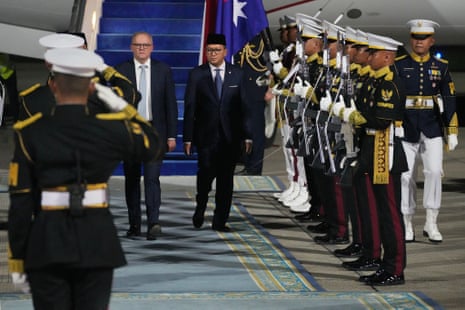
Prime Minister Anthony Albanese arrived in Jakarta on Friday to formalize a historic defense agreement with Indonesia, marking a pivotal shift in the strategic partnership between the two neighboring nations. The signing of the "watershed" security pact comes at a time of heightened geopolitical sensitivity in the Indo-Pacific, as Australia seeks to deepen its ties with Southeast Asia’s largest economy. While the Prime Minister focuses on international diplomacy, the Australian domestic landscape remains fraught with economic and social challenges, ranging from a high-stakes parliamentary inquiry into interest rates to a series of disturbing incidents involving extremist iconography and public safety threats.
The diplomatic mission to Jakarta is Albanese’s fifth visit to Indonesia since taking office and his second since the 2025 federal election, signaling the Labor government’s prioritization of the bilateral relationship. Accompanied by Foreign Minister Penny Wong, the Prime Minister is scheduled to meet with Indonesian President Prabowo Subianto to finalize the Australia-Indonesia Treaty on Common Security. This agreement, which has been under negotiation since late last year, is expected to enhance military cooperation, streamline joint exercises, and improve maritime security coordination between the two countries.
A Watershed Moment for Indo-Pacific Security
The new security treaty represents a significant evolution in how Australia and Indonesia interact on defense matters. Historically, Indonesia has maintained a strict policy of non-alignment, a doctrine designed to prevent the nation from being drawn into the orbits of major global powers or becoming a staging ground for foreign military operations. By entering into this "watershed" agreement, Jakarta is signaling a willingness to engage in more structured security cooperation with Canberra, even as it maintains its traditional neutral stance in the broader rivalry between the United States and China.
During a statement to Parliament prior to his departure, Prime Minister Albanese characterized the treaty as a "proud moment" in the shared history of the two nations. He emphasized that the pact is not merely a military arrangement but a framework for long-term regional stability. "It will ensure that we work together to shape a better future, securing our shared place in the world, so that we can secure the best outcome for those we serve here at home," Albanese said. The Prime Minister’s decision to make Indonesia his first international destination following his re-election underscores the strategic weight Canberra places on Jakarta as a regional anchor.

Breaking Down the Australia-Indonesia Security Pact
While the full technical details of the Australia-Indonesia Treaty on Common Security have been kept under close wraps, analysts suggest the agreement will facilitate greater "interoperability" between the Australian Defence Force (ADF) and the Indonesian National Armed Forces (TNI). This includes more frequent high-level staff talks, expanded joint training programs, and a streamlined legal framework for Australian troops to operate in Indonesia for exercise purposes, and vice versa.
Gatra Priyandita, a senior analyst at the Australian Strategic Policy Institute, noted that the agreement is a vital step in building mutual trust. Historically, the relationship has been punctuated by periods of tension, particularly regarding issues of sovereignty and regional influence. However, the shared concern over maritime security, transnational crime, and regional displacement has driven the two capitals closer together. The presence of Foreign Minister Penny Wong and her meeting with Indonesian counterpart Sugiono further illustrates the multi-layered approach the Albanese government is taking to solidify this partnership beyond just defense.
Economic Pressure Mounts as RBA Governor Faces Parliament
As the Prime Minister conducts high-level diplomacy abroad, the focus in Canberra has shifted to the economy. Reserve Bank of Australia (RBA) Governor Michele Bullock and Deputy Governor Andrew Hauser are appearing before the House of Representatives Standing Committee on Economics today for a scheduled oversight hearing. The appearance comes in the wake of the central bank’s recent decision to raise the cash rate to 3.85%, a 25-basis-point hike that has sent shockwaves through the Australian housing market and increased the financial burden on millions of mortgage holders.
The hearing is expected to be contentious, as lawmakers from both sides of the aisle seek to assign blame for the country’s persistent inflation. Opposition members have stepped up their attacks on Treasurer Jim Chalmers, arguing that the federal government’s fiscal policy—specifically its level of public spending—is working at cross-purposes with the RBA’s monetary tightening. The RBA has maintained that interest rate hikes are necessary to cool an overheated economy and bring inflation back within the target range of 2% to 3%, but the political fallout from these decisions has become a central theme in the national discourse.
Inflation and the Political Tug-of-War
Governor Bullock is facing rigorous questioning regarding the specific drivers of inflation in the current quarter. While global supply chain issues have largely stabilized, domestic factors such as high energy costs and a tight labor market continue to exert upward pressure on prices. The "regular grilling" by MPs serves as a critical mechanism for central bank accountability, but it also provides a platform for political grandstanding.
Treasurer Jim Chalmers has defended the government’s budget, asserting that Labor’s spending is targeted toward cost-of-living relief and long-term productivity rather than fueling the inflationary fire. However, with the cash rate at its highest level in over a decade, the pressure on the RBA to justify further hikes—or to signal a potential pause—has never been higher. The outcome of today’s testimony will likely influence market expectations and could dictate the political narrative heading into the next parliamentary session.
Rising Concerns Over Domestic Extremism and Social Cohesion
In addition to economic and diplomatic hurdles, Australia is grappling with a rise in incidents related to hate speech and domestic extremism. In New South Wales, a 44-year-old man has been charged after allegedly displaying Nazi symbols in the Hunter region. The investigation began in late January after reports surfaced that the symbols had been placed on a council-issued waste bin in Cessnock. Under state law, the public display of Nazi symbols without a legitimate excuse—such as educational or historical purposes—is a criminal offense.
The man was issued a notice to appear in Cessnock Local Court on March 19. This incident is part of a broader trend that has alarmed community leaders and law enforcement agencies across the country. The Australian government has recently moved to strengthen federal laws against the display of hate symbols, reflecting a zero-tolerance approach to ideologies that promote racial or religious hatred.
Nazi Symbols and Terrorism Charges in Western Australia
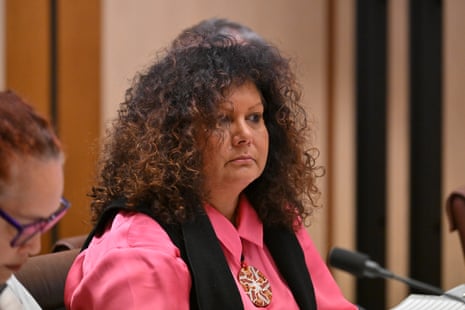
The situation in New South Wales follows a much more severe security alert in Western Australia. Minister for Indigenous Australians Malarndirri McCarthy recently expressed the government’s concern over an alleged attempted bombing at an "Invasion Day" protest in Perth. A 31-year-old man was charged with terrorism offenses on Thursday after police uncovered "pro-white" extremist material and alleged that his actions were motivated by "hate and racism."
Minister McCarthy described the incident as a "real wake-up call" for social cohesion in Australia. Speaking on national radio, she noted that many First Nations people felt "very scared" and "angry" following the news of the alleged plot. McCarthy called for greater vigilance from all Australians and criticized what she perceived as a lack of sufficient media and political attention toward the threat of right-wing extremism. "Each and every one of us needs to be vigilant about what we can do," McCarthy said, emphasizing that while Australia thrives on a diversity of views, those debates must be conducted with respect and within the bounds of the law.
Public Safety and the E-bike Regulatory Crisis
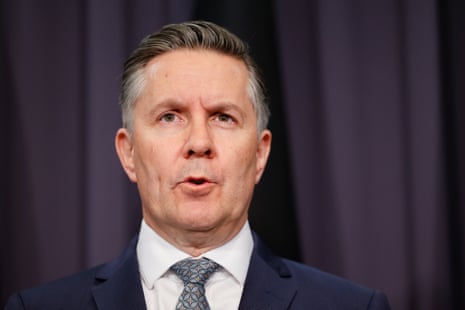
While security and the economy dominate the headlines, a burgeoning public safety issue is causing concern in Australia’s major cities. Health Minister Mark Butler has labeled the rise of dangerous e-bike riding a "real emergency" following a series of high-profile incidents. Most notably, a group of approximately 40 riders recently swarmed the main deck of the Sydney Harbour Bridge during peak-hour traffic, an area where cycling is strictly prohibited. The riders then proceeded to weave through the Sydney central business district, causing significant disruption and safety risks for motorists and pedestrians.
Minister Butler stated that the proliferation of high-powered e-bikes has "exploded" since the pandemic and has now reached a crisis point. He noted that the current legal framework is a "patchwork" of different state and territory laws, which makes enforcement difficult for police. "This has got to be the subject of strong action by all governments," Butler told reporters, calling for a "sensible" and unified approach to regulating the devices.
The incident on the Sydney Harbour Bridge is currently under investigation by NSW Police, though no charges have yet been laid. The NRMA and other motoring advocacy groups have joined the call for stricter regulations, suggesting that without clear licensing or age restrictions, the "menace" of unregulated e-bike swarms will continue to threaten public order and strain emergency services.
Conclusion and National Outlook
The events of this week highlight the complex balancing act required of the Australian government. In Jakarta, Prime Minister Albanese is attempting to secure Australia’s place in a shifting global order through the "watershed" security pact with Indonesia. Simultaneously, the RBA’s struggle with inflation and the rise of domestic extremist acts suggest that internal stability is as much a priority as external security.
As the Prime Minister returns from Jakarta and the RBA Governor concludes her testimony, the focus will likely remain on how these high-level decisions translate into tangible outcomes for the Australian public. Whether it is through the strengthening of regional alliances, the management of the national economy, or the protection of social cohesion, the government faces a demanding period of governance in an increasingly volatile environment.