The British government signaled a major shift in transparency on Tuesday, confirming it will support a parliamentary motion to release confidential files regarding Andrew Mountbatten-Windsor’s 2001 appointment as a special trade envoy. Trade Minister Chris Bryant delivered a blistering assessment of the man formerly known as Prince Andrew, describing him before the House of Commons as a "rude, arrogant and entitled" individual who used his public position to further a "constant self-aggrandizing and self-enriching hustle." The decision to support the Liberal Democrat-led motion follows intense public pressure to uncover the vetting process that allowed the royal to represent British business interests for a decade despite long-standing warnings about his associations.
The motion, known as a "humble address," creates a legal obligation for the government to produce all internal communications, minutes, and due diligence reports related to the creation of the trade envoy role. It specifically seeks documents held by the Cabinet Office, the Foreign Office, and the Prime Minister’s Office, including advice provided by Lord Peter Mandelson, who served as a high-ranking official during the initial appointment period. While the government has agreed to the release in principle, ministers clarified that no documents will be made public if they are deemed to prejudice an ongoing police investigation into allegations of misconduct in public office.
Andrew ‘rude, arrogant and entitled’ as Lawmakers Demand Accountability
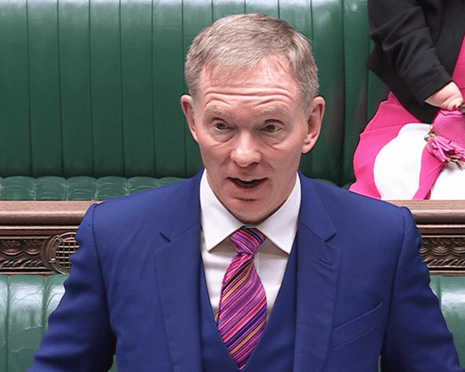
During a heated debate in the Commons, Bryant shared personal accounts from civil servants and colleagues who interacted with Andrew Mountbatten-Windsor during his tenure as a trade representative. He argued that the pattern of behavior described by those who worked with the former royal suggested a man who could not distinguish between the public interest and his own private gains. Bryant recounted an anecdote from Tonypandy where the royal insisted on arriving by helicopter for a meeting with sea cadets, contrasting it with the more modest car travel favored by his mother, the late Queen.
"They were absolutely delighted and excited to meet a member of the Royal family, but he left early and showed next to no interest in the young people," Bryant told the House. The minister’s comments reflect a significant hardening of the government’s stance toward the disgraced royal. By labeling him as a man on a "hustle," the government is effectively distancing the current administration from the protective culture that shielded the Duke of York for decades.
The trade minister also pointed out that modern trade envoys are subject to much stricter oversight than the regime that existed when Andrew Mountbatten-Windsor held the post. Today, envoys are typically members of Parliament or peers who must adhere to the same transparency obligations as ministers. Bryant suggested that the historical lack of accountability for the royal’s role created a vacuum where personal interests could supersede national diplomatic goals.

Government Backs Release of Trade Envoy Documents Amid Police Scrutiny
The move to release the documents comes at a precarious time for the former royal, who is currently under investigation by the Metropolitan Police on suspicion of misconduct in public office. Speaker of the House Lindsay Hoyle urged lawmakers to exercise "restraint" during the debate, noting that certain aspects of the case are sub judice. However, the government’s willingness to support the humble address suggests that the Prime Minister’s office believes the public’s right to know the truth about the 2001 vetting process outweighs the historical precedent of royal confidentiality.
Education Secretary Bridget Phillipson echoed this sentiment during a morning media circuit, stating that the public has a right to see relevant material. She emphasized that the principle of transparency is paramount, though she joined Bryant in cautioning that the timing of the release must not interfere with criminal proceedings. The Liberal Democrats, who chose the motion for their opposition day, have vowed to use every political and legal lever to ensure that the files are not buried or delayed indefinitely.
Liberal Democrat leader Ed Davey, who has been vocal in his calls for a public inquiry, apologized during a radio interview for his own role in defending the royal 15 years ago. As a junior minister in 2011, Davey had described Andrew’s work as "excellent," a comment he now says he deeply regrets. He argued that the system at the time was designed to prevent MPs from criticizing the monarchy, effectively silencing those who had concerns about the royal’s friendship with convicted sex offender Jeffrey Epstein.
Broadening Investigations and the Epstein Connection
The scope of the proposed transparency extends beyond the 2001 appointment. Lawmakers are increasingly focused on how the trade envoy role may have been leveraged by Jeffrey Epstein to gain access to world leaders. Ed Davey highlighted a specific example involving emails from the Epstein files, suggesting that Epstein tried to use Andrew’s influence to secure meetings with the late Libyan dictator Muammar Gaddafi. One email reportedly quoted the royal saying, "Libya fixed," after an introduction was requested.
Liam Byrne, the chair of the Commons business committee, confirmed on Tuesday that his committee is preparing to launch its own inquiry into the governance of trade envoys. Byrne stated that while the committee would wait for the conclusion of the police investigation before launching formal hearings, they are "gathering information immediately." This parallel investigation would likely look at the institutional failures that allowed a trade envoy to operate with such little oversight for so long.
The controversy has also reignited scrutiny of Lord Peter Mandelson’s role in the affair. The humble address specifically requests documents relating to advice provided by Mandelson during his time as a key figure in the New Labour government. This follows a previous humble address regarding Mandelson’s own communications, suggesting a broader effort by Parliament to dismantle what Ed Davey called "the system that protected Andrew Mountbatten-Windsor and Epstein’s other associates."
Wider Political Turmoil and the Reform UK Challenge
The debate over the royal documents took place against a backdrop of significant political shifts across the United Kingdom. As the government grapples with the fallout of the trade envoy scandal, other parties are pushing radical policy agendas. Richard Tice, the business spokesperson for Reform UK, called for a "Great Repeal Bill" on Tuesday, aimed at scrapping Labour-era regulations on net zero, employment rights, and property rentals. Tice argued that these laws "kill jobs" and hinder national growth.
Labour spokespeople quickly condemned Tice’s proposals, accusing Reform UK of "declaring war" on British workers and renters. The tension highlights a growing ideological divide in British politics, where traditional institutions are being challenged by populist movements. Additionally, Reform UK MP Danny Kruger sparked controversy by calling for a "pro-family" policy to address what he described as a "totally unregulated sexual economy" in Britain.
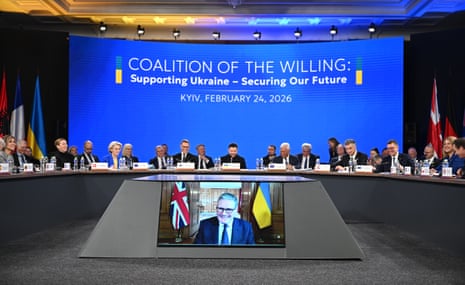
Meanwhile, Prime Minister Keir Starmer marked the fourth anniversary of the Russian invasion of Ukraine by paying tribute to the "incredible resilience" of the Ukrainian people. During a cabinet meeting and a subsequent virtual meeting with international leaders, Starmer urged the global community to "defeat the falsehood that Russia is winning." The Prime Minister’s focus on international stability stands in contrast to the domestic focus on royal and ministerial misconduct.
Implications for the Future of the Monarchy and Public Trust
The government’s decision to back the release of the trade envoy documents marks a pivotal moment in the relationship between the British state and the monarchy. For decades, the vetting and appointment of royals to public-facing roles were handled with a level of secrecy that is increasingly viewed as incompatible with modern democratic standards. By allowing these documents to enter the public domain, the government is signaling that the era of "deference" over "accountability" may be coming to an end.
The impact of this disclosure could be far-reaching. If the documents reveal that senior ministers or civil servants ignored clear warning signs during the vetting process, it could lead to further resignations or inquiries into the conduct of past administrations. For the public, the release of these files represents an opportunity to understand how the "disinfectant of transparency" can be applied to the highest levels of power.
As the Metropolitan Police continue their investigation, the political world remains on edge. The combination of a criminal probe and a parliamentary document release creates a pincer movement that the former Duke of York may find impossible to escape. Lawmakers from all sides of the House appear to agree on one thing: the system that allowed these events to unfold must be thoroughly examined and reformed to prevent future abuses of public office.