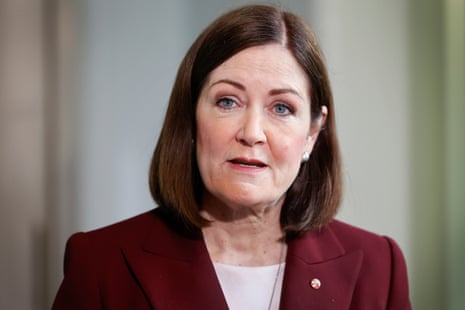
Liberal Senator Sarah Henderson confirmed Tuesday that the Liberal Party, under the newly appointed leadership of Angus Taylor, is pivoting its platform to prioritize an immigration policy centered strictly on the "national interest." Speaking to RN Breakfast, Henderson sought to distance the current party leadership from a recently leaked hardline immigration proposal that had been drafted during the tenure of former leader Sussan Ley. The senator characterized the leaked document as "unverified" and emphasized that the party’s forthcoming official policy would be designed to ensure the safety and social cohesion of the Australian public.
The internal shift comes as the Liberal Party navigates a leadership transition and mounting pressure from the right wing of the Australian political spectrum. Henderson’s remarks underscore a strategic effort to rebrand the party’s approach to border security and migration, focusing on "protecting the Australian way of life" while maintaining that the party still values the contributions of legal migrants. This rhetoric arrives amid a heated national debate over security screenings for individuals arriving from conflict zones, specifically Gaza and regions of the Middle East.

The Shift to a National Interest Immigration Policy
Senator Henderson’s emphasis on a "national interest" immigration policy marks a clear attempt to provide a unified front following the ousting of Sussan Ley. Henderson noted that while the party recognizes the "wonderful contribution" of migrants globally, there is a renewed determination to prevent individuals with "hate in their hearts" from entering the country. The senator’s comments suggest that the Liberal Party will lean heavily into national security as a primary pillar of its platform heading into the next election cycle.
When questioned about the potential threat posed by civilians fleeing Gaza, Henderson cited "very serious concerns" regarding security in the region. She argued that the bottom line for any immigration policy must be the confidence of Australians in their own community safety. This "national interest" framing is expected to serve as the foundation for Angus Taylor’s formal policy announcement, which Henderson indicated would occur "very soon" after consultation with the shadow cabinet.
Controversy Surrounding the Leaked Migration Ban
The political landscape was jolted earlier this week by the leak of a clandestine immigration plan developed under the previous leadership. The document proposed an unprecedented ban on migrants from 37 specific regions across 13 countries, including Palestine, Lebanon, Somalia, Afghanistan, Egypt, and the Philippines. These areas were identified in the plan as being under the control of declared terrorist organizations.
Beyond the regional bans, the leaked proposal outlined a strategy to accelerate the deportation of up to 100,000 asylum seekers and individuals on student visas. The aggressive nature of the document has sparked significant internal friction within the Coalition. While some hardline members have signaled support for the measures, moderate Liberals have warned that adopting such "Trump-style" policies could alienate centrist voters and damage Australia’s international reputation.
Political Fallout and Leadership Distancing
Opposition Leader Angus Taylor has moved quickly to delegitimize the leaked document, asserting that he has not seen the plan and that it holds "no validity" under his leadership. Taylor told the ABC’s 7.30 program that the document never reached the shadow cabinet for formal consideration. He insisted that any future immigration framework would be developed from scratch with his new leadership team, though he declined to provide specific details beyond general principles of security and economic benefit.
Despite Taylor’s attempts to distance himself, he has signaled that intelligence agencies must play an increasingly rigorous role in vetting arrivals. Taylor suggested that while "shutting the door" on entire regions might not be the final policy, there is a necessity for high-level scrutiny of social media and background data for migrants from high-risk areas. This middle-ground approach seeks to satisfy the party’s conservative base without fully committing to the controversial bans proposed in the Ley-era draft.

Humanitarian and Civil Rights Responses
The Refugee Council of Australia has issued a scathing condemnation of the proposed bans, labeling them "appalling" and "blind prejudice." The council argued that an indiscriminate ban based on geography rather than individual merit violates basic principles of fairness and Australian values. Humanitarian advocates have pointed out that many of the people seeking to flee these regions are themselves victims of the very terrorist groups the Liberal Party claims to be targeting.
The council’s statement emphasized that denying entry to innocent people—including family members of Australian citizens—based on their place of origin is a policy of "indiscriminate" exclusion. This sentiment has been echoed by various civil rights groups who fear that such a policy would stigmatize entire communities within Australia and undermine social cohesion. The comparison to former U.S. President Donald Trump’s travel bans has become a recurring theme in the critique of the Coalition’s shifting stance.
Broader Regional Security and the Syria Repatriation Crisis
As the immigration debate intensifies at home, the complexities of Australia’s foreign and security policies are being tested abroad. Reports have surfaced that 34 Australian women and children, who were recently released from a Kurdish-run detention camp in Syria, have been sent back to the Roj camp after failing to meet government requirements for repatriation. The group had hoped to return to Australia, but their prospects remain bleak as the government continues to weigh the security risks of those associated with former ISIS territories.

The situation in the Roj camp highlights the ongoing challenge of managing Australian citizens in conflict zones. The government’s hesitance to facilitate their return reflects a broader caution regarding individuals who may have been exposed to radical ideologies. This development provides a somber backdrop to the Liberal Party’s rhetoric on "national interest," as the fate of these women and children remains a point of contention between human rights lawyers and national security hawks.
Domestic Challenges: Victoria’s Fire Risk and the Housing Shortage
While immigration dominates the political headlines, Australia is also facing immediate domestic crises. A total fire ban was declared across much of southern Victoria on Tuesday as hot, dry conditions and low humidity created an "extreme" fire danger rating. The Country Fire Authority (CFA) warned that any spark could lead to a catastrophic blaze, particularly in the Wimmera and Gippsland regions. CFA Chief Officer Jason Heffernan urged residents in high-risk areas to leave early, noting that "very dry fuels" across the state have made the landscape a powder keg.
Simultaneously, new research from UNSW’s City Futures Research Centre has highlighted the depth of the nation’s housing crisis. Although social housing construction is at its highest level since the 1980s—with a projected net gain of 55,000 homes by 2030—the increase is still considered insufficient. Experts noted that even this "unparalleled" growth will only stabilize the share of social housing at 4%, far below the OECD average of 7%. With over 437,000 households currently unable to secure affordable social housing, the gap between supply and demand remains a significant hurdle for policymakers.
Scientific Endeavors Amidst Political Turmoil
In a departure from the heavy political and environmental news, Australian scientists are launching a unique project to track the migration of 10,000 bogong moths. Using a combination of eyelash glue and confetti-like numbered tags, researchers and citizen scientists will follow the insects as they travel hundreds of miles from the Australian Alps to breeding grounds across the southeast.
The project, modeled after the successful "Monarch Watch" program in North America, aims to gather data on the nocturnal journeys of the moths, which are a vital part of the alpine ecosystem. Dr. Kate Umbers of Western Sydney University described the effort as "low-tech, high-effort," emphasizing the importance of understanding invertebrate migration patterns in the face of changing climates. The initiative serves as a reminder of the diverse range of challenges and projects currently unfolding across the Australian continent.
Political Alignment and Future Implications
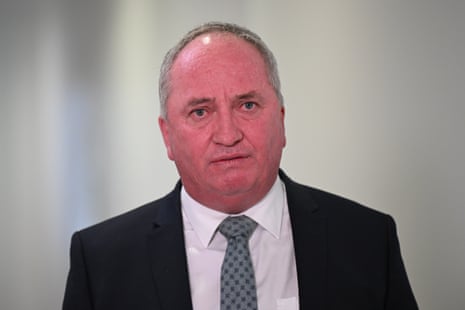
The alignment of prominent conservative figures behind hardline immigration stances suggests that the debate is far from over. Former National Party leader Barnaby Joyce expressed "100%" support for banning migration from specific conflict zones, arguing that Australia should not "re-litigate" the ideologies of people from high-risk areas. Joyce’s comments align him with One Nation leader Pauline Hanson, further pressuring the Liberal leadership to adopt a more aggressive posture to prevent a loss of voters to the far-right.

As Angus Taylor prepares to unveil the official Liberal immigration policy, the party remains at a crossroads. The challenge will be to craft a "national interest" policy that satisfies the security concerns of the conservative wing while avoiding the "prejudice" and "Trump-style" labels that have characterized the recent leaks. With the next election looming, the outcome of this policy debate will likely define the Coalition’s identity for years to come.