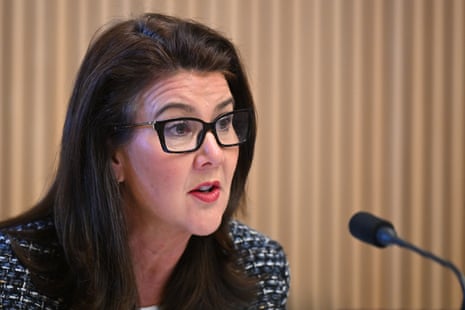
The Australian Liberal Party is confronting a historic collapse in public support as senior leadership warns of an "existential crisis" following the release of a devastating Newspoll. Liberal Senator Jane Hume, a prominent figure within the party, characterized the current political standing of the Coalition as a descent into "irrelevance" during a series of candid media appearances on Monday. This internal political turmoil coincides with the high-stakes arrival of Israeli President Isaac Herzog in Sydney, a visit that has already sparked significant diplomatic and domestic friction across the country.
The latest Newspoll figures have sent shockwaves through Canberra, revealing that the Coalition’s primary vote has cratered to just 18%. Within that figure, the Liberal Party accounts for only 15%, while the National Party holds a mere 3%. Conversely, the right-wing minor party One Nation has seen its popularity skyrocket to 27%, surpassing the combined support of the traditional conservative heavyweights. This shift suggests a massive realignment of the Australian right, threatening the long-term viability of the Liberal-National partnership.

Liberals Face ‘Existential Crisis’ Amid Polling Collapse
Senator Jane Hume did not hold back in her assessment of the party’s direction, telling reporters in the press gallery that the current trajectory would result in the total elimination of the Liberal Party from the House of Representatives. Hume’s use of the term "existential crisis" reflects a growing fear among moderates and conservatives alike that the party has lost its connection to the Australian electorate. She called for an immediate "reset," suggesting that the party’s focus on internal bickering has rendered it invisible to voters struggling with a cost-of-living crisis.
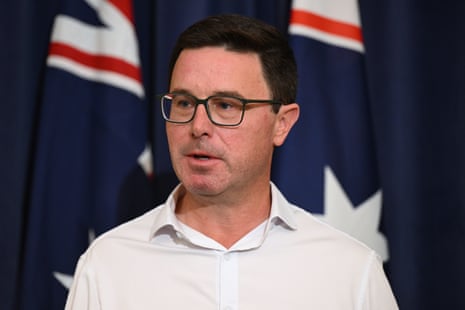
The polling disaster follows a tumultuous period for the Coalition, which only recently reunited after a 17-day split. The division was sparked by internal disagreements over leadership and policy direction, leading to a temporary divorce between the Liberals and the Nationals. While the parties are once again sitting together on the opposition benches, the scars of the separation remain visible. Prime Minister Anthony Albanese mocked the reunion on Monday, stating that National Party leader David Littleproud looked "like a hostage" during a joint press conference with Liberal leader Sussan Ley.
Internal speculation regarding a leadership spill is intensifying. While Sussan Ley has publicly maintained that her position is secure and that she does not expect a challenge, names like Angus Taylor and Andrew Hastie are frequently mentioned as potential successors. Hume noted that if the current polling numbers hold, none of the current leadership aspirants would likely retain their seats in the next federal election. The lack of a "two-party preferred" calculation in the latest Newspoll—because the Coalition’s primary vote was so low—further underscored the gravity of the situation.
Israeli President Arrives in Sydney Amid Protests and Legal Challenges
As the Liberal Party grapples with its internal future, the arrival of Israeli President Isaac Herzog in Sydney has shifted the national focus toward international relations and domestic social cohesion. Herzog touched down on Monday morning for a four-day visit intended to include meetings with survivors and families of the Bondi beach terror attack. He was received at the airport by Israel’s Ambassador to Australia, Amir Maimon, and Assistant Minister to the Prime Minister, Patrick Gorman.
The visit has polarized the Australian public and the Jewish community. The Executive Council of Australian Jewry welcomed the president, stating that his presence would "lift the spirits of a pained community" and help recalibrate bilateral relations between historic allies. However, a significant faction of the community, organized under the Jewish Council of Australia, has voiced fierce opposition. More than 600 members of the Jewish community signed a letter and took out full-page newspaper advertisements declaring that Herzog is "not welcome" in the country, citing concerns over international law and human rights.
Legal battles are also unfolding in the New South Wales court system regarding planned protest marches. Authorities are currently determining whether a massive demonstration scheduled for the Sydney Town Hall can proceed or if it violates public assembly declarations. Within the Labor government, some ministers have expressed "deep concerns" about the timing and nature of the visit, highlighting the delicate balancing act Prime Minister Albanese must perform to maintain social harmony while hosting a foreign head of state.

One Nation Surge and the Immigration Debate
The surge of One Nation to a 27% primary vote has empowered the party’s newest high-profile recruit, former Deputy Prime Minister Barnaby Joyce. Joyce, who defected to One Nation in December, has leveraged the polling data to launch a fresh offensive on the government’s immigration policies. Speaking on a prominent podcast, Joyce argued that Australians have reached a "snapping point" regarding the intake of migrants amidst a national housing shortage and healthcare strain.
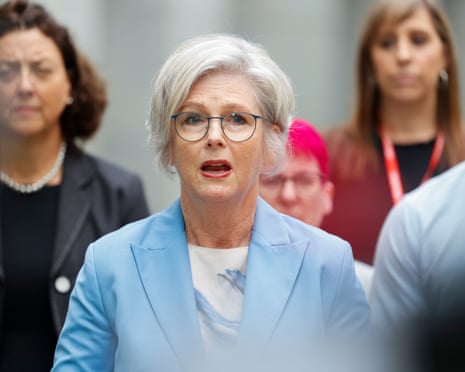
Joyce’s rhetoric has become increasingly sharp, focusing on what he calls a "contract" for those wishing to live in Australia. He suggested that migrants should be barred from social security and must remain off "the crime pages" to stay in the country. His comments, which included disparaging remarks about the origins of some migrants, have been condemned by Labor frontbencher Tanya Plibersek as "shallow and cynical." Plibersek argued that the Coalition’s current chaos is precisely what is driving voters toward the fringes of the political spectrum.
The rise of One Nation poses a dual threat to the Liberal Party. Not only is the minor party siphoning off traditional conservative voters, but it is also dictating the legislative agenda. In the House of Representatives, National MP Pat Conaghan is attempting to introduce a private member’s bill to ban the burning or desecration of the Australian flag—a policy long championed by One Nation leader Pauline Hanson. This move is seen by many analysts as a desperate attempt by the Coalition to reclaim the "culture war" narrative from the far right.
National Security Concerns and Media Accountability
The political landscape is further complicated by a rare public confrontation between the Australian Security Intelligence Organisation (ASIO) and the national broadcaster, the ABC. ASIO issued a lengthy statement expressing "serious concerns" over an episode of the investigative program Four Corners focused on the Bondi beach terror attack. The agency warned the ABC that it could take further action if the broadcast included unsubstantiated claims regarding the histories of the gunmen, Sajid and Naveed Akram.
ASIO defended its 2019 investigation into Naveed Akram, maintaining that there was no evidence at that time of an intent to commit violent acts. The intelligence agency accused the ABC of relying on an "unreliable and disgruntled source" to build a narrative of institutional failure. The ABC has stood by its reporting, asserting that the investigation provides a "detailed picture" of the events leading up to the attack. This clash highlights the ongoing tension between national security requirements and the public’s right to media transparency.
The standoff occurs as the Royal Commission on Antisemitism and Social Cohesion begins its work. ASIO noted that its ability to respond to specific media inquiries is currently constrained by ongoing court proceedings and the commission’s oversight. The outcome of this dispute is expected to have lasting implications for how Australian intelligence agencies interact with investigative journalists on matters of domestic terrorism.
Economic Rebound and Social Policy Initiatives
While the political headlines are dominated by crisis and controversy, the Australian economy showed signs of resilience on Monday. The S&P/ASX 200 was projected to open more than 1% higher, reversing some of the steep losses recorded late last week. Market strategists noted that while global volatility and fears of "liberation day" tariffs from the United States have kept investors on edge, many are using recent sell-downs as an opportunity to increase their holdings.
On the social policy front, the Labor government is highlighting the impact of its $792.9 million women’s health package. Finance Minister Katy Gallagher announced that more than 660,000 women have accessed cheaper medications for endometriosis, menopause, and contraception since their listing on the Pharmaceutical Benefits Scheme (PBS). The government claims these listings have saved Australian women more than $73 million in out-of-pocket costs over the last 12 months.
The intersection of economics and social issues was even felt in the halls of Parliament House, where a debate over the availability of contraceptives in the building’s gym bathrooms made its way into Senate estimates. Senator Jane Hume questioned why condoms were for sale in the women’s changing rooms but not the men’s. The exchange, which saw officials defending the promotion of sexual health while promising to review the disparity, provided a brief moment of levity in an otherwise grim day for the opposition.

Looking Ahead: A Testing Week for the Government and Opposition
The convergence of a polling collapse, a controversial presidential visit, and heightened national security concerns ensures that this will be one of the most challenging weeks of the current parliamentary term. For the Liberal Party, the "existential crisis" is no longer a theoretical threat but a mathematical reality that requires a fundamental shift in strategy. The party must find a way to silence internal dissent and present a unified alternative to a Labor government that, while also seeing a dip in primary support, remains far ahead of its traditional rival.
Prime Minister Albanese, meanwhile, must navigate the diplomatic fallout of President Herzog’s visit while addressing the growing popularity of One Nation’s anti-immigration platform. As Senate estimates continue to grill public servants and private members’ bills face debate in the House, the focus remains on whether the traditional pillars of Australian politics can withstand the pressure of a rapidly fracturing electorate. The coming days will likely determine if the Coalition can achieve the "reset" it so desperately needs or if it will continue its slide toward political irrelevance.