The co-founder of the activist group Palestine Action declared that a government attempt to outlaw the organization has "massively backfired," following a landmark High Court ruling that labeled the ban unlawful. Three senior British judges determined on Friday that the proscription of the group was a disproportionate measure that constituted a severe interference with the fundamental rights to free speech and peaceful protest. The ruling marks a significant legal defeat for the UK government, which had designated the group as a terrorist organization in an effort to curb its direct-action tactics against defense contractors.
Despite the court’s finding that the ban was unlawful from its inception, the proscription order remains technically in place. Lawyers representing Home Secretary Shabana Mahmood are expected to present arguments regarding why the ban should not be immediately lifted while the government prepares an appeal. This legal stalemate has left more than 2,500 supporters of the group in a state of legal uncertainty, facing potential prosecution for their affiliation with a group that the courts have now declared was banned without proper legal justification.
Huda Ammori, who co-founded Palestine Action in 2020 and spearheaded the legal challenge against the Home Office, stated that her legal team would vigorously resist any attempts to maintain the ban during the appeal process. Ammori argued that the government’s continued insistence on the ban is "ridiculous" given the court’s findings. She emphasized that thousands of individuals are currently navigating the criminal justice system for simple acts of solidarity, such as holding signs expressing support for the group or opposing the conflict in Gaza.
High Court Finds Proscription of Palestine Action Unlawful
The judicial review focused on whether the Home Secretary had exceeded her powers by using anti-terrorism legislation to target a group primarily known for civil disobedience and property damage. The three judges presiding over the case acknowledged that Palestine Action promotes its political objectives through "criminality and the encouragement of criminality." However, they concluded that such actions do not meet the legal threshold for terrorism under UK law.
The court ruled that the group’s activities, which frequently involve targeting factories owned by Israeli defense firm Elbit Systems, should be handled through standard criminal law rather than the sweeping powers of the Terrorism Act. By applying a terror label to a protest group, the judges argued, the government had undermined protected civil liberties. This distinction is critical, as it limits the state’s ability to use national security legislation to suppress domestic political dissent that does not involve violence against persons.
Legal experts suggest that the ruling could have far-reaching implications for how the UK government defines and targets extremist organizations. If the judgment stands, it would set a high bar for future proscriptions, ensuring that the "terrorist" designation is reserved for groups posing a genuine threat to life and national security, rather than those engaging in disruptive activism or property-based "direct action."
Impact of the Unlawful Ban on Supporters and the Legal System
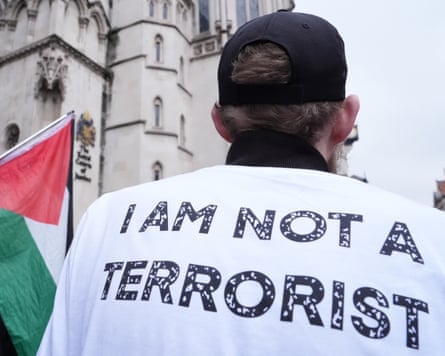
The human cost of the proscription has been substantial, with more than 500 individuals already charged under Section 13 of the Terrorism Act. This specific section of the law makes it a criminal offense to wear clothing or carry items that suggest support for a proscribed organization. Many of these cases had been put on hold pending the outcome of the High Court’s decision, creating a massive backlog in the judicial system.
Ammori highlighted the "chaos" created by the mass arrests, noting that many of those charged were simply exercising what they believed to be their right to protest. She described the wave of solidarity following the ban as "uplifting," noting that the government’s attempt to suppress the movement instead galvanized a global network of supporters. According to Ammori, the ban served as a catalyst for increased public awareness of the group’s mission to disrupt the Israeli weapons industry.
The Home Secretary, Shabana Mahmood, defended the original decision to proscribe the group, stating that the process was "rigorous and evidence-based." She noted that the ban had received endorsement from Parliament before it was implemented. The government’s intent to appeal the High Court’s ruling signals a continued commitment to treating Palestine Action’s tactics as a matter of national security rather than mere public order.
The Strategy of Direct Action and the Defense Industry
Since its founding in 2020, Palestine Action has utilized a "direct action" model, often involving the occupation of factory roofs, the smashing of windows, and the dousing of buildings in red paint to symbolize bloodshed. Their primary target has been Elbit Systems, a major Israeli defense electronics company with several sites across the United Kingdom. The group argues that these facilities produce components used in military operations in the Palestinian territories.

The government’s decision to ban the group followed years of pressure from defense industry lobbyists and diplomatic concerns. Proponents of the ban argued that the group’s activities went beyond legitimate protest, causing millions of pounds in damages and threatening the livelihoods of UK workers. However, the High Court’s ruling suggests that the economic impact of protest, however severe, does not automatically equate to terrorism.
By focusing on property damage rather than physical harm to individuals, Palestine Action carved out a niche that challenged the traditional boundaries of the law. The judges’ recognition that these acts are "criminal" but not "terrorist" highlights a growing tension between the state’s desire to protect industrial assets and the judiciary’s mandate to protect the right to political expression.
Personal Toll and the "Terrorist" Label
For Huda Ammori, the legal battle has been deeply personal. As a woman of Palestinian and Iraqi heritage, she spoke candidly about the psychological impact of being labeled a terrorist by the state. She described the experience of hearing the group she co-founded described as a terrorist organization on national news as "sickening," noting that such labels are often used as slurs against people of Middle Eastern descent.
Ammori argued that the government’s strategy was an attempt to "smear" the movement and delegitimize its focus on human rights. She stated that the label was intended to scare away potential supporters and isolate the group from the broader political discourse. Instead, she claims the move backfired by making Palestine Action a "household name" and sparking outrage among those concerned about the erosion of civil liberties in Britain.
The co-founder expressed confidence that the ban would eventually be quashed entirely. She noted that winning the case on the grounds of free speech and the right to protest was a more significant victory than winning on a technicality. Had the court ruled only on procedural errors, such as a failure to consult, the Home Secretary could have simply repeated the process to re-impose the ban. The current ruling strikes at the heart of the government’s legal justification for the proscription.
Future Legal Battles and Political Consequences
The upcoming appeal by the Home Office will be a pivotal moment for the Labour government’s approach to domestic activism. Since taking office, the current administration has faced pressure to balance its support for international law with the need to maintain domestic order and protect the UK’s strategic defense partnerships. The Palestine Action case has become a litmus test for how the government navigates these conflicting interests.
If the government loses its appeal, it may be forced to pay significant damages to those who were unlawfully detained or prosecuted under the ban. Furthermore, a final defeat would likely embolden other activist groups—such as those focused on climate change or animal rights—who use similar direct-action tactics. These groups may see the ruling as a shield against future attempts by the state to use anti-terrorism legislation to shut down their operations.
For now, the 2,500 people associated with Palestine Action remain in a legal "limbo." While the High Court has declared their group’s ban unlawful, the threat of prosecution persists until the proscription order is formally quashed. The legal community is watching closely to see if the government will seek a "stay" on the judgment, which would keep the ban in effect during a lengthy appeals process that could last months or even years.
Broader Implications for Protest Rights in the UK
The case of Palestine Action sits at the center of a broader debate regarding the "Police, Crime, Sentencing and Courts Act" and the "Public Order Act," both of which have granted UK authorities broader powers to crack down on disruptive protests. Civil liberties groups have argued that these laws, combined with the use of the Terrorism Act against activists, represent a dangerous "creep" of state power.
The High Court’s ruling provides a rare check on that power, reaffirming that the state cannot simply redefine "terrorism" to suit its political or economic needs. By ruling that the ban on Palestine Action "massively backfired," the court has sent a clear message to the Home Office: criminality is a matter for the police and the criminal courts, while the designation of "terrorism" must remain a strictly defined tool for addressing existential threats to the public.
As the legal proceedings continue, the visibility of Palestine Action remains at an all-time high. The group has indicated that it has no intention of ceasing its activities, regardless of the final legal outcome. For the UK government, the challenge remains how to handle a determined activist movement that has successfully used the judiciary to challenge the very laws intended to silence it.