Former President Barack Obama has publicly addressed a deeply controversial artificial intelligence (AI) generated video, shared by former President Donald Trump on his Truth Social platform, which depicted Obama and his wife, former First Lady Michelle Obama, as apes. Obama characterized the incident as part of a troubling decline in political discourse, underscoring a perceived loss of decency and respect in American public life amidst a contentious political climate.
The video, which quickly garnered widespread condemnation, appeared on Trump’s social media account on February 5th before being removed the following day. Its content was not merely inflammatory but also tapped into a long and painful history of racist caricatures used to dehumanize Black individuals, particularly those in positions of power. The swift removal, attributed to an error by a White House staffer, did little to quell the outrage and concern sparked by its brief circulation.
A History of Racialized Imagery and Political Provocation
The use of simian imagery to denigrate Black people has a deeply rooted and painful history in the United States, dating back to the era of slavery and continuing through Jim Crow and into modern times. This form of dehumanization served to justify oppression and deny Black individuals their full humanity and rights. For a video depicting a former Black president and first lady as apes to be shared by another former president, regardless of intent or deletion, immediately evokes this fraught history.
Donald Trump’s political career has frequently been marked by controversial statements and social media posts, often pushing the boundaries of conventional political discourse. His use of platforms like Truth Social has become a hallmark of his communication strategy, often circumventing traditional media filters and directly engaging his base with provocative content. This particular incident, however, crossed a line for many, drawing criticism from across the political spectrum.
The Video’s Content and Swift Deletion
The AI-generated video in question was a composite piece, initially focusing on false claims of election fraud related to the 2020 presidential election. It then transitioned into an animation featuring characters from Disney’s The Lion King dancing to the song "The Lion Sleeps Tonight." Disturbingly, the clip culminated with an animation explicitly depicting Barack and Michelle Obama as apes, despite the fact that apes are not characters featured in The Lion King story. This deliberate insertion of racialized imagery amplified the video’s offensive nature.
The video was posted on Truth Social on February 5th and subsequently deleted on February 6th. Following its removal, a White House official, speaking on background, stated to The Hollywood Reporter that "A White House staffer erroneously made the post. It has been taken down." This explanation, while attributing the post to an error, did not specify whether the staffer acted independently or under instruction, nor did it offer an apology for the content itself, leaving many questions unanswered regarding accountability.
Obama’s Measured Response to the Controversial Video
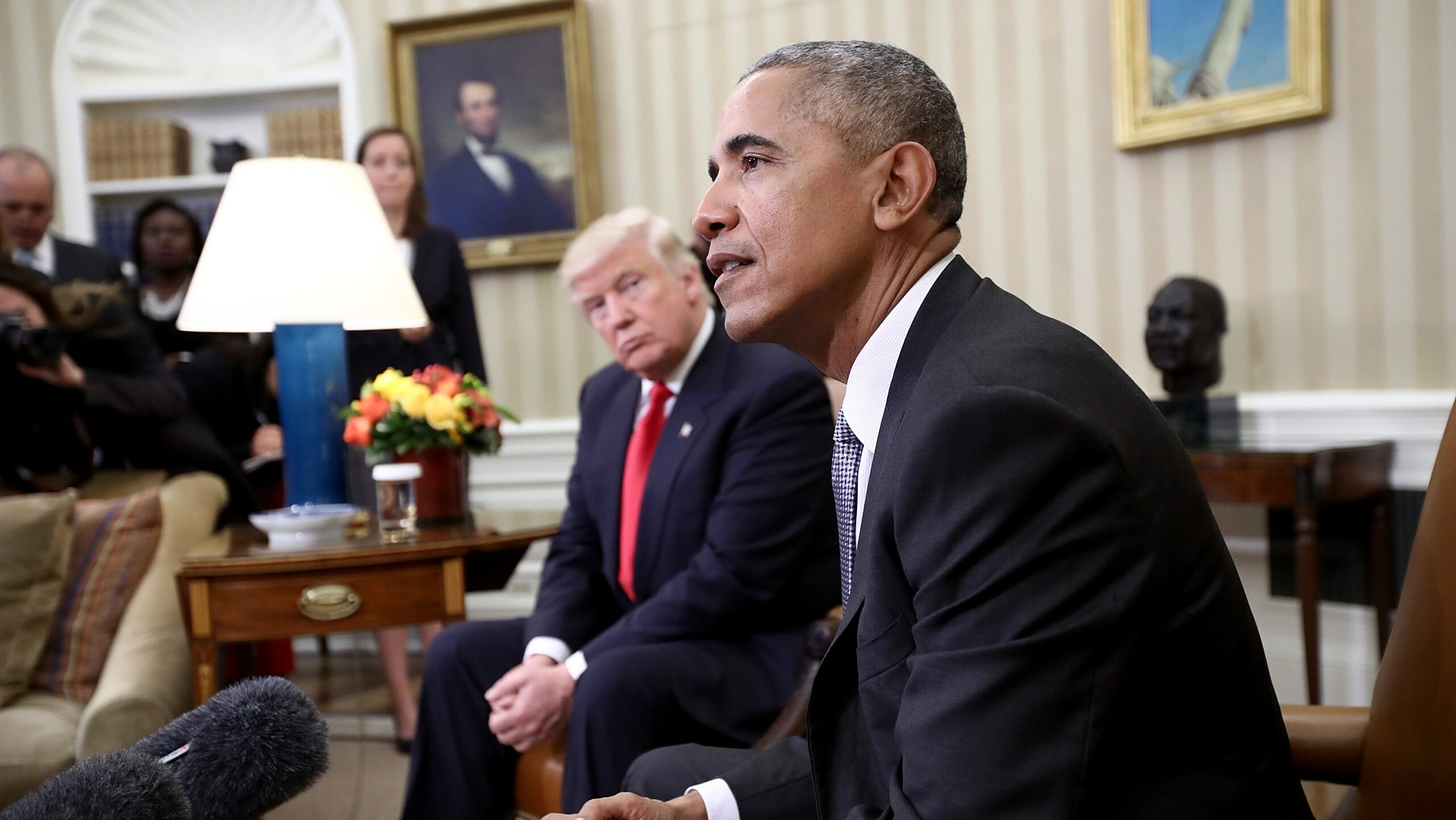
Barack Obama addressed the incident during a Saturday interview with Brian Tyler Cohen. The host prefaced his question by observing that "the discourse" surrounding the current administration had "devolved into a level of cruelty that we haven’t seen before," citing the viral video as a prime example. Obama’s response was thoughtful and critical, reflecting on the broader implications for American society and political norms.
"First of all, I think it’s important to recognize that a majority of the American people find this behavior deeply troubling," Obama began. He acknowledged the immediate impact of such content, stating, "It is true that it gets attention. It’s true that it’s a distraction." However, he quickly pivoted to an optimistic view of the American public, asserting, "But, as I’m traveling around the country, as you’re traveling around the country, you meet people, they still believe in decency, courtesy, kindness."
Analysis and Broader Implications of the Trump-Shared Video
Obama further elaborated on the current state of political communication, describing it as a "clown show that’s happening in social media and on television." His comments underscored a profound concern about the erosion of institutional respect and personal integrity in public life. He lamented the apparent loss of shame among individuals who once felt compelled to uphold a certain level of "decorum and a sense of propriety and respect for the office." This observation speaks to a broader cultural shift where extreme rhetoric and provocative imagery have become increasingly normalized.
The incident highlights several critical issues in contemporary American politics and digital culture. Firstly, it showcases the dangerous potential of AI-generated content, or deepfakes, to spread misinformation and incite hatred. While the technology itself is neutral, its application can be weaponized to create highly damaging and divisive material, challenging the ability of the public to discern truth from fabrication.
Secondly, the episode underscores the ongoing struggle with content moderation on social media platforms. Truth Social, like other platforms, faces the challenge of balancing free speech with the need to prevent the dissemination of hate speech and harmful content. The rapid posting and subsequent deletion of the video also raise questions about internal vetting processes within political campaigns and leadership offices.
Impact on Public Discourse and Political Culture
The sharing of such a video by a former president carries significant weight, impacting not only political discourse but also broader societal norms. It risks lowering the bar for acceptable behavior from public figures and can embolden others to engage in similar tactics. This contributes to a more toxic political environment, making constructive dialogue and compromise increasingly difficult.
The incident also reignited discussions about the responsibilities of political leaders to foster civility and respect. When figures of national prominence engage in or amplify content that is widely perceived as racist and dehumanizing, it sends a troubling message about the values they uphold. This can have a particularly damaging effect on younger generations, who may view such behavior as an acceptable part of political engagement.
Reactions, Consequences, and Calls for Accountability
The video sparked immediate and strong reactions from various political figures. California Governor Gavin Newsom swiftly condemned the post, labeling it "Disgusting behavior by the president." Notably, even some Republicans expressed outrage. South Carolina Republican Senator Tim Scott, who is Black, wrote online, "Praying it was fake because it’s the most racist thing I’ve seen out of this White House. The President should remove it." These bipartisan condemnations underscore the egregious nature of the content.
Beyond political figures, civil rights organizations and public commentators widely criticized the video, emphasizing its racist undertones and the historical context of such imagery. While the post was ultimately deleted, the incident provoked a serious discussion about accountability for digital content shared by high-profile individuals, especially when that content relies on deeply offensive stereotypes. The question remains as to whether a mere deletion, without a clear apology or explanation from the individual who shared it, is sufficient to address the harm caused.
The episode serves as a stark reminder of the challenges facing American democracy in an era of polarized politics, ubiquitous social media, and rapidly advancing AI technology. Former President Obama’s reflections highlight the enduring tension between the baser instincts that can be amplified online and the fundamental desire among most Americans for a political sphere characterized by decency and mutual respect. The struggle to uphold these values in the face of increasingly provocative and often dehumanizing content continues to be a defining feature of the contemporary political landscape.