The legendary Le Palace nightclub in Paris, a cornerstone of global nightlife that once served as the European equivalent to New York’s Studio 54, is slated for a massive restoration and reopening in early 2027. French producer Mickael Chétrit, who acquired the historic building last year, has launched an ambitious project to revive the venue, which once hosted a glittering array of international celebrities including Mick Jagger, Grace Jones, Andy Warhol, and Karl Lagerfeld. The announcement marks a significant turning point for the Rue du Faubourg Montmartre landmark, which has sat largely dormant or misused since its peak in the late 1970s and early 1980s.
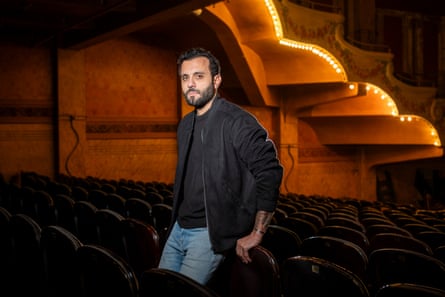
Located in the heart of the capital’s theater district, the venue is currently undergoing a comprehensive overhaul aimed at recapturing the avant-garde spirit of its heyday while meeting modern architectural and safety standards. Chétrit’s vision involves transforming the dilapidated structure into a dual-purpose space featuring a basement nightclub and a 1,400-capacity theater and concert hall. The project is being managed in coordination with French heritage officials, as several elements of the building, including its 1912 hand-painted frescoes, are legally protected historical monuments.
A Resurrection of Parisian Nightlife
The planned 2027 reopening of Le Palace is seen by cultural historians as a major effort to reclaim a lost era of Parisian social life. During its prime, the club was more than just a discotheque; it was a cultural melting pot where the rigid social hierarchies of France were momentarily dissolved. Chétrit, despite being too young to have experienced the club’s original run, noted that the legacy of the venue remains potent. He reported being inundated with requests from international artists and performers who view Le Palace as a symbolic "home" for the arts.

The restoration comes at a time when Paris is seeing a resurgence in high-end nightlife and cultural investment. However, few venues carry the weight of Le Palace. Chétrit compared the prestige of the venue to the Olympia, the legendary Paris music hall. For many veteran performers, returning to the stage at Le Palace is described as a full-circle moment, as the venue served as the launching pad for numerous careers in the late 20th century.
The Architect of the Night: Fabrice Emaer and the 1978 Revolution
To understand the significance of the reopening, one must look back to March 1, 1978, the night Le Palace first opened its doors as a nightclub. The venue was the brainchild of Fabrice Emaer, a restaurant and nightclub owner known as the "Prince of the Night." Emaer sought to create a space that rivaled the energy and exclusivity of New York’s Studio 54 but with a distinctly French flair for theatricality and intellectualism.
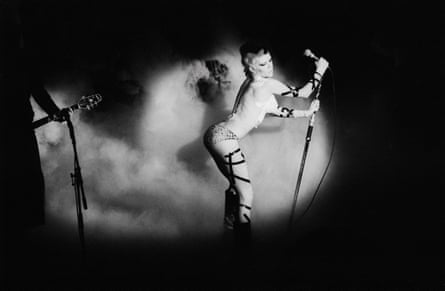
The opening night has become the stuff of legend. Grace Jones famously stunned the VIP audience with a dramatic rendition of Edith Piaf’s "La Vie en Rose," appearing on a balcony and solidifying her status as a disco icon. In the years that followed, the venue became a magnet for the global elite. Serge Gainsbourg and Prince performed on its stage; Bob Marley was a frequent guest; and the fashion world’s elite, led by Yves Saint Laurent and Kenzo Takada, used the space as an unofficial headquarters. It was a period defined by what designer Jacques Garcia calls a "crazy, without limits" atmosphere, tempered by an innate Parisian elegance.
Where Plumbers Danced with Princes: A Social Experiment
One of the most radical aspects of Le Palace under Emaer’s leadership was its "democratic" door policy. While celebrities were granted easy entry, the club was famous for rejecting wealthy "boring" patrons in favor of local workers, students, and eccentric characters who possessed a certain "look" or attitude. It was not uncommon for a Parisian plumber or firefighter to find themselves dancing alongside a member of the Rolling Stones or a European princess.

This mixing of social classes was a deliberate choice by Emaer, who wanted to break down the barriers of the traditional French establishment. This spirit of inclusivity is something Chétrit hopes to preserve in the new iteration of the venue. The goal is to avoid creating a sterile, ultra-exclusive VIP lounge and instead foster an environment that encourages the same unpredictable social chemistry that made the original Le Palace a global phenomenon.
Architectural Heritage and the Challenges of Restoration
The building at Rue du Faubourg Montmartre has a history that predates the disco era by decades. It first opened in 1912 as a cinema before being converted into a music hall in the 1920s. During the interwar period, it hosted legendary performers such as Josephine Baker, Tino Rossi, and Maurice Chevalier. The venue was even the site of a major scandal in the 1920s when an operetta featuring a scene of simulated intimacy nearly led to the building’s permanent closure by the authorities.
Because of this deep history, the current renovation is a complex undertaking. The main theater contains listed frescoes of naked dancers that must be meticulously restored by specialized craftsmen. Chétrit acknowledged that the involvement of official heritage architects increases the cost and timeline of the project, but he insisted it is the only way to respect the building’s soul. "It complicates things," Chétrit said of the regulations, "but it’s a way of respecting the architecture and the historical aspect of the place."
The Jacques Garcia Vision: Reclaiming the Myth
To lead the interior redesign, Chétrit has enlisted the renowned designer Jacques Garcia. Now 78, Garcia is a fitting choice for the project, having been a regular fixture at Le Palace during its 1970s peak. Garcia is best known for his work on luxury hotels like the Hotel Costes in Paris and the NoMad in New York, as well as his recent work on the Gainsbourg museum.
Garcia’s approach to the project is rooted in nostalgia and a desire to honor the "myth" of the venue. He has spoken publicly about the "limitless" nature of the parties he attended there and the need to bring that sense of freedom back to the space. The redesign will not be a sterile recreation of the past but a modern interpretation that utilizes the venue’s history as a foundation. This will include the use of advanced technology, such as video screens in the entrance corridor that will display archival footage and photographs of past patrons like Jerry Hall and Tina Turner, allowing new generations to understand the venue’s cultural impact.
From Ransacked Ruin to 2027 Reopening
The road to the 2027 reopening has been a long and difficult one. After Fabrice Emaer died of cancer in 1983, the club struggled to maintain its identity. Throughout the 1990s, the building fell into a state of severe disrepair. It was eventually occupied by squatters and systematically looted. Chétrit described the scene he encountered upon purchasing the building as one of total devastation. "The place was completely ransacked," he said. "There used to be magnificent chandeliers here and wall lights, but everything was stolen."
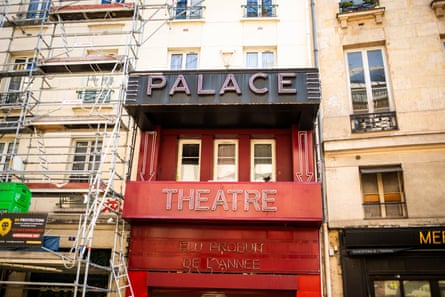
Despite several attempts to revive the space as a theater in the early 2000s, it failed to regain its former glory and closed definitively in 2023. The current renovation, which begins in earnest next month, is the most significant investment in the building in over 40 years. Scaffolding already partially obscures the famous neon sign on the facade as workers prepare to gut the interior and reinforce the structural foundations.
Economic and Cultural Impact on Paris
The revival of Le Palace is expected to have a ripple effect on the surrounding district. The theater district, while always busy, has lacked a central "anchor" venue that bridges the gap between traditional theater and modern nightlife. By offering a space that can host both high-profile concerts and late-night clubbing, Chétrit is positioning Le Palace as a versatile economic driver.
Furthermore, the project reflects a broader trend of "cultural heritage tourism" in France. By restoring a venue with such a rich history of celebrity and fashion, the developers are tapping into a global fascination with the 1970s and 80s. The reopening is timed to capitalize on this nostalgia, providing a destination for international tourists who want to experience the "myth" of Parisian nightlife.
A Legacy Restored
As the 2027 deadline approaches, the music and fashion industries are watching closely. The success of the project will depend on whether Chétrit and Garcia can strike the delicate balance between historical preservation and modern relevance. In an era of digital entertainment and highly regulated social spaces, recreating the "crazy, without limits" atmosphere of 1978 is a formidable challenge.
However, the enduring power of the Le Palace name suggests that the appetite for such a venue remains high. By focusing on the "spirit" of the original club—its inclusivity, its theatricality, and its refusal to adhere to social norms—the new management hopes to create a landmark that is as influential in the 21st century as its predecessor was in the 20th. For the city of Paris, the reopening of Le Palace is not just the return of a nightclub; it is the restoration of a piece of its cultural identity.