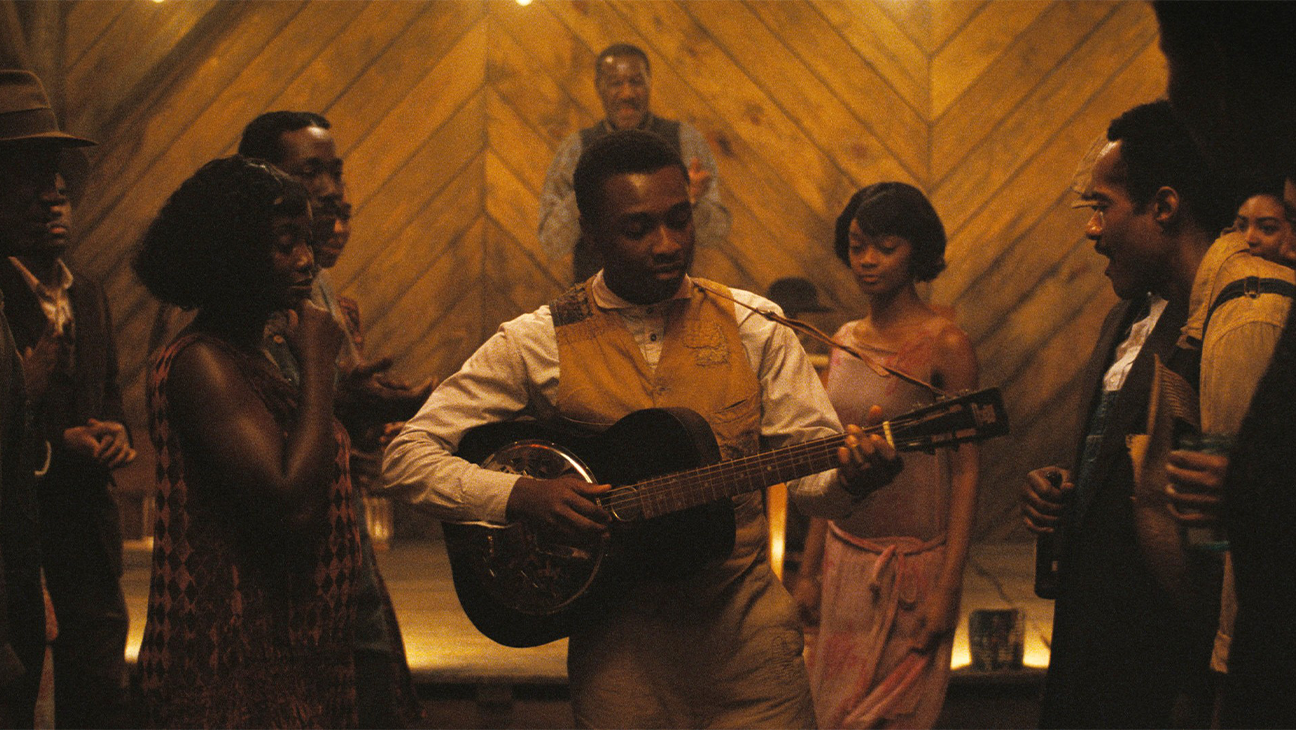
Danai Gurira, the acclaimed actor and writer, has publicly championed Ryan Coogler’s latest cinematic offering, Sinners, describing it as a profoundly impactful, genre-defying work that stands apart in contemporary filmmaking. In a deeply personal reflection, Gurira articulated how Sinners reignited her primal connection to cinema, a feeling she had experienced only once before in her life. Her powerful endorsement serves as a call to recognize the film’s unique artistry and resist conventional categorization.
A Deep-Seated Connection to Cinema
Gurira traces her profound relationship with film back to her childhood, specifically to her first theatrical experience watching Steven Spielberg’s E.T. at the tender age of five. She vividly recalls the intense emotional spectrum—love, fear, pain, and joy—she felt for the extraterrestrial character, a connection that transcended the screen and lingered long after the credits rolled. This formative encounter established a benchmark for cinematic impact, a deeply moving experience that defined her understanding of storytelling’s power.
As Gurira matured and developed her own career in the arts, she gained a nuanced appreciation for the intricate craft required to evoke such a powerful audience response. She recognized the delicate alignment necessary across various elements: compelling narrative cohesion, profound character depth and performance, daring and original direction, dynamic cinematography, and impactful sound design. Crucially, she emphasized that all these components must demonstrate respect for the audience, trusting their intellect and instincts to engage with the material.
The Unparalleled Resurgence of Wonder with ‘Sinners’
For decades, that initial, overwhelming feeling from E.T. remained singular in Gurira’s cinematic experience. That changed, she states, when she encountered Ryan Coogler’s Sinners as a forty-something actor and writer. The film replicated that rare sense of awe and wonder, transporting her back to the mindset of that five-year-old girl, completely captivated and under a story’s spell. This time, however, she also possessed the artist’s eye, allowing her to simultaneously appreciate the brilliant craftsmanship while remaining fully entranced by the film’s magic.
Gurira highlighted that Sinners impacted her through its integrated artistic elements in an unprecedented way. She described being swept into its world by the immersive sound, the feeding cinematography, the sharply drawn characters that evoked complex emotions, and a narrative that commanded rapt attention. This holistic experience, she asserted, was utterly singular, challenging her prior understanding of how a story could affect her.
Challenging Hollywood Norms and Championing Originality
Gurira’s admiration for Sinners extends beyond its artistic merit to its very existence within the current industry landscape. She underscored the courage required for Coogler to create such a film, lamenting that originality is often discouraged, let alone produced, in today’s entertainment sector. In an era frequently dominated by established franchises, sequels, and adaptations, the unapologetic and uncompromising power of Sinners’ narrative stands as a critical reminder for contemporary artists.
She characterized Sinners as an essential "permission slip," an example demonstrating that creators must advocate for their stories to be told in their own distinct ways. Gurira celebrated Sinners as a pure manifestation of Coogler’s unique vision, suggesting its creation should be studied in film schools as a model for authentic storytelling.
A Genre of Its Own: Why ‘Sinners’ Defies Categorization
A central tenet of Gurira’s "love letter" is her insistence that Sinners cannot be neatly placed into pre-existing genres. She directly challenged attempts to label it, such as "horror" or "musical," arguing that such terms fail to encompass the film’s multifaceted nature. While acknowledging that music is an intrinsic, breathing, and narrative-feeding component of the film, she firmly rejected comparisons to traditional musicals.
Instead, Gurira contends that Sinners achieves what only truly rare art can: it created its own genre. She implored audiences and critics to cease efforts to categorize it, declaring such attempts a waste of time, as the film transcends such classifications. Gurira elaborated on its unique fusion of elements: an allegory of vampires, a deep exploration of music and sound, a pervasive atmosphere of racism rather than merely a theme, and a core narrative featuring a love story and a coming-of-age journey. All these threads, she emphasized, coalesce into a piece of cinema that stands entirely on its own.
The Cultural Resonance and Public Engagement
Beyond its artistic innovation, Sinners has achieved a rare feat in the current media landscape: it sparked genuine conversation, original thought, passionate arguments, and profound self-investigation. In an era where audiences often claim to have "seen it all," the film fostered reflection and a renewed belief in the possibilities of defying norms and embracing authentic expression. Gurira suggested that Sinners brought a vital energy back to culture, stripping away jadedness and replenishing a collective spirit that many did not even realize had been lost.
Gurira’s personal engagement with Sinners mirrored this broader impact. She felt compelled to watch the film multiple times, believing its depth required more than a single viewing to fully absorb. She recounted attending a packed IMAX screening on a Monday afternoon at 4 p.m.—a slot typically reserved for blockbusters like Mission: Impossible. The fact that a film about Black twin brothers in the Deep South of the 1930s could displace a major action franchise in an IMAX theater, drawing a full house, served as a powerful testament to its unexpected reach and resonance. Gurira noted the biblical term "Selah," prompting reflection on this significant cultural shift.
During her repeat viewing, Gurira described feeling even more consumed by the experience, particularly during an iconic juke joint scene, where she felt enveloped by the imagery of "rivers of fire." Following the film, the audience remained glued to their seats, applauding collectively, unable to immediately break free from the shared emotional experience of a great story they wished they could instantly relive for the first time. Outside the theater, she encountered a young man named Robert, who was on his sixth viewing, equally inspired and aflame with a childlike joy. This shared sense of being "in a moment" — where a movie changes you and never lets you go — underscored the film’s profound impact on its audience.
Ryan Coogler’s Unprecedented Vision and Legacy
Gurira’s admiration for Coogler is long-standing and deeply personal. She recalled telling him she was proud of him even before they knew each other well. Having since collaborated on two films and navigated "unspeakable tragedy" together, her pride has only deepened. She views Coogler as a singular force in cinema, capable of breaking new ground with both artistic integrity and mainstream appeal.
In what she described as her "more hyperbolic moments," Gurira compared Coogler to the Martin Luther King Jr. of film. This comparison highlights her belief that he has pioneered a new domain, successfully mainstreaming the unapologetic, authentic, epic, and global Black experience. Coogler’s work, she argued, has made millions feel seen and heard, all while excelling within the traditional Hollywood system from which Black creators have historically been excluded. Gurira further praised his character, describing him as having the gentlest, kindest, and most fair-minded spirit, all achieved before the age of forty.
Gurira anticipates that Coogler’s legacy will be unprecedented, inspiring future generations of artists to embrace their power and tell their stories without apology, thereby enriching the global cultural landscape. Above all, she emphasized that Coogler has delivered one of the most singular pieces of cinema seen to date, reminding audiences and creators alike of the medium’s profound capabilities. He created something from nothing, a work that resists easy classification.
The Enduring Power of Cinema
In summation, Gurira affirmed that Sinners is not merely genre-defying; it is humanity-affirming and culture-enriching. It serves as a powerful reminder of collective power, shared stories, and ongoing struggles. Ultimately, the film achieved what only truly great cinema can do, a solace Gurira admitted she never realized she so desperately needed in challenging times: it made her feel like a five-year-old again. Watching Sinners, she experienced something magical, new, and full of wonder, rekindling her childhood belief that anything is possible.
Danai Gurira is an award-winning actor, writer, and Tony-nominated playwright, known for her roles in Marvel’s Black Panther franchise and The Walking Dead. She is slated to appear in Michael B. Jordan’s The Thomas Crown Affair and alongside Denzel Washington in Here Comes the Flood.