Paramount Global has emerged victorious in the intense bidding war for Warner Bros., setting the stage for a monumental merger that promises to reshape the Hollywood landscape, but the deal faces immediate and formidable regulatory hurdles, with state attorneys general, led by California’s top prosecutor, gearing up for a protracted legal battle. The unexpected withdrawal of Netflix CEO Ted Sarandos from the competition left Paramount as the frontrunner, culminating in a bet-the-company decision that now hinges on the strategic maneuvering of Paramount’s chief deal architect, Makan Delrahim, against a coalition of state regulators determined to scrutinize every aspect of the proposed acquisition.
The dramatic turn of events unfolded rapidly, with Sarandos’s high-profile visit to Washington, D.C., sparking speculation about Netflix’s commitment to acquiring Warner Bros. Days earlier, Paramount had elevated its offer, surpassing Netflix and positioning itself to secure the coveted studio. Sarandos, reportedly weighing a counter-bid that would have profoundly impacted Netflix’s future, ultimately opted out just hours after his White House meetings, effectively ceding the prize to Paramount. This swift conclusion to the bidding war marked a significant pivot, shifting the focus from corporate competition to the intricate dance of regulatory approval.
The Looming Regulatory Gauntlet for the Warner Bros. Deal
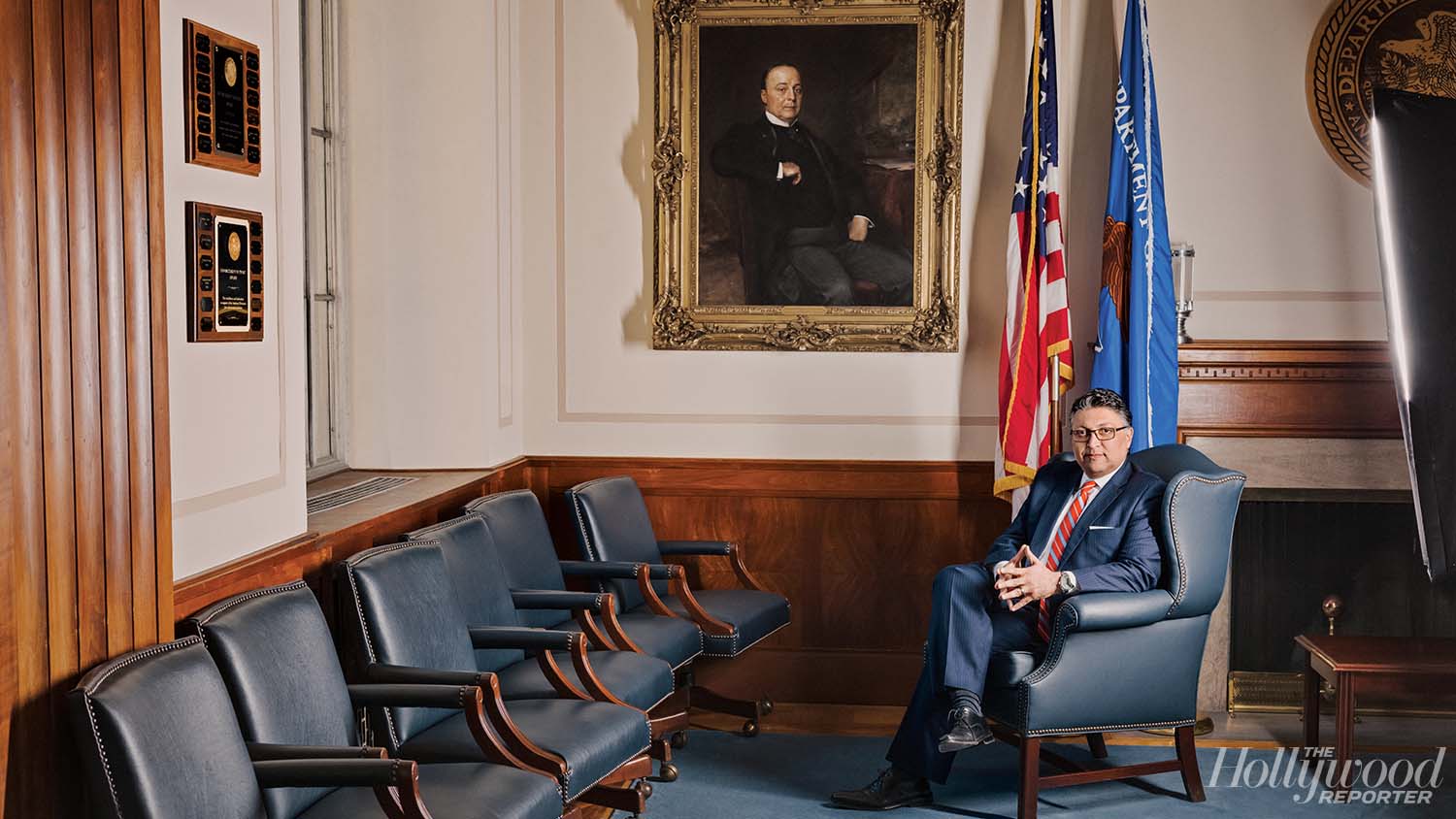
With the bidding concluded, all attention has turned to the formidable task of navigating the regulatory landscape. Makan Delrahim, a seasoned legal strategist with deep expertise in D.C. dealmaking and the principal architect of Paramount’s merger blueprint, now leads the charge for the acquiring company. His counterpart in this impending clash is California Attorney General Rob Bonta, who is expected to spearhead a multi-state effort to challenge and potentially block the transaction. This confrontation is anticipated to culminate in a high-stakes court battle, the outcome of which will cast a long shadow over the future of the entertainment industry.
Amidst whispers that federal regulators might favor Paramount, California’s Attorney General Bonta wasted no time in asserting his office’s intent. On Thursday, he unequivocally stated, "Paramount/Warner Bros. is not a done deal." Bonta emphasized that these "two Hollywood titans" have not yet cleared regulatory scrutiny, confirming an active investigation by the California Department of Justice. He pledged a "vigorous" review, signaling an aggressive stance against the proposed consolidation.
Bonta has reportedly engaged in discussions with other state attorneys general, mobilizing a potential coalition to oppose the merger. However, they face a considerable disadvantage in terms of timing. Paramount strategically filed for deal approval last year and has already submitted the comprehensive information required by the Justice Department, an unusually rapid maneuver. Typically, satisfying these regulatory demands can take over a year, but Paramount compressed this process into a few months, effectively accelerating the timeline. This strategic move has created a race against the clock for opponents, as Paramount aims to finalize the deal as soon as it secures approval from foreign regulators.
The Urgency of Pre-Merger Intervention
The timing of a legal challenge is critical. While a lawsuit could technically be filed even after the merger is consummated, the legal terrain changes significantly at that point. Post-merger, Paramount would have already commenced integrating Warner Bros. into its expansive operations. Historically, courts have demonstrated a greater willingness to halt a deal before its completion rather than to unwind a merger that has already taken effect. This precedent underscores the urgency for California and its allies to act swiftly.
The prevailing sentiment is that time heavily favors Paramount. To counter this advantage, California could seek a temporary court order, effectively blocking Paramount from closing the deal while investigations continue. Insiders familiar with the situation indicate that all options remain on the table, from the specific legal arguments deployed to the nature of the relief sought. "It’s all well and good they got past the federal government, but they haven’t gotten past California," remarked a state government insider, emphasizing, "They can’t short circuit our investigation or concerns here."
Antitrust Concerns and the Threat to Competition
Beyond the temporal pressures, state attorneys general, particularly Bonta, appear confident in their ability to construct a compelling legal narrative asserting that the merger violates established antitrust laws. While a Sherman Act claim, typically used to block deals that entrench an existing monopoly, might be difficult to prove, the argument that the merger contravenes the Clayton Act, which targets deals that create monopolies or substantially lessen competition, is perceived as robust, if not stronger in specific areas.
The core of their argument revolves around a tangible reduction in market competition. The acquisition would shrink the landscape of major Hollywood studios from five to four, a significant concentration of power. Furthermore, the merger would unite two major newsrooms, raising concerns about media diversity and control over information dissemination. Unlike a potential Netflix acquisition, which presented fewer horizontal competitive overlaps, the Paramount-Warner Bros. deal involves two entities that directly compete across various segments, including cable television, news programming, and sports broadcasting. These direct competitive overlaps are central to the antitrust challenge.
Monopsony Fears: Impact on Hollywood Talent
An often-underestimated dimension of the antitrust challenge revolves around the potential for a monopsony – a market condition where a single buyer wields significant power over sellers, enabling them to purchase labor and goods at prices below market value. This concern has been a growing alarm bell among Hollywood talent for years. Writers, actors, and other creatives have voiced fears that increasing media consolidation severely limits their options and negotiating leverage.
Leonard Dick, a veteran writer for acclaimed shows like Lost and House, articulated these concerns in a 2023 submission to the Federal Trade Commission. He explained, "Media consolidation has made it exponentially more difficult to sell a television or movie project. If I am partnered with say, 20th Television (owned by Disney) and the Disney-owned streamer/networks don’t want to order it, chances are slim to none another network/streamer will buy it because they want to own their own shows." Similarly, Dan Gregor, a writer for How I Met Your Mother, lamented to the FTC that he now possesses "zero leverage to negotiate."
The public face of this concern was amplified by actor Mark Ruffalo, who, in a recent post on X, urged state attorneys general to engage directly with talent regarding how the deal could "kill competition in the industry and drive down wages." He actively encouraged public input on the merger, directing followers to a website dedicated to blocking the acquisition. A person familiar with Bonta’s thinking confirmed that the deal’s impact on labor is a "significant concern," indicating that the California Attorney General’s office is scrutinizing the merger "from all sides, including horizontal consolidation and certainly any vertical impacts."
The Future of Theatrical Releases and Content Diversity
The implications for theatrical releases also factor into the regulatory assessment. The acquisition of 20th Century Fox by Disney serves as a cautionary tale. Following that merger, Fox’s film output plummeted from 14 movies annually in 2017 and 2018 to a mere combined total of 19 films projected for 2023 through 2025. Paramount CEO David Ellison has publicly committed to releasing at least 30 movies per year post-merger. While this pledge might be attainable in the short term, industry analysts question the long-term sustainability and economic viability of such a commitment given the historical trends in consolidated studios.
The legal venue for any challenge to the Warner Bros. deal also presents strategic considerations. The Central District of California, where a lawsuit would likely be filed, hosts a mix of judges, though perhaps not as ideologically conservative as other districts, such as the Northern District of Texas. While overt political considerations theoretically take a backseat in antitrust cases, they are rarely entirely absent. In what might otherwise be a closely contested legal argument, the composition of the court could become a decisive factor.
Rebecca Allen, an antitrust professor at Vanderbilt Law School, underscored the unique nature of this consolidation. "A five-to-four merger in the cardboard market would be viewed differently than in this context with these companies that will have control over most major news outlets," she observed. J. Christopher Hamilton, a professor at Syracuse University and former business executive and lawyer for companies including Paramount Global, Disney, and Warner Bros. Discovery, further highlighted the "sheer scope of narrative control" that the merger would entail. He pointed out the combined entity would control "HBO Max, Paramount Plus, Turner Classic Movies, and a vast universe of cable networks that shape how tens of millions of Americans consume not just news, but culture, history, and storytelling itself." Hamilton concluded that such consolidation, by controlling both news and entertainment pipelines "under the same ideological constraints," gives power not just over what people are told, but "what they imagine, what they aspire to, and what they believe is normal."
Broader Challenges and International Perspectives
Beyond government scrutiny, consumers themselves have signaled their intent to challenge the Warner Bros. deal. Earlier this month, a group of consumers filed a lawsuit seeking to block Netflix’s bid for Warner Bros., and they are expected to mount a similar challenge against Paramount. While consumer groups typically lack the extensive resources of federal or state governments and are often perceived as facing an uphill battle, there have been instances of success. A notable case in 2021 saw a federal appeals court uphold a decision requiring a company in the door manufacturing industry to divest assets following a consumer-initiated challenge.
Internationally, European regulators are not anticipated to mount an aggressive challenge to the merger. Historically, their primary focus in such large media acquisitions has centered on local market fixes, often requiring companies to divest specific cable or TV assets in territories where competition is limited. For example, the European Commission approved Disney’s 2019 acquisition of 21st Century Fox after Disney agreed to sell off several European factual TV channels that overlapped with Fox’s National Geographic channels. More recently, Amazon’s 2022 purchase of MGM was greenlit without any conditions, suggesting a potential precedent where broader concerns about streaming consolidation or theatrical releases were less of a factor.
The Path Ahead: Debt, Synergies, and Concessions
Irrespective of the legal and regulatory outcomes, David Ellison and Paramount face the formidable practical realities of managing the substantial debt burden associated with such a massive acquisition, estimated to be nearly $100 billion. Ellison has projected $6 billion in cost savings through synergies, though some analysts, including Sarandos during the bidding process, suggested that figure could balloon to multiple times that amount. The successful integration and financial rationalization of Warner Bros. into Paramount’s existing operations will be a monumental undertaking.
For Makan Delrahim, the strategy may not solely revolve around securing outright approval, but rather determining what concessions Paramount might need to make. Historically, competition enforcers, particularly under the Trump administration, have shown a willingness to accept settlements to mitigate merger concerns. If the Justice Department does pursue a lawsuit, it could open an avenue for regulators to influence the combined entity’s future operations, potentially even impacting the "ideology of the content the company creates," as suggested by some observers. The high stakes of this Warner Bros. deal promise a prolonged and complex saga that will undoubtedly leave an indelible mark on Hollywood and the global media landscape.