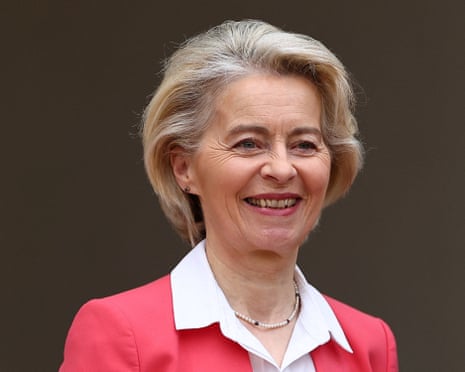
European Commission President Ursula von der Leyen issued a forceful call for economic reform on Wednesday, warning that the European Union’s potential as a "global giant" is being stifled by a persistent "handbrake" of internal regulatory fragmentation. Speaking before a session of the European Parliament in Strasbourg, von der Leyen signaled the start of a high-stakes 48-hour diplomatic push intended to overhaul the bloc’s internal market and bolster its standing against competing economies like the United States and China. The president’s remarks set the stage for a series of intensive summits in Antwerp and Brussels, where heads of state are expected to grapple with the tension between national sovereignty and the need for a unified economic front.
The core of von der Leyen’s argument centers on the premise that the EU, while possessing the world’s second-largest economy, is currently operating under a system she described as "fragmentation on steroids." This internal division, characterized by 27 different legal regimes and conflicting bureaucratic requirements, has prevented European companies from scaling effectively across borders. To maintain its relevance on the world stage, the Commission president insisted the EU must tear down barriers that prevent it becoming a global giant, linking economic competitiveness directly to the survival of European democracy and security.
The Legislative Push for an Integrated Single Market
A centerpiece of the Commission’s new strategy is the "EU Inc." proposal, a legislative framework designed to simplify the process of corporate expansion within the bloc. Under this regime, entrepreneurs and corporations would be able to register a company in any member state within 48 hours through a fully online interface. The initiative aims to eliminate the weeks of paperwork and the necessity of physical presence that currently define cross-border business setups in many European jurisdictions.
"This is the speed we need, and this is Europe made easy," von der Leyen told the parliament, emphasizing that the proposal is not merely about convenience but about survival in a digital-first global economy. The Commission has set an ambitious timeline for the project, seeking a formal agreement from member states by March 2026, with full implementation targeted for the end of the following year. Proponents argue that "EU Inc." would provide the necessary infrastructure for startups to compete with American tech firms, which benefit from a massive, unified domestic market that Europe has yet to fully replicate.
However, the path to implementation remains fraught with political obstacles. The proposal requires the harmonization of various tax and labor reporting standards, areas where member states have historically been protective of their individual authority. The Commission’s push for a "single-minded focus on the single market" suggests a shift toward more centralized economic oversight, a move that is already meeting resistance from several national capitals.
Why the EU Must Tear Down Barriers to Become a Global Giant
The urgency of von der Leyen’s message reflects a growing anxiety within Brussels regarding Europe’s lagging productivity growth. For over a decade, the gap between the GDP of the United States and the European Union has widened, driven largely by the U.S.’s ability to mobilize capital and innovation more rapidly. Analysts point to the EU’s fragmented capital markets as a primary culprit, noting that European savings are often invested in U.S. markets rather than being deployed to fund domestic innovation.
By advocating that the EU must tear down barriers that prevent it becoming a global giant, von der Leyen is addressing the systemic "handbrake" that keeps European capital locked within national silos. The fragmentation of the single market affects sectors ranging from telecommunications and energy to defense and finance. In the telecommunications sector, for instance, Europe has dozens of major operators across the continent, whereas the U.S. and China are dominated by a handful of massive players that can afford the immense research and development costs required for 6G and next-generation infrastructure.
The Commission president’s warnings also carried a geopolitical weight. She argued that competitiveness is the "foundation of our security," suggesting that without a robust and unified economy, the EU will lack the resources to defend its interests in an increasingly volatile world. This economic-security nexus has become a recurring theme in Brussels as the bloc faces pressure to increase defense spending while simultaneously managing a transition to a green economy.
Political Friction and the Anti-Bureaucracy Coalition
Despite the Commission’s clear vision, the debate over how to achieve these goals has exposed deep rifts among Europe’s most influential leaders. A formidable "anti-bureaucracy" coalition has begun to take shape, led by German Chancellor Friedrich Merz and Italian Prime Minister Giorgia Meloni. While both leaders agree that the EU needs to become more competitive, their focus is less on creating new "EU-wide" regimes and more on slashing existing regulations that they believe hamper national industries.
Merz, representing the EU’s largest economy, has been vocal about the "regulatory overkill" emanating from Brussels, particularly regarding environmental and social reporting requirements. His stance reflects the concerns of the German "Mittelstand"—the small and medium-sized enterprises that form the backbone of the German economy—who feel overwhelmed by the sheer volume of directives. Similarly, Meloni has advocated for a "pragmatic" approach that prioritizes national industrial strengths over what she views as overly ambitious federalist projects.
French President Emmanuel Macron has added a third dimension to the debate, frequently calling for "strategic autonomy" and massive joint investment. While Macron supports the idea that the EU must tear down barriers that prevent it becoming a global giant, his solution often involves the creation of common European debt or large-scale industrial subsidies, ideas that remain unpopular in "frugal" northern capitals. These competing visions will be put to the test during the informal summit in Antwerp, where leaders will meet with industry representatives to discuss the practicalities of reform.
The Broader Context: Security, Defense, and Ukraine
The discussions on economic reform are taking place against the backdrop of heightened security concerns across the continent. Parallel to the economic summits, EU defense ministers are meeting in Brussels to coordinate support for Ukraine and discuss the expansion of Europe’s own military industrial base. The link between the two meetings is clear: a fragmented economy cannot sustain a world-class defense industry.
The current European defense market is a patchwork of national champions, often producing different and incompatible equipment. This lack of standardization increases costs and slows down procurement, a critical flaw as the war in Ukraine enters a new and more demanding phase. Von der Leyen’s push for the EU to tear down barriers that prevent it becoming a global giant extends to this sector, where she has previously called for a "European Defense Union" to streamline production and investment.
Tomorrow’s scheduled NATO meeting in Brussels will further underscore the pressure on European nations to take more responsibility for their own security. For many in the Commission, the only way to fund the necessary upgrades to Europe’s military posture without gutting social programs is to unlock the growth potential inherent in a truly integrated single market.
Impact on Industry and the Public
For the average European citizen and small business owner, the outcome of these discussions could dictate the economic landscape for the next decade. If the "EU Inc." proposal succeeds, it could lower the entry barrier for thousands of entrepreneurs, fostering a new wave of cross-border competition that could drive down prices and increase service quality. For workers, a more integrated market could mean greater mobility and a more resilient job market in the face of global shocks.
Industry groups, however, remain cautious. While they welcome the rhetoric of tearing down barriers, they fear that new "EU-level" regulations could simply add another layer of complexity rather than replacing existing national ones. The Antwerp event will serve as a critical listening session for leaders to hear from the chemical, automotive, and tech sectors about the specific "handbrakes" they face, from high energy costs to the lack of skilled labor.
As the 48-hour marathon of discussions continues, the focus will remain on whether the 27 member states can move beyond national interests to embrace a collective economic identity. The stakes are high; as von der Leyen noted, the strength of Europe’s democracy is inextricably linked to its ability to provide prosperity for its citizens.
The push to ensure the EU must tear down barriers that prevent it becoming a global giant is no longer just a technocratic goal for the bureaucrats in Brussels. It has become a central pillar of the bloc’s strategy to survive and thrive in an era of great-power competition. Whether the "EU Inc." regime and the broader push for single-market deepening can overcome the political friction in Berlin, Rome, and Paris will be the defining story of the 2026 European economic agenda.