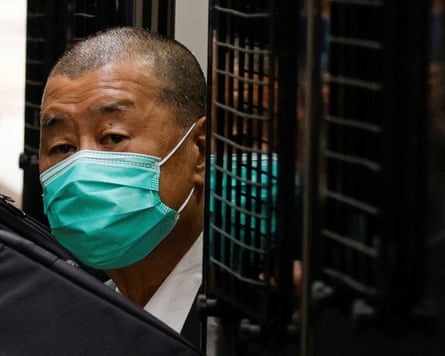
A Hong Kong court on Tuesday found the 68-year-old father of a prominent pro-democracy activist guilty of violating the city’s domestic national security law, marking a significant escalation in the government’s efforts to pressure dissidents living abroad by targeting their family members. Kwok Yin-sang was convicted of attempting to "deal with" financial assets belonging to an "absconder," making him the first individual to be successfully prosecuted under specific financial provisions of the Safeguarding National Security Ordinance, also known as Article 23.
The verdict, delivered by Acting Principal Magistrate Cheng Lim-chi, centers on Kwok’s attempt to terminate an insurance policy and withdraw funds intended for his daughter, Anna Kwok, who currently serves as the executive director of the Washington-based Hong Kong Democracy Council (HKDC). The elder Kwok now faces a maximum penalty of seven years in prison, with sentencing expected to be finalized within the coming weeks.
This conviction highlights the expanding reach of Hong Kong’s security apparatus, which has increasingly adopted tactics long used by mainland Chinese authorities to silence critics through the intimidation of their relatives. Legal experts and human rights organizations have condemned the ruling as a "vindictive" use of the law that effectively criminalizes familial support and basic financial management.
The First Conviction Under Article 23 Asset Clauses
The prosecution of Kwok Yin-sang is the first of its kind under the Article 23 legislation, which was fast-tracked through Hong Kong’s legislature in March 2024. While the city has been governed by a Beijing-imposed National Security Law (NSL) since 2020, Article 23 was designed to "plug loopholes" in the existing legal framework, introducing harsher penalties and broader definitions for crimes such as treason, insurrection, and foreign interference.
Under the new law, the Secretary for Security has the power to designate individuals who have fled the city as "absconders." Once an individual is designated, it becomes a criminal offense for anyone in Hong Kong to provide them with funds, handle their financial assets, or engage in joint ventures with them. The law is intended to financially isolate activists who continue their advocacy from overseas.
In the case of Kwok Yin-sang, the court heard that he attempted to withdraw a total of 88,609 Hong Kong dollars (approximately $11,350) from an education savings insurance policy. Kwok had reportedly started the policy for his daughter when she was only two years old. During the trial, the prosecution argued that because Anna Kwok had been declared a fugitive with a bounty on her head, any attempt by her father to manage or reclaim the funds associated with her name constituted a direct violation of the security statutes.
The Case Against Kwok Yin-sang and the Defense’s Argument
During the proceedings, the court focused on a police caution given to Kwok Yin-sang at the time of his arrest. According to the prosecution, the elder Kwok told officers, "I know my daughter is wanted by the security bureau. I was the one paying for her insurance policy. Since she’s no longer in Hong Kong, I just cut it."

The defense, led by lawyer Steven Kwan, argued that the prosecution was an overreach that targeted an individual based solely on his family ties rather than any intent to subvert the state. Kwan contended that sections 89 and 90 of the Article 23 law should not be applied to a father simply managing a long-standing insurance policy he had funded for his child decades prior. The defense emphasized that the money was essentially Kwok’s own investment for his daughter’s future and that his actions were those of a parent closing out a dormant account rather than an operative funding "anti-China" activities.
However, Magistrate Cheng Lim-chi rejected these arguments, ruling that the law is clear regarding the prohibition of handling any economic resources belonging to a designated absconder. The magistrate noted that once Anna Kwok was classified as a fugitive, her father lost the legal right to touch any policy listed in her name, regardless of who originally paid the premiums.
Anna Kwok and the Pursuit of Overseas Dissidents
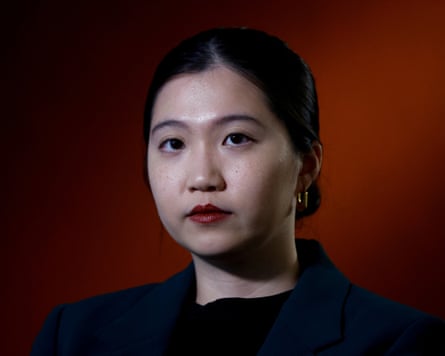
Anna Kwok is one of the most recognizable faces of the Hong Kong diaspora’s political movement. As the leader of the HKDC, she has frequently met with U.S. lawmakers and international human rights officials to advocate for sanctions against Hong Kong and Chinese officials. Her work has made her a primary target for the Hong Kong National Security Police, who issued an arrest warrant for her in July 2023.
Kwok is among a group of 34 overseas activists for whom the Hong Kong government has offered bounties of 1 million Hong Kong dollars ($128,000) each. She is accused of "colluding with foreign forces" and "inciting secession," charges that carry potential life sentences under the 2020 National Security Law.
Responding to her father’s conviction, Anna Kwok characterized the legal action as a psychological tactic intended to isolate her from her community and family. In a statement, she said the authorities were attempting to "weaponize human emotions" against her. "The Hong Kong government’s retaliation does not and will not discourage me from my ongoing advocacy and activism," she added. She noted that the targeting of her father was a deliberate attempt to "drive distance" between her and other Hong Kongers by demonstrating the high cost of association.
A Shift Toward Mainland-Style Legal Tactics
The conviction of Kwok Yin-sang reflects a broader shift in Hong Kong’s judicial landscape. For decades, the city operated under a "One Country, Two Systems" framework that guaranteed an independent judiciary and protections for civil liberties not found in mainland China. However, since the 2019 pro-democracy protests and the subsequent implementation of the NSL, the city’s legal system has increasingly mirrored the mainland’s approach to "national security."
Human rights groups have long documented the use of "guilt by association" in mainland China, where the families of human rights lawyers, journalists, and activists are often harassed, barred from travel, or imprisoned to force the cooperation or silence of the primary target. The arrest and conviction of Kwok Yin-sang, along with the arrest of Anna Kwok’s brother—who remains on bail—suggests that this practice is now a formalized component of Hong Kong’s security strategy.
Elaine Pearson, the Asia director for Human Rights Watch, described the conviction as "cruel and vindictive." She stated that the case demonstrates "just how far Hong Kong authorities are willing to go to silence peaceful activism abroad." The international community has expressed similar concerns, noting that the prosecution of family members for administrative financial tasks sets a dangerous precedent for the thousands of Hong Kongers now living in exile.
Broader Implications for Hong Kong’s Legal Autonomy
The verdict against Kwok Yin-sang comes amid a flurry of high-profile national security cases that have reshaped the city. Just days prior to this conviction, Jimmy Lai, the 78-year-old founder of the now-defunct Apple Daily newspaper and a vocal critic of the Chinese Communist Party, was sentenced to 20 years in prison for security offenses. The severity of Lai’s sentence, which outstripped many sentences given to famous dissidents in mainland China, signaled the government’s refusal to show leniency to those it deems "anti-China elements."
The implementation of Article 23 in 2024 was the fulfillment of a constitutional requirement under the Basic Law, Hong Kong’s mini-constitution. An earlier attempt to pass the law in 2003 was abandoned after half a million people took to the streets in protest. The 2024 version was passed by a legislature cleared of all opposition voices, following electoral "reforms" that ensured only "patriots" could hold office.
Authorities maintain that the law is necessary to ensure stability and prevent a recurrence of the 2019 unrest, which they describe as a "color revolution" backed by foreign intelligence agencies. However, the conviction of an elderly father over an insurance policy suggests that the definition of "national security" has expanded to include nearly any form of interaction with individuals the government dislikes.
International Condemnation and the Future of Activism
The conviction is expected to draw further scrutiny from Western governments, particularly the United States and the United Kingdom. The U.S. State Department has previously condemned the bounties placed on activists like Anna Kwok, calling them an example of "transnational repression." The targeting of a U.S.-based activist’s father is likely to lead to renewed calls for additional sanctions against Hong Kong judicial and security officials.
For the Hong Kong diaspora, the ruling serves as a stark warning. Many activists abroad have already severed ties with their families in Hong Kong to protect them from police harassment. The conviction of Kwok Yin-sang proves that even non-political, historical financial ties can be used as the basis for criminal charges.
As the court prepares to announce Kwok’s sentence, the case stands as a definitive marker of the new era in Hong Kong. The transition from a global financial hub with a robust rule of law to a city where family insurance policies are treated as threats to national security reflects a profound transformation of the social and legal fabric. The outcome of this case will likely influence how other "absconders" and their families navigate the increasingly perilous intersection of personal life and political dissent.