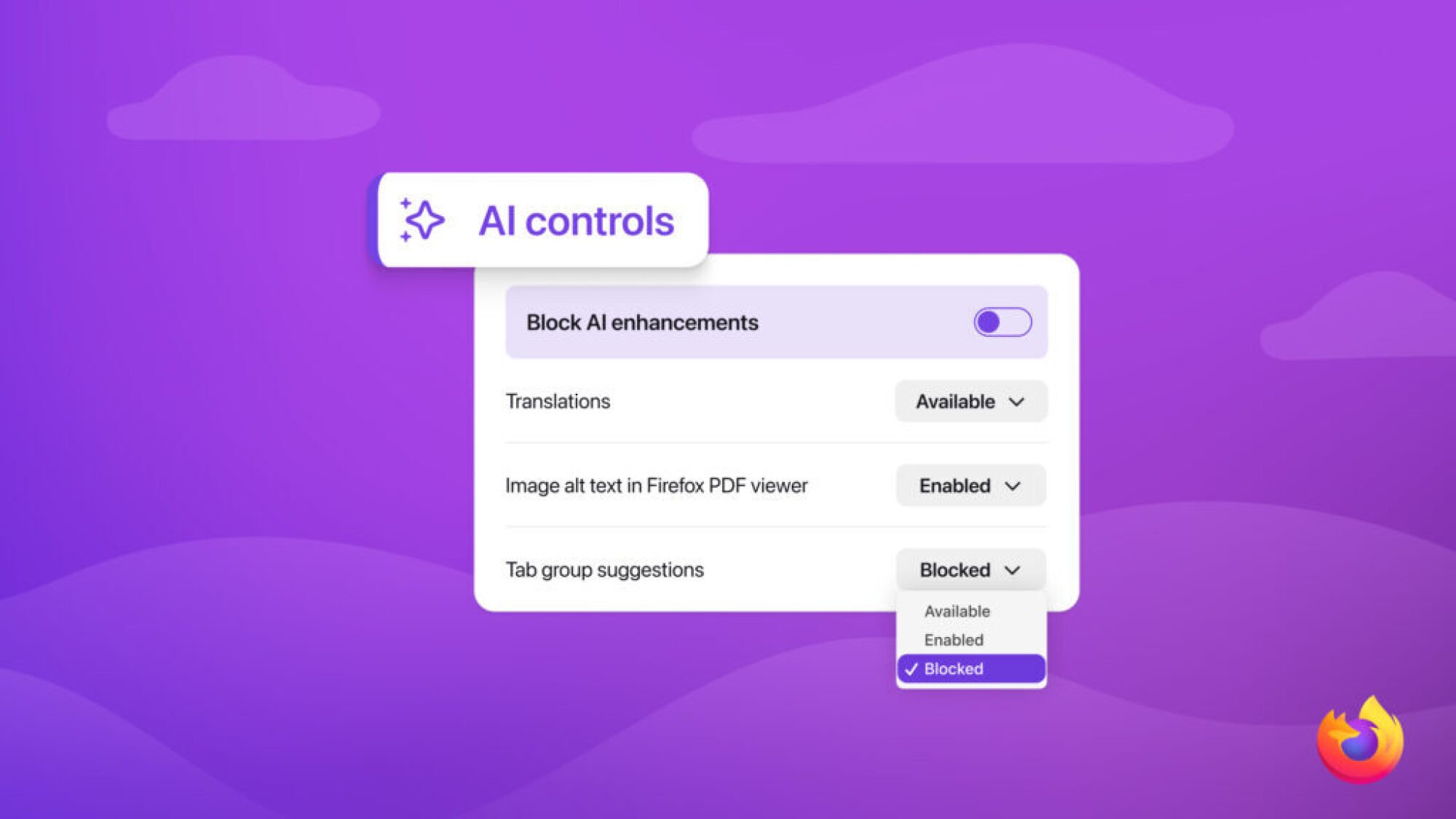
Mozilla has officially released Firefox 148, introducing a comprehensive "AI killswitch" that allows users to disable all artificial intelligence integrations with a single toggle. The update marks a significant shift in the browser landscape, offering a direct response to growing consumer "AI fatigue" and privacy concerns regarding the rapid implementation of generative tools in everyday software. By navigating to the new "AI Controls" section within the browser settings, users can now select "Block AI Enhancements" to remove features such as the ChatGPT sidebar, AI-powered link reviews, and automated tab group suggestions.
This move positions Firefox as a distinct alternative to competitors like Google Chrome and Microsoft Edge, both of which have moved aggressively to bake AI assistants and large language model (LLM) features into their core architectures. The rollout of the Firefox AI killswitch follows months of internal debate and public pressure from the browser’s core user base, which has historically prioritized privacy and user agency over automated convenience.
The Evolution of the Firefox AI Killswitch
The journey toward the Firefox AI killswitch began in earnest in late 2024, following a pivotal leadership change at Mozilla. In December, the organization’s new CEO, Anthony Enzor-DeMeo, signaled a major strategic pivot by announcing that Firefox would evolve into an "AI browser." The announcement was met with immediate and intense pushback from the open-source community and long-time Firefox enthusiasts. Many users expressed concern that integrating third-party AI tools would compromise the browser’s privacy-first reputation and introduce unnecessary "bloat" to the software.
Recognizing the severity of the backlash, Mozilla leadership quickly adjusted its roadmap. The organization committed to developing a robust set of controls that would prevent AI features from being forced upon the user. This commitment culminated in the Firefox 148 update, which transforms the browser into a modular experience where the user, rather than the developer, determines the presence of machine learning tools.
Navigating the New Firefox 148 AI Controls
The technical implementation of the Firefox AI killswitch is designed for simplicity, reflecting Mozilla’s focus on accessibility. Upon updating to version 148, users can find the new options by opening the "Settings" menu and selecting the "AI Controls" tab. The primary feature within this menu is the "Block AI Enhancements" toggle. When activated, this switch performs a sweeping removal of all AI-centric UI elements and background processes.
Specifically, the killswitch disables the experimental AI sidebar, which previously allowed users to interact with chatbots like ChatGPT, Claude, or Google Gemini while browsing. It also deactivates "Smart Tab Groups," a feature that uses machine learning to categorize open windows based on content relevance. Furthermore, "AI Link Reviews"—a tool designed to provide summaries of a webpage’s content before a user clicks a link—is entirely suppressed. By providing a centralized "off" button, Mozilla avoids the fragmented "opt-out" processes common in other modern software suites.
Privacy Concerns and the Backlash Against Integrated Intelligence
The demand for a Firefox AI killswitch is rooted in broader anxieties regarding data privacy and the ethics of AI training. Many privacy advocates argue that integrated AI tools often require the transmission of user data, such as browsing history or highlighted text, to external servers owned by companies like OpenAI or Google. Even with anonymization protocols, the potential for data leakage remains a primary concern for the demographic that typically chooses Firefox over more dominant market players.

Additionally, the "hallucination" problem associated with large language models has led some users to view AI enhancements as unreliable or even detrimental to the browsing experience. By providing an AI killswitch, Mozilla addresses the needs of researchers, journalists, and privacy-conscious professionals who require a "clean" environment free from the potential inaccuracies of generative summaries. This move reinforces the "non-profit-owned" ethos of Mozilla, emphasizing that the browser serves the user rather than the data-driven interests of advertisers or AI developers.
Mozilla’s Strategic Pivot Under New Leadership
The introduction of the Firefox AI killswitch represents a balancing act for CEO Anthony Enzor-DeMeo and the wider Mozilla executive team. While the initial push for AI integration was intended to keep Firefox competitive in a market increasingly dominated by "smart" features, the subsequent pivot to user-controlled AI highlights a unique market strategy. Rather than competing directly with Google’s Gemini or Microsoft’s Copilot on a feature-for-feature basis, Mozilla is competing on the basis of sovereignty.
Ajit Varma, Head of Firefox, has framed this decision as a fundamental issue of human-centric design. In statements following the update, Varma noted that while some users find immense value in AI-assisted browsing, others view it as an intrusion. The goal of the AI killswitch is to accommodate both groups without alienating the core audience that has sustained Firefox for decades. This "different path" aims to challenge the industry trend toward closed, AI-driven ecosystems that offer little transparency regarding how or when machine learning is applied.
The Competitive Landscape of AI-Free Browsing
The release of the Firefox AI killswitch comes at a time when the broader tech industry is facing a reckoning over "AI overreach." From Windows 11’s controversial "Recall" feature to the integration of AI summaries in Google Search, consumers are increasingly vocal about the lack of choice in adopting these technologies. Firefox’s 148 update provides a template for what "consensual technology" might look like in the generative era.
In the current browser market, Google Chrome remains the dominant force, with deep integrations of Gemini that are difficult for the average user to fully disable. Microsoft Edge has similarly transformed into a hub for Copilot, often prioritizing AI interaction in its user interface. By offering a legitimate "killswitch," Firefox is carving out a niche as the "pro-human" browser, a move that could potentially attract users who feel overwhelmed by the persistent presence of chatbots and automated suggestions in other digital spaces.
Industry Impact and Future Implications
The long-term impact of the Firefox AI killswitch on the browser’s market share remains to be seen, but it sets a significant precedent for software development. If Firefox sees an uptick in downloads following this update, it may force other developers to reconsider their "AI-first" mandates. The move suggests that "opt-in" rather than "opt-out" may become a preferred model for privacy-sensitive tools, particularly as global regulations like the EU AI Act begin to take effect.
Furthermore, the existence of the killswitch allows Mozilla to continue experimenting with AI features without the risk of permanent user abandonment. Since the features can be completely hidden, the development team can test advanced tools—such as on-device translation or local machine learning models—for the segment of the population that wants them, while maintaining a "classic" experience for the rest. This dual-track approach may be essential for the survival of independent browsers in an era where massive compute power is becoming a prerequisite for software innovation.
Conclusion of the Firefox 148 Rollout
As of today, the Firefox 148 update is available for download on Windows, macOS, and Linux. Users are encouraged to review their settings upon installation to ensure their browsing experience aligns with their preferences. The introduction of the Firefox AI killswitch serves as a reminder that in the rapidly evolving world of artificial intelligence, the most powerful feature a developer can offer is often the ability to turn it off. By prioritizing user choice, Mozilla has reaffirmed its commitment to an open and controllable internet, even as the rest of the industry moves toward an automated future.