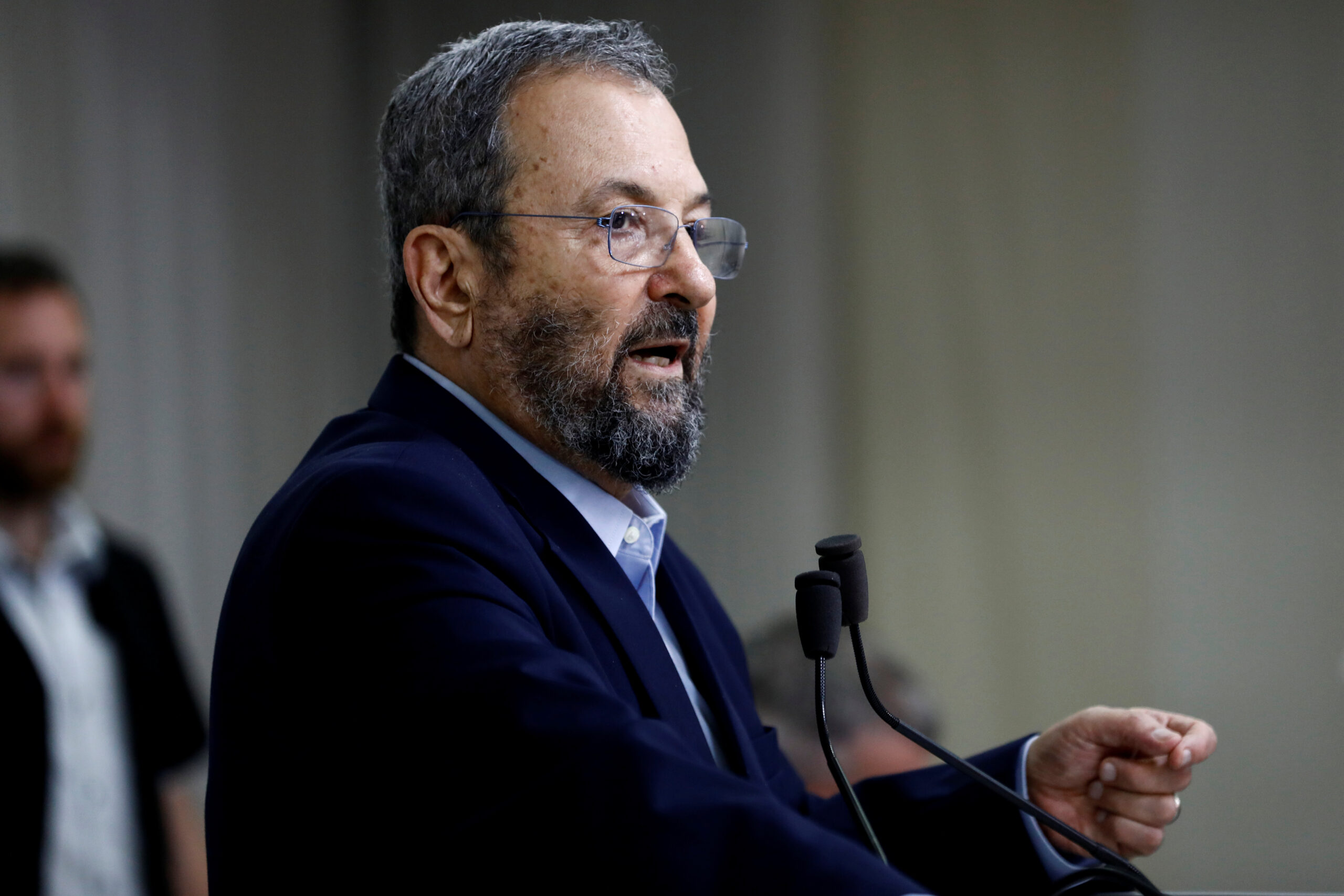
Former Israeli Prime Prime Minister Ehud Barak has expressed regret over his sustained relationship with convicted sex offender Jeffrey Epstein, particularly after Epstein’s 2008 conviction for procuring a minor for prostitution. His remarks come as a massive trove of files related to the late financier, released by the U.S. Department of Justice, continues to send ripples through global political and social circles. Barak, who served as Israel’s prime minister from 1999 to 2001, offered his first public comments on the matter during an interview with Israel’s Channel 12 on Thursday, months after Epstein died by suicide in federal prison in 2019.
The extensive release of Epstein’s documents has brought renewed scrutiny to his connections with influential figures worldwide, including high-profile politicians and business leaders. Barak, a decorated former military commander and politician, has found himself under a microscope as these documents detail his interactions with Epstein, a man whose criminal enterprise has been linked to sex trafficking and exploitation of minors. The former prime minister’s acknowledgment of his continued association with Epstein, even after his conviction, has ignited a fresh wave of public questioning.
Acknowledging Past Ties and Expressing Remorse
In his interview, Ehud Barak articulated a sense of regret for his prolonged association with Jeffrey Epstein, stating he wished he had never met the financier. He recounted being introduced to Epstein in 2003 at a large event in Washington D.C., an introduction facilitated by the late former Israeli President Shimon Peres. According to Barak, Peres had referred to Epstein at the time as a "good Jew."
"I am responsible for all my actions and decisions," Barak stated, acknowledging a need for deeper scrutiny. "There is room to question whether I should have investigated more thoroughly. I regret not doing so." This admission, while a step towards accountability, has done little to quell concerns given the timeline of his relationship with Epstein.
Despite Epstein’s 2008 conviction for sex offenses and his subsequent approximately one-year prison sentence during the period of their acquaintance, Barak maintained he was unaware of the full extent of Epstein’s criminal activities until a broader investigation was launched in 2019. "I did not know the manner of his crimes until 2019, and you probably didn’t know it either," he told Channel 12, as reported by Israeli media. He further claimed that throughout the 15 years he knew Epstein, he "never saw any unreasonable occurrence, or any unreasonable behavior."
Continued Contact and Visits to Epstein’s Properties
Ehud Barak did not dispute his continued interactions with Jeffrey Epstein following the financier’s 2008 conviction. These contacts included multiple stays, with his wife, at Epstein’s Manhattan residence between 2015 and 2019, alongside exchanges of emails and in-person meetings. This period significantly overlaps with the time Epstein was known to be operating his illicit network.
More controversially, Barak acknowledged visiting Epstein’s infamous private island, Little St. James, in the U.S. Virgin Islands. This island has become synonymous with allegations of sex trafficking and parties involving underage victims. Barak described his visit as a brief, three-hour daytime trip, accompanied by his wife and three security guards. He asserted that he saw only Epstein and some staff members during this excursion, attempting to downplay the significance of his presence on the notorious property.
Barak attempted to contextualize his ongoing business and social ties with Epstein post-conviction by suggesting that during that time, Epstein was widely perceived as someone who had "paid his debt to society" and had been reintegrated into public life. He argued that it was only with the reopening of investigations in 2019, which exposed the true scale and severity of Epstein’s crimes, that influential associates began to sever their connections. Epstein’s death in prison that same year, while awaiting trial on federal sex trafficking charges involving underage girls, cast a long shadow over these revelations.
Epstein’s Israeli Connections Emerge
The extensive release of Epstein’s files has significantly amplified scrutiny into his deep and complex ties to Israel. Beyond his relationships with global elites, the documents have shed light on Epstein’s financial support for various Israeli organizations, including Friends of the IDF (Israel Defense Forces) and the Jewish National Fund, a prominent settler organization. Furthermore, his connections with members of Israel’s foreign intelligence agency, Mossad, have also come under examination.
This renewed focus on Epstein’s links to Israel has raised uncomfortable questions about the financier’s influence and operations within the country and among its diaspora. The depth of these connections, now being meticulously detailed through the declassified files, suggests a more pervasive role for Epstein than previously understood, impacting various sectors from defense to land development.
Controversial Remarks on Demographics and Immigration
During the Channel 12 interview, Ehud Barak was also pressed on recently declassified audio recordings of conversations he had with Epstein. In one recording, Barak discussed Israel’s demographic challenges, suggesting a strategy of absorbing one million Russian-speaking immigrants to offset Palestinian population growth. The audio also captured Barak making disparaging remarks about Sephardi Jews, those of Middle Eastern and North African descent.
Barak’s recorded comments suggested that in the past, Israel had absorbed Jews "from North Africa, from the Arabs, from whatever." However, he added that the country could now "control the quality" of its population "much more effectively than our ancestors." He also referenced a conversation with Russian President Vladimir Putin, stating, "We can easily absorb another million. I used to tell [Russian President Vladimir] Putin always, what we need is just one more million."
The recording further elaborated on this immigration wave, with Barak suggesting that "many young, beautiful girls would come, tall and slim," from Russia to Israel. Addressing these controversial remarks, Barak stated he was "not proud of that choice of words, but I did not say that to Putin." He denied that his statements were racist, framing them instead as a discussion about Israel’s demographic concerns stemming from its growing Arab population. His explanation, however, has been met with skepticism by many who view the language used as inherently prejudiced.
The Shadow of Terje Rod-Larsen and the Oslo Accords
The ongoing revelations from the Epstein files have also cast a long shadow over prominent international figures, including Norwegian diplomat Terje Rod-Larsen. Rod-Larsen, a key architect of the 1993 Oslo Accords, a foundational agreement for the Israeli-Palestinian peace process, is now facing intense scrutiny. Documents have indicated he was deeply embedded within Epstein’s inner circle, leading to allegations of corruption and blackmail.
Norwegian media investigations have uncovered evidence of illicit loans, visa fraud involving trafficked women, and a substantial inheritance clause for Rod-Larsen’s children in Epstein’s will, potentially worth millions of dollars. These revelations have raised serious questions about the integrity of the Oslo Accords and whether their mediation was compromised by a figure vulnerable to elite pressure and foreign intelligence influence. The entanglement of a key peace process facilitator with a known sex offender like Epstein has added another layer of complexity and concern to the unfolding narrative.
Ongoing Scrutiny and Future Implications
Ehud Barak asserted that while further documents detailing his ties to Epstein might surface, none would reveal any inappropriate conduct on his part. The ongoing release of documents, meticulously compiled by investigators of Epstein’s activities, continues to expose the breadth of his global network and the extent of his influence over powerful individuals.
The repercussions of these revelations are far-reaching, impacting not only the individuals directly implicated but also the institutions and political landscapes they inhabit. For Barak, the renewed focus on his association with Epstein presents a significant challenge to his legacy. The former prime minister’s efforts to distance himself from the full scope of Epstein’s crimes, while acknowledging regret for the relationship, will likely continue to be dissected as more information emerges. The broader implications for international relations, the credibility of public figures, and the ongoing quest for justice for Epstein’s victims remain significant concerns as the declassified files continue to be analyzed.