Robert Kaplow, a former New Jersey high school teacher, has earned an Academy Award nomination for Best Original Screenplay for Blue Moon, a poignant biopic that delves into a pivotal night in the life of legendary lyricist Lorenz Hart. The film, directed by Richard Linklater, captures the inimitable Hart through the compelling performance of Ethan Hawke, who also secured a Best Actor nomination. Kaplow’s script, lauded for its lyrical quality and deep character study, is the culmination of a nearly 14-year journey, transforming a chance discovery into an Oscar-recognized work of historical fiction.

The Genesis of a Lyrical Screenplay
Kaplow’s path to an Oscar nomination is an unconventional one, rooted in both academic rigor and an unexpected find. His initial collaboration with director Richard Linklater on the adaptation of his novel, Me and Orson Welles, laid the groundwork for their reunion on Blue Moon. However, the inspiration for this particular project struck Kaplow much earlier. It began with the discovery of letters written by a young woman to Lorenz Hart at an estate sale in New York, sparking a fascination that would evolve into his debut screenplay. This serendipitous find ignited a nearly decade-and-a-half-long dedication to researching and imagining the inner world of one of Broadway’s most influential, yet often overlooked, figures.
The film’s narrative unfolds entirely over a single night: the opening-night party for Oklahoma!, the groundbreaking musical that marked Richard Rodgers’ first collaboration with Oscar Hammerstein II, and notably, his first without Hart. This specific historical moment serves as a powerful backdrop for Kaplow’s character study, allowing him to explore Hart’s complex emotions—shrewdness, longing, and vulnerable discontent—as his former partner steps into a new, triumphant era. Through Kaplow’s meticulously crafted dialogue and Hawke’s immersive portrayal, audiences are transported into Hart’s world for a concentrated 90 minutes, experiencing his charm and profound internal struggles.

Deconstructing the Rodgers-Hart Partnership
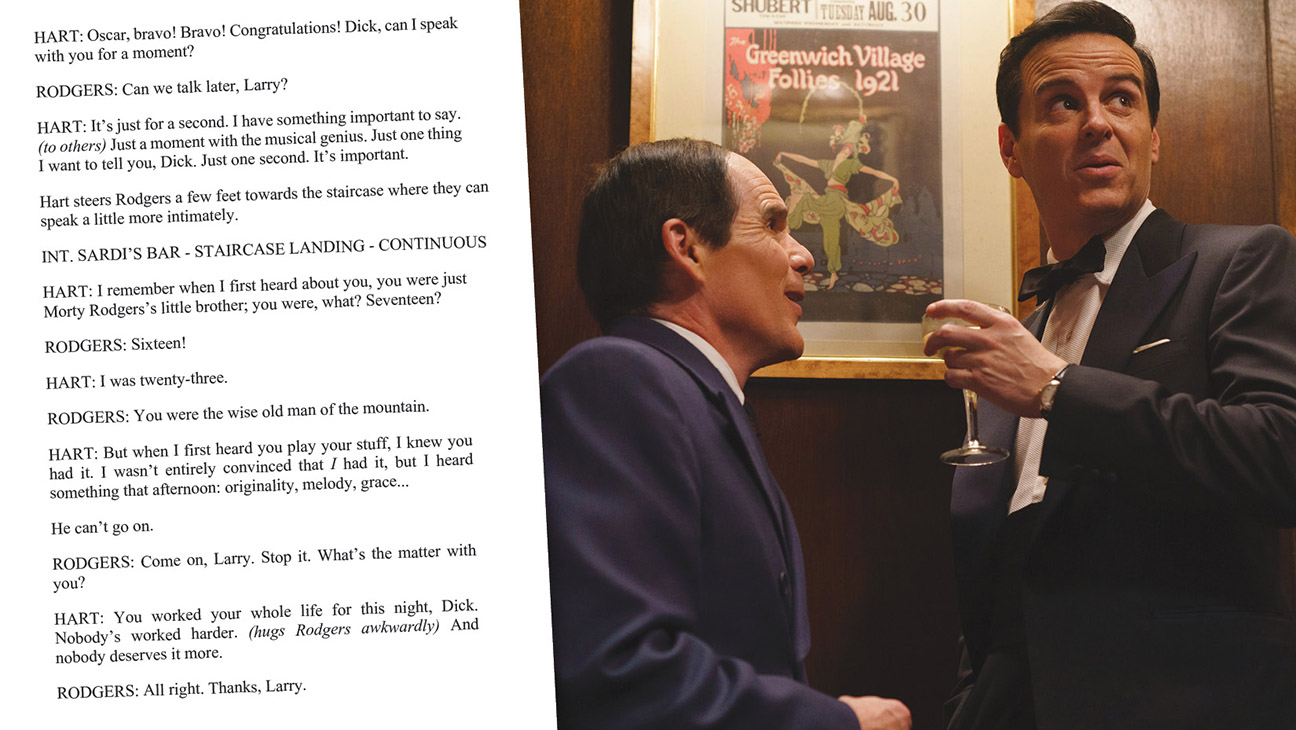
At the heart of Blue Moon is the intricate and often tumultuous relationship between Lorenz Hart and Richard Rodgers. Kaplow was particularly drawn to this dynamic, recognizing its profound impact on musical theater history. He set out to encapsulate their quarter-century creative bond, which he describes as "complicated, yet endearing." A key scene involving a staircase serves as a powerful metaphor for their partnership, attempting to compress years of shared triumphs and frustrations into a brief, potent exchange.
Kaplow reveals the paradoxical nature of their connection, stating, "I think in many ways they love each other and respect each other as artists and friends. And they’re also exasperated by each other… everything is like you’re walking in an emotional minefield." This description vividly illustrates the tension and delicate balance that characterized their collaboration for 25 years. The screenplay masterfully navigates these emotional currents, presenting a relationship defined by deep mutual admiration alongside profound personal and professional challenges. The film subtly suggests that their artistic synergy, while brilliant, was inherently unsustainable given Hart’s personal struggles and the evolving landscape of Broadway.

Ethan Hawke’s Emotive Portrayal of Lorenz Hart
Ethan Hawke’s commitment to embodying Lorenz Hart is a cornerstone of Blue Moon‘s success, earning him an Academy Award nomination for Best Actor. Kaplow credits Hawke’s unique sensibility as a writer himself for his ability to "feel and even taste language." This quality was crucial for portraying Hart, a lyricist whose very essence was intertwined with words. Kaplow notes, "He understood that Hart was a man who breathed language — it’s in his blood and DNA."
Hawke’s performance brings to life Hart’s own self-description from the film: "Larry Hart is drunk with beauty — wherever he finds it. In men, in women, in the smell of cigar stores." Kaplow emphasizes that Hawke doesn’t just deliver these lines; he "makes these lines sing because he really feels it." The intense focus on Hart’s character, with hardly a moment where he isn’t speaking, demanded an actor capable of conveying profound depth and internal conflict through dialogue. Hawke and Kaplow collaborated closely to find a captivating and authentic voice for Hart, one that resonates with the lyrical genius and tragic vulnerability of the man.

Inventing History: The Oklahoma! Afterparty
Kaplow’s writing process for Blue Moon involved a delicate dance between historical fact and imaginative invention, a method he previously explored with Linklater in Me and Orson Welles. While historical records confirm Hart’s attendance at the opening night of Oklahoma!, Kaplow clarifies, "Whether he showed up to the afterparty or not, that’s my invention." This specific creative liberty serves a crucial narrative purpose, allowing Kaplow to explore Hart’s complex psychological state.
He found the idea of Hart attending the afterparty compelling because "it seemed kind of an act of bravery to show up and say to everyone there, ‘I’m still a player, I’m still involved in the world of musical theater.’" Yet, Kaplow acknowledges the inherent paradox, adding, "And at the same time, it seems to me a slightly self-destructive thing to do." This duality — the desire for relevance coupled with a propensity for self-sabotage — forms the emotional core of Hart’s character in the film, making his presence at the celebration of Rodgers’ new success both poignant and painful. This invented scenario allows Kaplow to dramatize the real-life crossroads Hart faced, offering a speculative yet emotionally resonant glimpse into his final years.

Crafting Hart’s Distinct Voice
One of the significant challenges in writing Blue Moon was developing Lorenz Hart’s distinctive voice on the page, given the scarcity of actual personal writings. Kaplow overcame this by immersing himself in Hart’s vast body of lyrics, drawing inspiration from songs like "Manhattan" and "My Funny Valentine." His goal was to invent a voice so authentic that audiences familiar with Hart’s work would instinctively recognize it as his.
Kaplow recounts a breakthrough moment: "There was a point where I just said, ‘I have this character who just has to speak.’ I bought this school notebook and a ballpoint pen and one night I just took the brakes off and let it go." This uninhibited creative outpouring resulted in 71 pages of dialogue, a testament to how much Hart, through Kaplow’s pen, "was just burning to speak." This intense, almost channeled writing process allowed Kaplow to inhabit Hart’s psyche, translating the wit, melancholy, and poeticism of his lyrics into a compelling narrative voice. The resulting dialogue feels organic and deeply personal, offering an intimate window into the lyricist’s brilliant but troubled mind.

The Oklahoma! Refusal and a Symbolic Parting
The film also addresses a pivotal historical detail: Lorenz Hart’s refusal to adapt Green Grow the Lilacs, the play that would become Oklahoma! Rodgers approached Hart with the project, but Hart famously declined. Kaplow explains Hart’s rationale within the film’s narrative: "It’s a cowboy musical. I don’t have any interest in that." Hart, who had peaked in the late 1930s with his more satirical and sardonic depictions of America, found the sentimental, "waving the flag for Old Glory" tone of the nascent Oklahoma! entirely antithetical to his artistic sensibilities. "He would never write a song like that; it just wouldn’t be who he was," Kaplow asserts.
This creative divergence underscores the broader tension of the Blue Moon narrative. As Kaplow observes, "Part of the tension of this scene is that Rodgers is on his way up the stairs to be celebrated and Hart isn’t." The literal and metaphorical ascent of Rodgers contrasts sharply with Hart’s trajectory. The scene culminates with Hart’s symbolic descent: "Down the stairs and it’s over." This moment encapsulates the end of an era, not just for the Rodgers and Hart partnership, but for Hart’s place at the pinnacle of musical theater, marking a poignant and irreversible parting of ways. The film effectively uses this historical turning point to explore themes of legacy, artistic integrity, and the often-painful march of progress.

Broader Implications and Critical Acclaim for Blue Moon
The critical reception of Blue Moon has highlighted its unique contribution to the biopic genre. Instead of offering a sprawling, cradle-to-grave account, Kaplow and Linklater chose an intensely focused, single-night narrative, which amplifies the emotional resonance and psychological depth of Lorenz Hart’s story. This approach allows audiences to experience Hart’s internal world with an immediacy rarely achieved in biographical films. The decision to center the story on the Oklahoma! premiere, a moment of both triumph for Rodgers and profound personal reckoning for Hart, provides a powerful lens through which to examine themes of artistic partnership, personal decline, and the relentless evolution of creative industries.
The film’s Oscar nominations for Robert Kaplow’s screenplay and Ethan Hawke’s performance underscore its artistic merit and its success in bringing a complex historical figure back into the cultural conversation. Blue Moon invites a new generation to appreciate Lorenz Hart’s lyrical genius while acknowledging the personal struggles that often accompanied his brilliance. It solidifies Kaplow’s reputation as a masterful storyteller capable of weaving together historical detail with profound human emotion, and further cements Linklater’s legacy as a director drawn to intimate, character-driven narratives. The film is not just a tribute to Hart but a reflection on the bittersweet nature of legacy and the enduring power of words to shape and define a life.