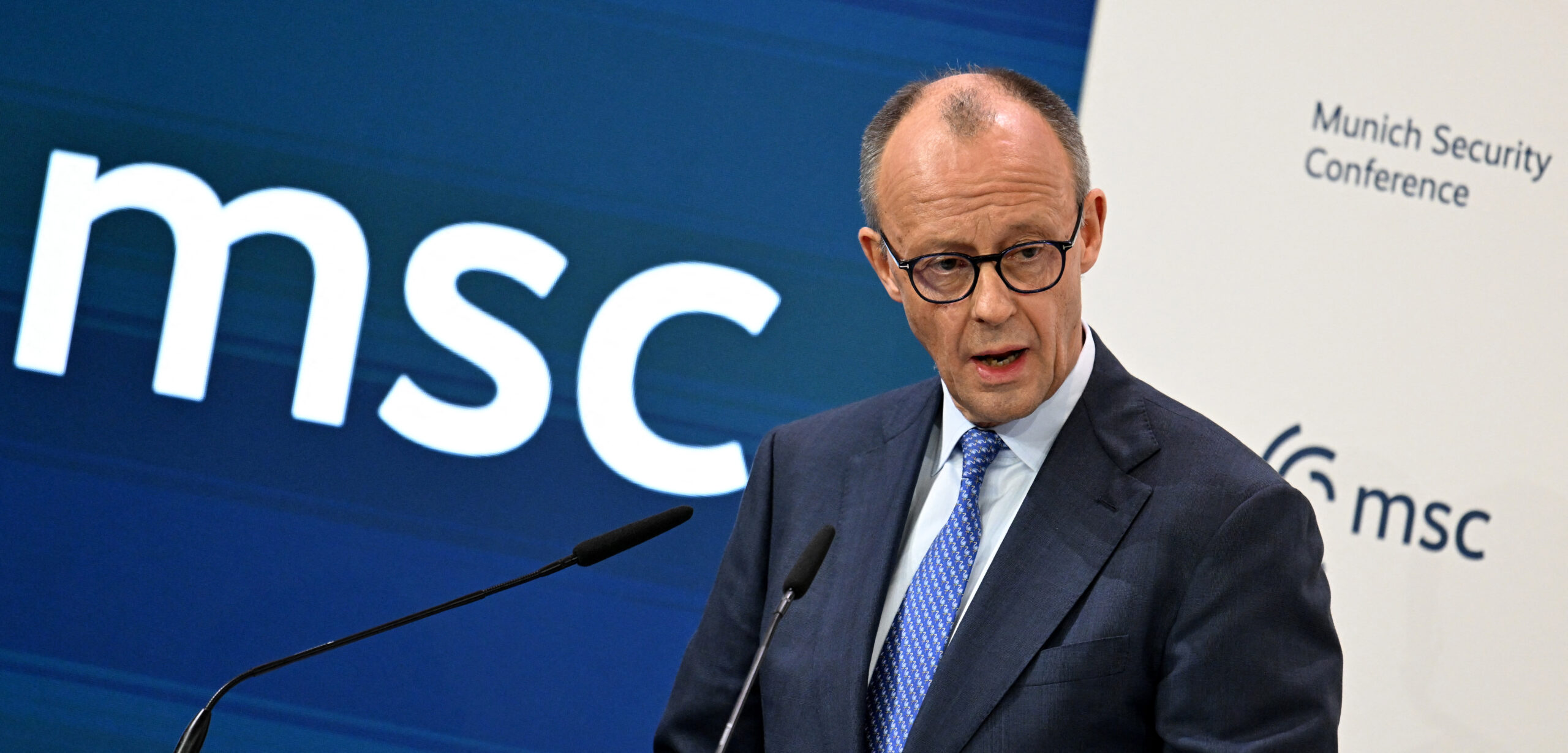
German Chancellor Friedrich Merz issued a stark call for unity and a renewed commitment to the transatlantic alliance, imploring the United States and Europe to actively "repair and revive transatlantic trust together" during a pivotal address at the Munich Security Conference. Merz, speaking on Friday at the annual gathering of global security leaders, emphasized that a deep division has emerged between the two continents, a sentiment he acknowledged was echoed by U.S. Vice President JD Vance a year prior. The German leader underscored that strengthening the alliance is not merely a European imperative but a strategic advantage for the United States as well, particularly in an era of escalating global power competition.
The remarks by Merz signaled a significant divergence from the more confrontational tone adopted by some U.S. officials in recent times. Last year, Vice President Vance used his platform at the same conference to criticize European allies over their defense spending commitments to NATO and to question the state of democracy on the continent. Merz directly referenced Vance’s assessment, stating, "Let me begin with the uncomfortable truth: A rift, a deep divide has opened between Europe and the United States. Vice President JD Vance said this a year ago here in Munich. He was right in his description." This acknowledgment set the stage for Merz’s plea for a "new transatlantic partnership," aiming to bridge the growing chasm.
Acknowledging the Transatlantic Divide
Merz did not shy away from the complexities of the current geopolitical landscape, particularly as it relates to the "America First" philosophy espoused by former President Donald Trump and his supporters. He explicitly stated that Europe should not mirror the political direction or the "culture war" of the MAGA movement, indicating a desire for a partnership based on shared values rather than ideological alignment. This nuanced position suggests Germany’s willingness to engage with a potentially shifting U.S. foreign policy while maintaining its own distinct identity and interests.
The German leader’s appeal was a direct engagement with the prevailing dynamics within U.S. politics and its implications for international relations. He posited that in the face of formidable global rivals, even the United States cannot afford to act unilaterally. "In the era of great power rivalry, even the United States will not be powerful enough to go it alone," Merz asserted. He then reinforced the mutual benefits of NATO, stating, "Being a part of NATO is not only Europe’s competitive advantage. It is also the United States’ competitive advantage. So let’s repair and revive transatlantic trust together. Europe is doing its part." This statement aimed to reframe the alliance as a cornerstone of collective security and prosperity, beneficial to all its members.
Navigating a New Era in Geopolitics
The receptiveness of Washington to Merz’s message remained a critical question, especially after a year marked by policies that have strained relationships with traditional European allies. These policies have included increased pressure for greater NATO funding, fluctuating efforts to resolve Russia’s war in Ukraine, and contentious proposals such as the acquisition of Greenland, an autonomous territory within NATO member Denmark. The U.S. administration has also emphasized what it terms Europe’s need for "civilizational self-confidence and Western identity," urging continental nations to manage migration while simultaneously critiquing perceived suppression of right-wing viewpoints, a stance that has drawn accusations of racist undertones from critics.
U.S. Secretary of State Marco Rubio, speaking as he departed for Germany, acknowledged the deep connections between the U.S. and Europe. "We are very tightly linked together with Europe," Rubio stated, highlighting the shared cultural and personal heritage that binds the two regions. He underscored the need for dialogue in the current global climate, remarking, "We live in a new era in geopolitics, and it’s going to require all of us to reexamine what that looks like." Rubio’s participation in the conference underscored the ongoing high-level engagement, even amidst underlying policy divergences.
The timing of the Munich Security Conference also coincided with the looming midterm elections in the United States, a crucial juncture that will determine control of the House of Representatives and the Senate. Recent polling indicated a decline in support for former President Trump on several domestic issues, including his stringent immigration policies. Furthermore, American voters have expressed disquiet over Trump’s foreign policy actions, such as the controversial military operation involving Venezuelan leader Nicolás Maduro and his assertive stance on Greenland. A poll released on the day of Merz’s speech revealed that seven in ten U.S. adults disapprove of Trump’s handling of the Greenland issue, a higher disapproval rate than for his overall foreign policy approach.
Reimagining European Nuclear Deterrence
Beyond the broader call for transatlantic revival, Merz also confirmed that Germany is actively engaged in discussions with French President Emmanuel Macron regarding "European nuclear deterrence." This initiative has gained significant traction as the United States appears to be re-evaluating its strategic priorities and its long-standing security commitments to Europe. The concept of a European nuclear umbrella is seen by some as a necessary safeguard in an increasingly unpredictable international security environment.
Under NATO’s current framework, U.S. nuclear weapons stationed in Europe are accessible to allied aircraft in emergency situations. It is widely believed that U.S. nuclear bombs are stored in several European locations, including Italy, Belgium, the Netherlands, and western Germany. However, Germany’s own nuclear capabilities are constrained by a 1990 agreement related to its reunification, which prohibits the manufacture, possession, and control of nuclear, biological, and chemical weapons. Merz assured that any new policy regarding European nuclear deterrence would adhere to Germany’s existing legal obligations.
Following the United Kingdom’s withdrawal from the European Union in 2020, France remains the sole nuclear-armed state within the bloc. This singular possession of nuclear weapons by France has intensified discussions about a more cohesive European nuclear strategy that could potentially involve greater burden-sharing and strategic autonomy, independent of direct U.S. reliance. The ongoing dialogue between Germany and France on this sensitive issue reflects a growing European desire for greater strategic self-determination in the face of evolving global security dynamics and potential shifts in U.S. foreign policy commitments. The broader implications of such a move could reshape the European security architecture and the future of NATO itself, prompting a re-evaluation of collective defense strategies in the 21st century.
The Imperative of Collective Security
Merz’s address at the Munich Security Conference served as a critical moment for transatlantic diplomacy, highlighting both the enduring importance of the alliance and the urgent need for its revitalization. His emphasis on shared advantages and mutual benefit aims to counteract narratives of unilateralism and to reinforce the idea that collective security is the most effective path forward in a multipolar world. The conference, a traditional forum for high-level security discussions, provided a vital stage for Germany to articulate its vision for a strengthened partnership, one that acknowledges past challenges while looking towards a more unified future.
The German Chancellor’s frank assessment of the "deep divide" between Europe and the United States, coupled with his proactive proposals for repair, underscores the strategic imperative of maintaining robust transatlantic ties. As global challenges, from geopolitical rivalries to climate change and pandemics, continue to escalate, the ability of democratic nations to cooperate and present a united front becomes increasingly crucial. Merz’s call for a "new transatlantic partnership" is not merely a diplomatic nicety but a strategic necessity for navigating the complex and often volatile landscape of contemporary international relations. The success of this endeavor will hinge on the willingness of both sides to engage in constructive dialogue, compromise, and a renewed commitment to the shared values that have long underpinned the alliance.