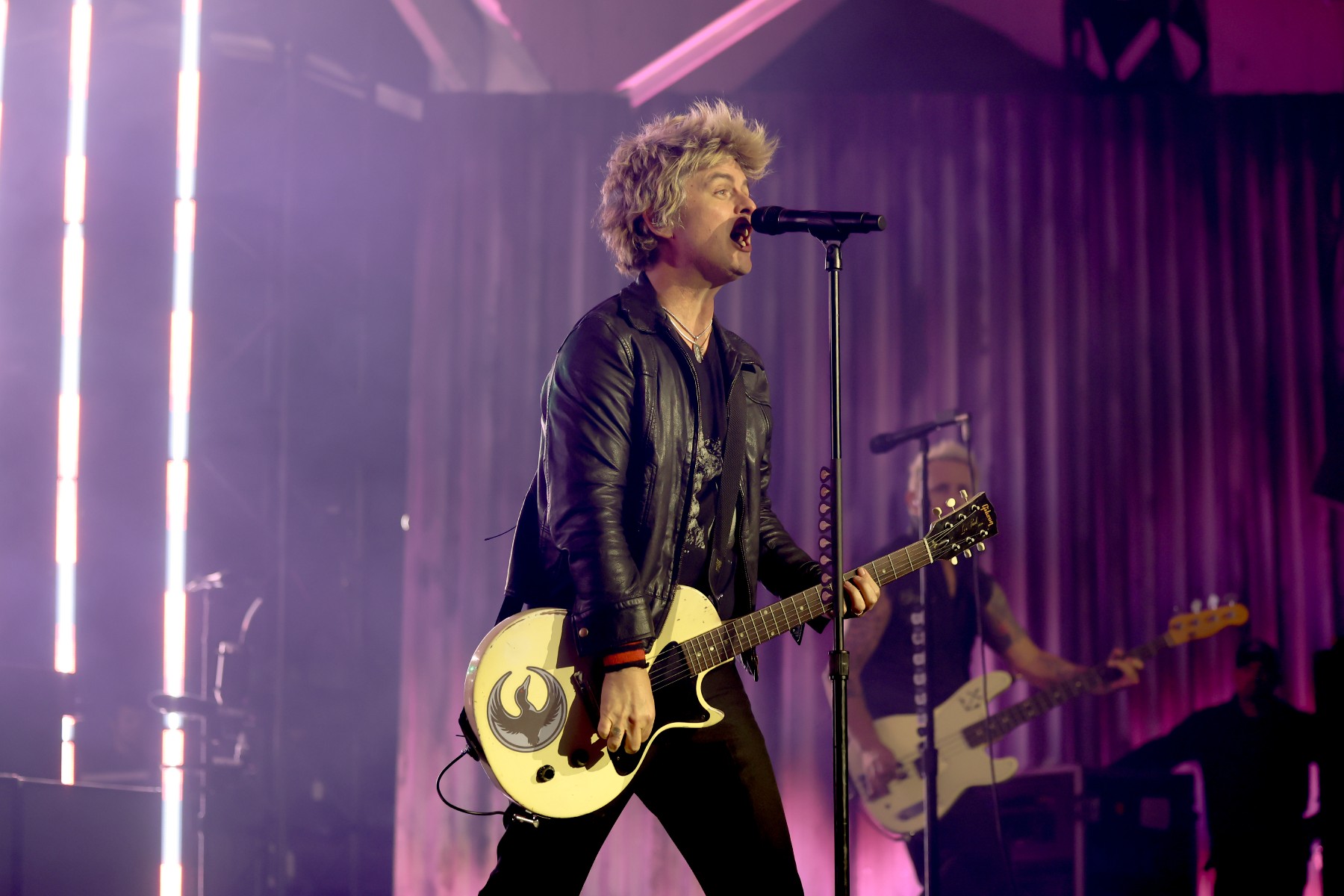
San Francisco, CA – Rock band Green Day delivered a fiery political statement during their pre-Super Bowl performance, with frontman Billie Joe Armstrong directly addressing and admonishing Immigration and Customs Enforcement (ICE) agents. The incident occurred on Friday, February 6, 2026, at The FanDuel Party Powered by Spotify, a high-profile event held at Pier 29 in San Francisco ahead of Super Bowl LX. Armstrong’s vocal dissent added a layer of political commentary to the typically celebratory atmosphere surrounding the NFL championship game.
During the band’s energetic set, Armstrong paused to deliver a pointed message that appeared to target law enforcement officials, particularly those working with ICE. The singer urged any ICE agents in attendance or present in the Bay Area to reconsider their employment. “Quit your shitty ass job. Quit that shitty job you have,” Armstrong declared to the crowd, as captured in a widely circulated video of the event.
Armstrong did not stop there, broadening his condemnation to include specific political figures whom he associated with immigration policies. He continued, “Because when this is over, and it will be over at some point of time, Kristi Noem, Stephen Miller, JD Vance, Donald Trump – they’re gonna drop you like a bad fucking habit. Come on to this side of the line.” This statement suggests Armstrong believes these political figures, who have been associated with stricter immigration enforcement, would abandon ICE agents once their political objectives are no longer served.
The context for Armstrong’s remarks is likely tied to the heightened security and presence of federal law enforcement that often accompanies major national events like the Super Bowl. Super Bowl LX was scheduled to take place on Sunday, February 8, 2026, between the Seattle Seahawks and the New England Patriots, with San Francisco and the surrounding Bay Area serving as hosts. The presence of ICE agents in the vicinity, potentially for security or enforcement duties related to the game or its associated events, appears to have prompted Armstrong’s outspoken criticism.
Green Day’s History of Political Activism
This outspoken stance is not an anomaly for Green Day or its lead singer. The Bay Area-based punk rock band has a long-standing history of using their platform to voice opposition to political figures and policies they deem problematic. Their activism has been particularly vocal in its criticism of Donald Trump and his administration’s policies.
A notable instance of their political commentary occurred in 2016 at the American Music Awards. During their performance of “Bang Bang,” the band infamously altered the lyrics to include a chant of “No Trump, no KKK, no fascist U.S.A.” This moment solidified their reputation as a band unafraid to engage in political protest through their music and public appearances.
More recently, prior to the Super Bowl pre-show incident, Armstrong had already begun incorporating anti-Trump and anti-MAGA sentiments into Green Day’s performances. At a concert in Los Angeles on January 17, 2026, he modified the lyrics of “American Idiot” to include the line, “I’m not part of a MAGA agenda.” This alteration signaled a continued commitment to expressing his political views during live shows.
Amplifying Dissent Through Lyric Alterations
Armstrong’s strategy of altering song lyrics to convey political messages was also evident during the San Francisco performance. He famously changed the words of the song “Holiday” to reference Jeffrey Epstein, a convicted sex offender. The original lyric, “the representative from California has the floor,” was reportedly altered to “the representative from Epstein Island has the floor.” This lyrical substitution gained particular traction amid the recent release of new Department of Justice documents pertaining to the Epstein case, drawing a connection between political figures and the controversial figure.

Furthermore, in an earlier concert in Minneapolis on January 17, Armstrong had voiced solidarity with “our brothers and sisters in Minnesota” amidst what he described as “aggressive immigration policies and ICE raids in Minneapolis.” During that performance, he explicitly stated that “This song is anti-fascist. This song is anti-war,” framing his lyrical adjustments and vocal criticisms within a broader ideological framework.
Super Bowl LX and Political Controversy
The booking of Green Day and Puerto Rican superstar Bad Bunny for Super Bowl LX events had already generated controversy, drawing criticism from former President Donald Trump. According to a report in the New York Post, Trump expressed his disapproval, stating, “I’m anti-them. I think it’s a terrible choice. All it does is sow hatred. Terrible.” This suggests that the NFL’s choice of musical performers for its marquee event was seen by some as a departure from a more neutral or universally appealing selection.
Green Day was also slated to perform during the Super Bowl LX pre-game opening ceremony, an event designed to celebrate the game’s 60th anniversary and honor past MVPs. The NFL had announced in mid-January that the band would perform some of their “most iconic rock anthems” as part of this ceremony. However, the implications of Armstrong’s politically charged statements at the pre-show event on his participation in the official NFL ceremony remained unclear following his remarks.
Broader Implications and Public Reaction
Billie Joe Armstrong’s vocal condemnation of ICE and his political commentary at a major Super Bowl-related event underscore the increasing intersection of entertainment, sports, and political discourse in the United States. Major music acts and sporting events often serve as platforms for artists and athletes to express their views, which can resonate with a wide audience and spark significant public discussion.
The choice of Green Day, a band with a history of punk rock ethos and anti-establishment messaging, to perform at events surrounding the Super Bowl highlights the NFL’s efforts to appeal to a diverse demographic. However, it also opens the door for potential friction when artists express views that may not align with all segments of the viewership or the league’s broader audience.
Armstrong’s remarks also come at a time of ongoing national debate surrounding immigration policies, border security, and the role of federal enforcement agencies. His direct criticism of ICE and his invocation of prominent political figures suggest a desire to leverage the Super Bowl’s massive viewership to amplify his political message and encourage dissent against policies he opposes.
The consequence of such public pronouncements can be varied. For some, Armstrong’s words would serve as an affirmation of their own political beliefs and a source of inspiration. For others, particularly those who support ICE and the policies associated with it, his statements might be perceived as disrespectful or inappropriate for the occasion. The band’s decision to integrate political messaging into their performances, especially during a widely televised national event, ensures that their music continues to be not only a form of entertainment but also a vehicle for social and political commentary.
The timing of these statements, so close to the Super Bowl game itself and ahead of an official NFL performance, positions Green Day and Billie Joe Armstrong at the center of a cultural and political conversation. Their actions prompt questions about the role of artists in major sporting events and the extent to which political expression is welcomed or tolerated on such platforms. As the Super Bowl weekend unfolded, the impact and reception of Armstrong’s remarks were likely to be a topic of discussion among fans, media, and political observers alike. The band’s consistent willingness to engage in such public discourse suggests that this incident is part of a larger, ongoing commitment to using their musical platform for political and social advocacy.