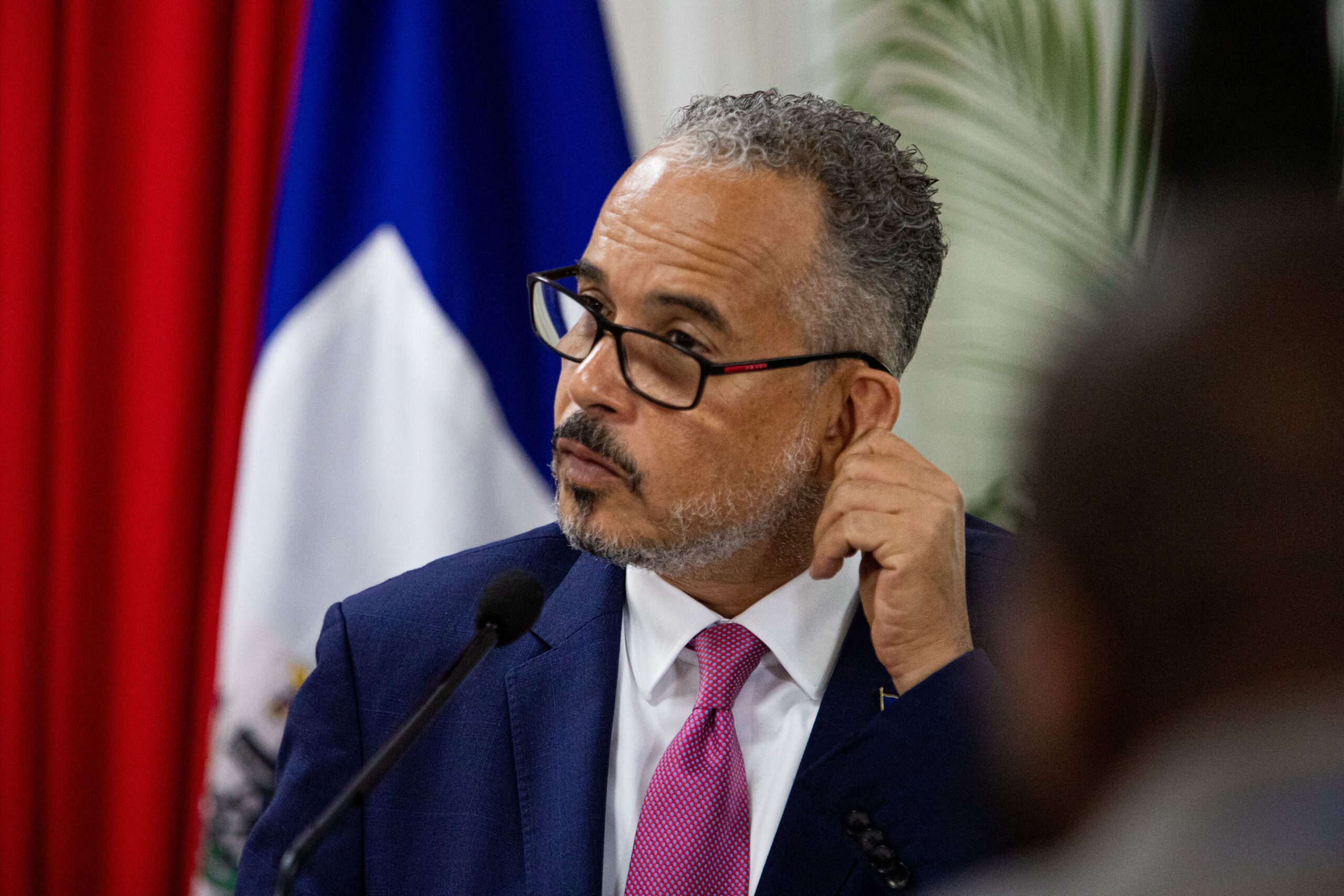
Haiti’s Transitional Presidential Council has officially transferred executive authority to Prime Minister Alix Didier Fils-Aime, marking a significant shift in the nation’s fractured political landscape. This handover, occurring after nearly two years of governance plagued by pervasive gang violence and political instability, places the 54-year-old businessman at the helm of a country teetering on the brink of collapse. The ceremony, conducted under heavy security in the capital, Port-au-Prince, underscores the precariousness of the situation, with armed gangs controlling an estimated 90 percent of the metropolitan area.
The move follows a period of intense internal friction within the nine-member Transitional Presidential Council itself. In late January, several council members publicly declared their intention to oust Prime Minister Fils-Aime. This internal discord prompted a swift reaction from the United States, which responded by announcing visa revocations for four unidentified council members and one cabinet minister. The U.S. State Department, through Secretary of State Marco Rubio, had previously emphasized the critical importance of Fils-Aime’s continued leadership in the fight against "terrorist gangs" and the broader effort to stabilize Haiti.
Just days prior to the council’s dissolution, the U.S. military presence near Haiti’s shores intensified. A U.S. warship and two coast guard vessels were deployed to waters off the coast of Port-au-Prince. This show of force was widely interpreted as a signal of American support for Fils-Aime’s administration and a deterrent against further destabilization efforts by the council or the powerful gangs that have effectively crippled the nation. The council’s aborted attempt to remove the prime minister now appears to be a footnote as they formally stepped down, leaving Fils-Aime to navigate the immense challenges ahead.
The Genesis of the Transitional Council and Its Shortcomings
The Transitional Presidential Council was established in 2024 with the stated objective of steering Haiti towards stability and democratic elections. Its formation was a direct response to the profound political vacuum created by the assassination of President Jovenel Moise in 2021. The council, intended to be the nation’s highest executive body, was tasked with restoring order, reforming institutions, and preparing the country for its first general elections in a decade.
However, the council’s tenure has been marred by persistent internal disputes, accusations of corruption, and a palpable inability to curb the escalating gang violence. From its inception, the body struggled with internal cohesion, leading to infighting and questions regarding the legitimacy and motivations of its members. Instead of fostering unity, the council often appeared to be a microcosm of the broader political dysfunction that has long plagued Haiti.
Within just six months of its establishment, the council removed Prime Minister Garry Conille, paving the way for the selection of Alix Didier Fils-Aime as his successor. This early leadership change signaled the instability within the council and foreshadowed the difficulties it would face in fulfilling its mandate. The council’s inability to overcome its internal divisions and effectively address the country’s most pressing issues has led to widespread disillusionment among the Haitian populace.
The Elusive Promise of Elections
A core responsibility of the Transitional Presidential Council was to establish a framework for federal elections, culminating in the selection of a new president. However, this crucial objective has repeatedly been deferred. The council initially postponed a series of planned votes that were meant to culminate in a new presidential selection by February. Tentative new dates were later announced for August and December of this year, but a widespread sentiment of skepticism prevails regarding the feasibility of holding a free and fair election, let alone a runoff, within the current year.
The political instability and the pervasive control of armed groups over significant portions of the territory present formidable obstacles to any electoral process. The logistical challenges of ensuring security for polling stations, protecting voters, and maintaining the integrity of the ballot are immense. Without a substantial improvement in the security situation and a more unified political front, the prospect of a timely and legitimate election remains a distant hope for many Haitians.
The Devastating Impact of Gang Violence
The escalating gang violence has had a catastrophic impact on Haiti, leading to widespread death, displacement, and humanitarian suffering. According to United Nations figures, nearly 6,000 people were killed by gangs in Haiti last year alone. The violence has also resulted in a massive displacement crisis, with approximately 1.4 million people, representing 10 percent of the nation’s population, forced to flee their homes.
The relentless gang activity has not only disrupted daily life but has also crippled essential services, including healthcare and education. The pervasive fear and insecurity have forced many businesses to close and have severely hampered economic activity. The humanitarian consequences are dire, with a significant portion of the population facing food insecurity and lacking access to basic necessities.
International Efforts and Their Limited Success
In response to the escalating crisis, the United Nations Security Council approved the deployment of an international security force to assist Haitian police in restoring order. This multinational mission was intended to provide much-needed support to overwhelmed local law enforcement agencies. However, the implementation of this plan has been notably slow and fraught with challenges.
More than two years after the Security Council’s resolution, fewer than 1,000 troops, primarily comprising Kenyan police officers, have been deployed to Haiti. The UN’s target is to have 5,500 troops in the country by mid-year or by November at the latest. The protracted timeline and the limited initial deployment raise concerns about the effectiveness and timely impact of this crucial international intervention. The success of this security force will be pivotal in creating the conditions necessary for political progress and humanitarian relief.
The Daunting Task Ahead for Prime Minister Fils-Aime
Prime Minister Alix Didier Fils-Aime now shoulders the immense responsibility of steering Haiti through this turbulent period. His immediate priorities will undoubtedly include stabilizing the security situation, fostering a more cohesive political environment, and finding a viable path towards democratic elections. The support of the international community, particularly the United States, will be crucial in his efforts.
However, the deep-seated political divisions, the entrenched power of armed gangs, and the widespread economic hardship present formidable obstacles. Fils-Aime will need to demonstrate exceptional leadership, political acumen, and a commitment to inclusive governance to navigate these challenges. The coming months will be critical in determining whether Haiti can begin to emerge from its protracted crisis or if it will continue to descend further into chaos. The nation’s future hinges on the ability of its leaders to overcome internal divisions and forge a united front against the forces that have held it captive for so long. The eyes of the region and the world will be watching closely as Prime Minister Fils-Aime embarks on this daunting mission.