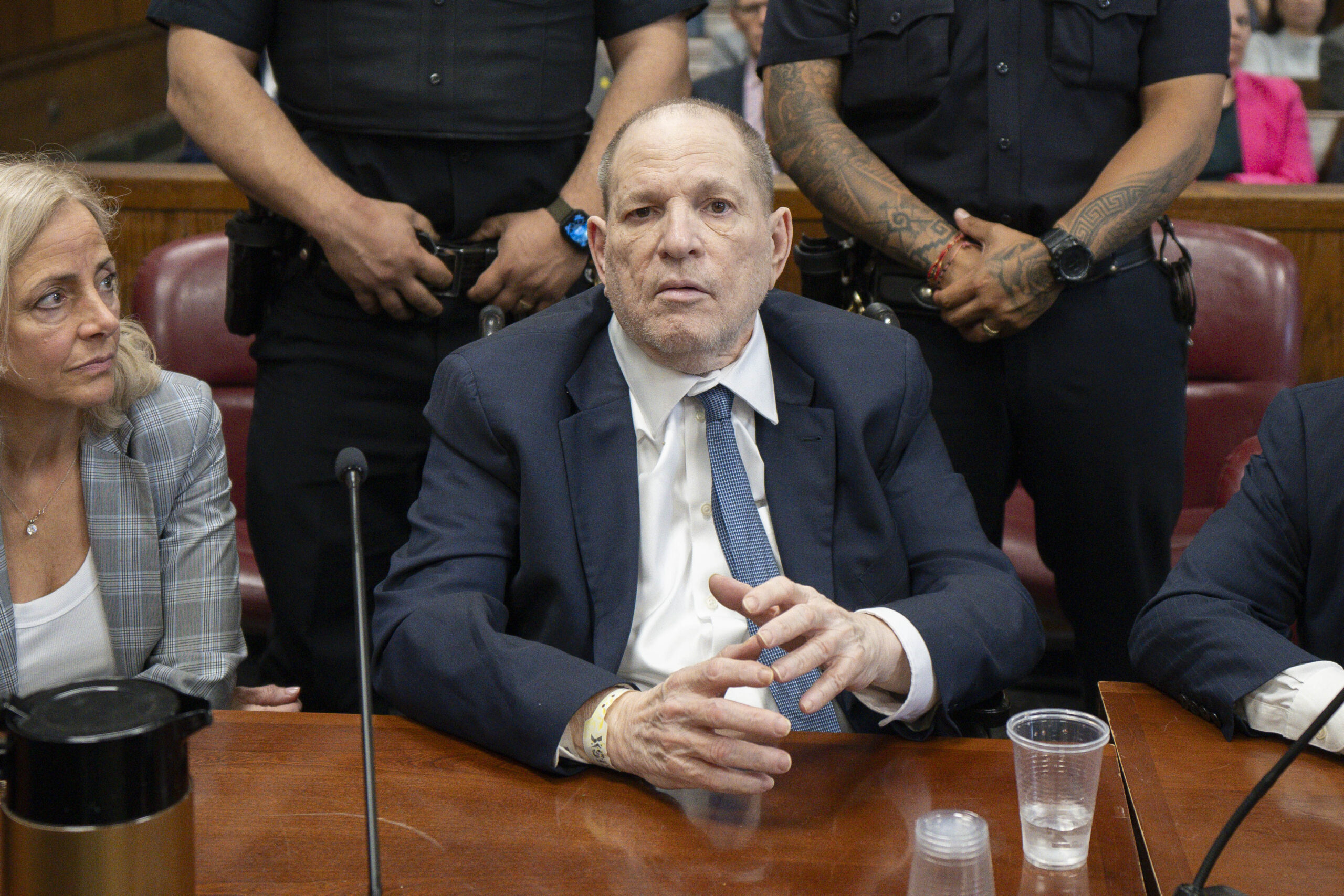
Harvey Weinstein, the disgraced former Hollywood mogul currently incarcerated, has brought in a new legal team to represent him as he faces an impending retrial in New York on a lingering third-degree rape charge. This significant legal maneuver comes as the 72-year-old prepares for another contentious courtroom battle, years after his initial New York convictions were overturned. The decision marks a strategic shift, with his former counsel now focusing on an appeal related to his separate West Coast conviction.
A Shifting Legal Landscape for Weinstein
The new defense roster features Jacob Kaplan of Agnifilo Intrater, a firm known for handling high-profile cases. Kaplan, whose current clientele includes accused killer Luigi Mangione, will be joined by his colleagues Marc Agnifilo, also representing Mangione, and Teny Geragos, who recently defended Sean "Diddy" Combs in a major sex trafficking and racketeering trial. Their collective experience suggests a robust and aggressive defense strategy is being assembled for Weinstein’s upcoming appearance. A scheduled court hearing to finalize details for the retrial was recently postponed, indicating ongoing negotiations and preparations behind the scenes.
Prosecutors and the new defense team are reportedly working to resolve the outstanding third-degree rape charge that originally resulted in a mistrial during Weinstein’s landmark 2020 New York proceedings. While discussions around a potential resolution, possibly involving a plea deal that could integrate with his existing sentences, have taken place, the likelihood of the charge proceeding to a full trial remains high. Weinstein had previously failed to respond to a plea offer that might have allowed for concurrent sentencing and credit for time already served.
The Overturn of a Landmark Conviction
Weinstein has been imprisoned for four years, initially serving a 23-year New York sentence following his 2020 conviction. In that pivotal trial, he was found guilty of a criminal sexual act in the first degree and third-degree rape. However, a seismic shift occurred in April 2024 when the New York Court of Appeals, in a 4-3 split decision, vacated those verdicts. The state’s highest court ruled that the trial judge had erred by permitting testimony from women whose allegations were not part of the formal charges, a violation of what is known as the Molineux rule. This legal principle generally prohibits the introduction of evidence of a defendant’s prior uncharged crimes unless it falls under specific exceptions, such as demonstrating motive, intent, absence of mistake, common plan or scheme, or identity. The court determined that the testimony in question had prejudiced the jury, leading to an unfair trial.
The vacating of these convictions sent shockwaves through the legal community and among victim advocacy groups, reigniting debates about the balance between a defendant’s right to a fair trial and the justice system’s capacity to address systemic patterns of abuse. For many, Weinstein’s initial conviction symbolized a reckoning within Hollywood and a triumph for the #MeToo movement, which had brought his decades of alleged predatory behavior to light. The appellate court’s decision, while rooted in procedural law, was seen by some as a setback for victims seeking accountability from powerful figures.
A Complicated Legal History and Lingering Charges
The path to Weinstein’s current legal predicament is complex, marked by multiple trials and appeals across the country. His journey from a celebrated film producer to a convicted sex offender began in earnest with investigative reports in The New York Times and The New Yorker in 2017, which detailed a myriad of sexual abuse allegations spanning decades. These reports ignited the #MeToo movement, empowering countless survivors to come forward with their own stories of harassment and assault.
The 2020 New York trial, which captivated global attention, saw Weinstein convicted of charges related to Miriam Haley and Jessica Mann. While he was acquitted of charges involving former model Kaja Sokola, the jury was unable to reach a unanimous verdict on other counts, including the third-degree rape charge that is now slated for retrial. This hung jury on specific charges essentially resulted in a mistrial for those counts, leaving them unresolved until now. The New York Court of Appeals’ decision to overturn the convictions did not impact the charges that resulted in a mistrial, thus clearing the path for the state to pursue a retrial on those specific unresolved counts.
In addition to the New York proceedings, Weinstein faced a separate trial on the West Coast. In 2022, a Los Angeles jury found him guilty of rape and sexual assault against one of four women who accused him in that jurisdiction. He was subsequently sentenced to 16 years in state prison for those crimes. Despite the New York convictions being vacated, Weinstein remains incarcerated at Rikers Island in New York, serving time based on his Los Angeles conviction. His previous legal team, Aidala Bertuna & Kamins, which handled his initial New York trials, has confirmed they will continue to work on an appeal of his latest Los Angeles verdict.
Strategic Defense and Appellate Challenges
The decision to replace the legal team for the upcoming New York retrial highlights the distinct nature of this new phase of litigation. Arthur Aidala, a prominent member of Weinstein’s former defense, stated that his firm is now focused on the appellate process for the Los Angeles conviction. Aidala expressed confidence that "serious legal errors" in the recent conviction will be identified and that the verdict will ultimately be overturned, much like the New York convictions. "As trial counsel for Harvey Weinstein in two separate proceedings, we have fought vigorously to protect his rights and ensure that he received a fair trial," Aidala said in a statement. "Our work does not end here. We will continue to advocate forcefully on his behalf in appellate courts, where we are confident that serious legal errors will be addressed and his most significant conviction will ultimately be overturned, as we have achieved in the past." He also confirmed that his firm would continue to represent Weinstein in all pending civil matters and support the new counsel to ensure a coordinated legal strategy.
The new legal team’s composition, featuring attorneys with experience in high-stakes criminal defense and celebrity cases, suggests a renewed approach to the upcoming retrial. Jacob Kaplan, Marc Agnifilo, and Teny Geragos will navigate the complexities of trying a case years after the initial proceedings, with public opinion largely shaped by the earlier convictions and the extensive media coverage. The defense will likely focus on the nuances of the specific charge, the credibility of witnesses, and procedural arguments, especially in light of the appellate court’s previous ruling regarding prejudicial testimony.
Broader Implications for Justice and Accountability
Weinstein’s ongoing legal battles continue to draw scrutiny to the justice system’s handling of sexual assault cases, particularly those involving powerful individuals. The vacating of his New York convictions underscored the stringent legal standards required for criminal convictions, even in cases with widespread public condemnation. While some view the appellate ruling as a necessary upholding of due process, others fear it could embolden perpetrators or discourage victims from coming forward, reinforcing the perception that justice is harder to achieve against the influential.
The upcoming New York retrial will serve as another critical test, not only for Weinstein but for the legal principles that govern criminal proceedings. It will inevitably reignite public discourse surrounding the #MeToo movement’s legacy, the challenges faced by survivors in seeking legal redress, and the evolving standards of evidence and testimony in sexual assault cases. The outcome of this retrial, alongside the appeals of his Los Angeles conviction, will contribute to the broader narrative of accountability in an era profoundly shaped by the pursuit of justice for victims of abuse. The world will be watching as Harvey Weinstein, stripped of his former power, faces yet another reckoning in a New York courtroom.