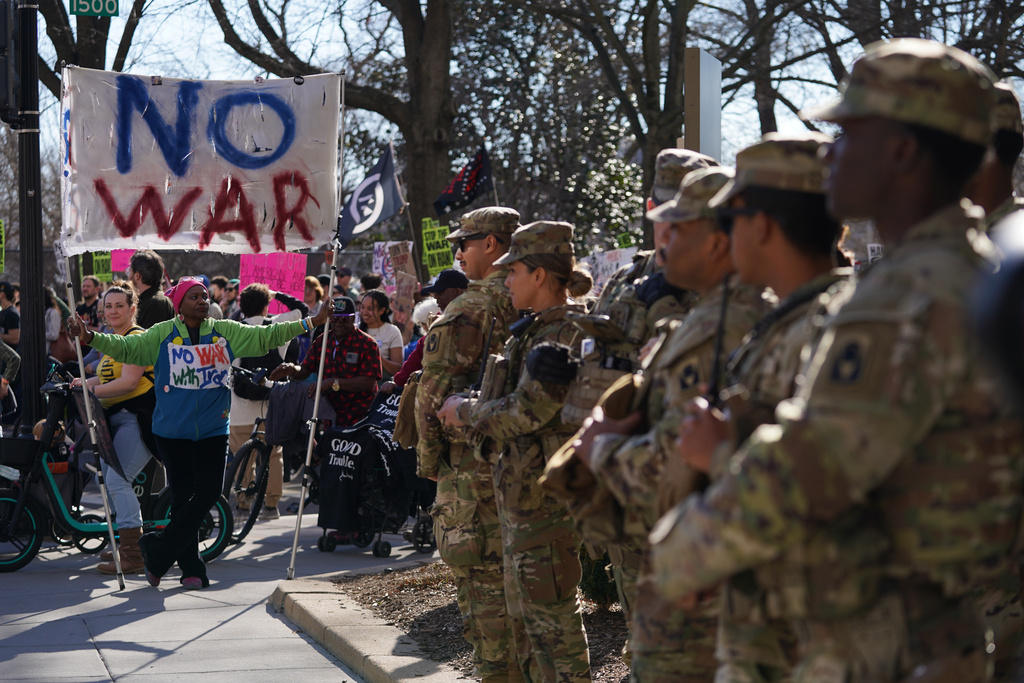
US politicians have offered a starkly divided response to President Donald Trump’s decision to launch a joint military operation with Israel against Iran, a move that has escalated regional tensions and sparked fears of a wider conflict. Republicans largely lauded the action as a necessary defense against Iranian aggression, while many Democrats expressed deep concern, criticized the lack of Congressional authorization, and warned of potential catastrophic consequences. The divergent reactions underscore the deep partisan chasm in American foreign policy, particularly concerning the Middle East.
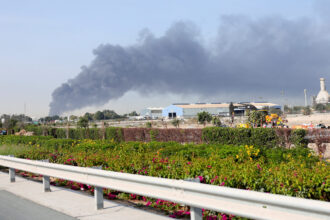
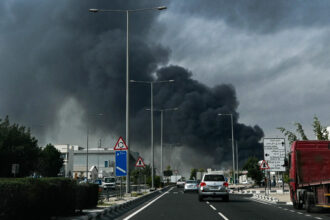
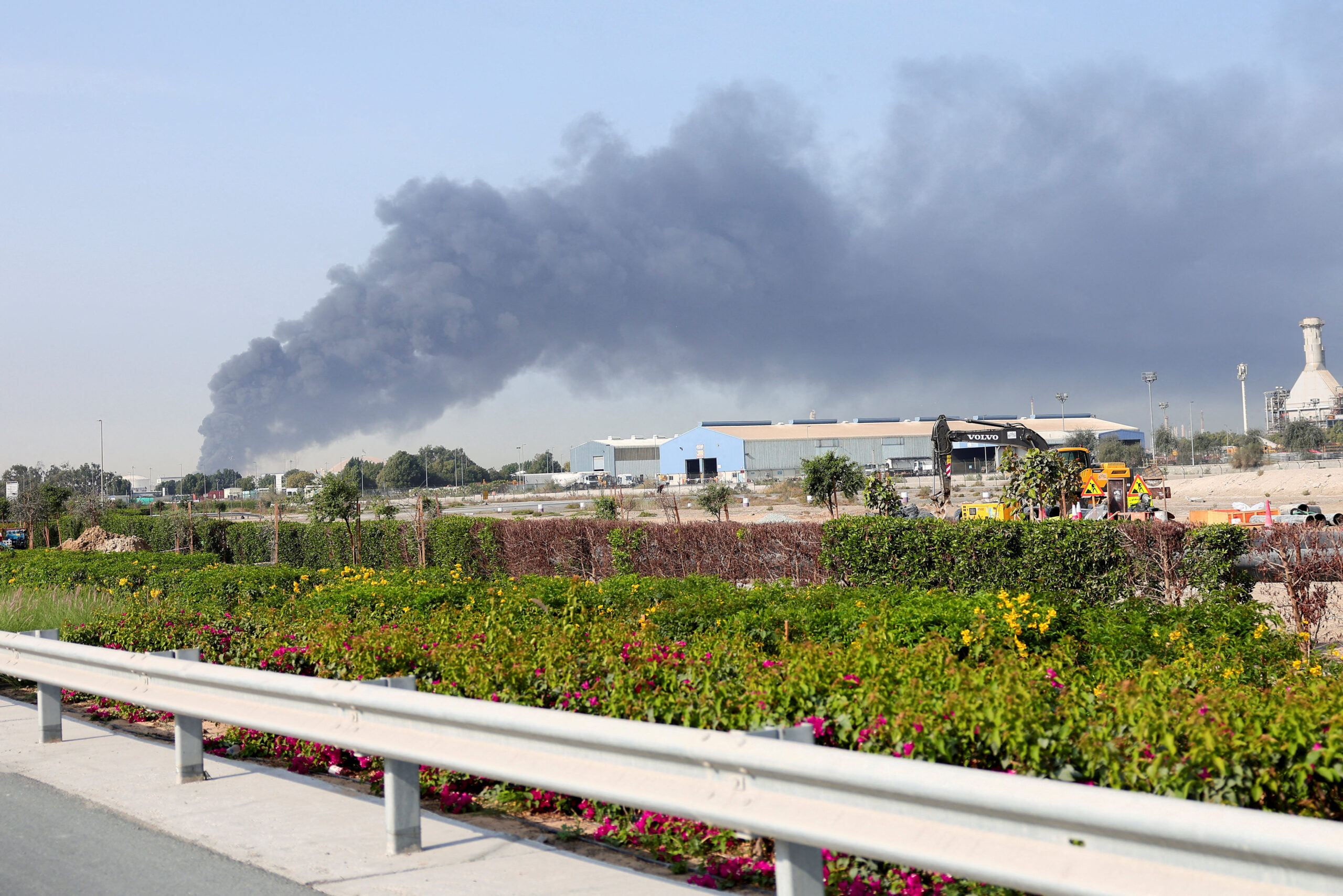
The coordinated strikes, reportedly resulting in significant casualties within Iran, have ignited a volatile tit-for-tat exchange, with Iran launching retaliatory attacks on Israel and U.S. bases across the region. These bases are situated in nations including Bahrain, Qatar, the United Arab Emirates, Saudi Arabia, Jordan, and Kuwait, heightening anxieties about a spiraling conflict that could engulf the entire Middle East in widespread violence.
Precedent and Justification for the Strikes
President Trump, in a statement following the initial military operations, framed the action as a defensive measure. "A short time ago, the United States military started major combat operations in Iran," he declared. "Our objective is to defend the American people by eliminating imminent threats from the Iranian regime, a vicious group of very hard, terrible people. Its menacing activities directly endanger the United States, our troops, our bases overseas, and our allies throughout the world." This justification centers on the perceived existential threat posed by Iran’s nuclear program, ballistic missile development, and alleged support for regional destabilization efforts.
Republican leaders echoed this sentiment, emphasizing Iran’s long-standing pattern of aggressive behavior. House Speaker Mike Johnson stated, "Today, Iran is facing the severe consequences of its evil actions. President Trump and the Administration have made every effort to pursue peaceful and diplomatic solutions in response to the Iranian regime’s sustained nuclear ambitions and development, terrorism, and the murder of Americans—and even their own people." Similarly, Senate Majority Leader John Thune pointed to Iran’s "relentless nuclear ambitions, its expanded ballistic missile inventory, and its unwavering support for terror groups in the region" as posing an "unacceptable threat." He commended President Trump for acting after Iran reportedly refused diplomatic off-ramps.
Democratic Concerns and Criticisms
In contrast, a significant segment of Democratic lawmakers voiced strong opposition and raised serious questions about the legality and wisdom of the strikes. A central point of contention has been the apparent lack of prior authorization from Congress, a requirement mandated by the Constitution for acts of war. House Minority Leader Hakeem Jeffries criticized the President directly: "Donald Trump failed to seek Congressional authorization prior to striking Iran. Instead, the president’s decision to abandon diplomacy and launch a massive military attack has left American troops vulnerable to Iran’s retaliatory actions." He added a plea for the safety of U.S. military personnel deployed in the volatile region.
Senate Minority Leader Chuck Schumer highlighted a lack of transparency from the administration. "The administration has not provided Congress and the American people with critical details about the scope and immediacy of the threat," Schumer stated. He argued that confronting Iran requires "American strength, resolve, regional coordination, and strategic clarity," but characterized Trump’s approach as "fitful cycles of lashing out and risking wider conflict" that are "not a viable strategy."
More progressive voices within the Democratic party offered even sharper rebukes. Representative Rashida Tlaib asserted that "The American people do not want a war with Iran. Trump is acting on the violent fantasies of the American political elite and the Israeli apartheid government, ignoring the vast majority of Americans who say loud and clear: No More Wars." This perspective frames the conflict as driven by external pressures and elite interests, divorced from public will.
Representative Alexandria Ocasio-Cortez echoed this sentiment, stating, "The American people are once again dragged into a war they did not want by a president who does not care about the long-term consequences of his actions. This war is unlawful. It is unnecessary. And it will be catastrophic." She alleged that Trump abandoned ongoing diplomatic efforts in favor of military action.
The Role of Congress and War Powers
The debate over Congressional authorization has become a focal point for Democratic opposition. Several lawmakers have called for immediate action to invoke the War Powers Resolution, a legislative measure designed to limit the president’s ability to commit U.S. forces to hostilities without congressional consent. Senator Bernie Sanders, a prominent critic, declared the "Trump-Netanyahu war" to be "unconstitutional and violates international law." He urged Congress to "pass a War Powers Resolution immediately," drawing parallels to past conflicts like Vietnam and Iraq.
Senator Chris Van Hollen accused the President of misleading the public and launching an "illegal, regime-change war" that endangers American lives and results in civilian casualties. He also called for an immediate Senate vote on the War Powers Resolution. Representative Ro Khanna and Representative Thomas Massie, a rare bipartisan pairing on this issue, announced their intention to push for a Congressional vote on war with Iran upon Congress’s reconvening. Massie explicitly stated, "This is not ‘America First.’ When Congress reconvenes, I will work with Representative Ro Khanna to force a Congressional vote on war with Iran. The Constitution requires a vote, and your Representative needs to be on record as opposing or supporting this war."
Public Opinion and Potential Ramifications
Initial public reaction, as indicated by a YouGov poll conducted shortly after the strikes, revealed a divided populace. The poll suggested that 33 percent of U.S. adults approved of the U.S. attacking Iran, while 45 percent disapproved. Among Democrats and Independents, approval was significantly lower, at just 10 percent and 21 percent respectively, starkly contrasting with the 68 percent of Republicans who expressed support. This data highlights a partisan divide mirroring that seen among elected officials.
The potential for wider regional conflict remains a paramount concern. Iran’s retaliatory strikes on U.S. allies and bases underscore the precariousness of the situation. The involvement of Israel, a key U.S. ally, further complicates the geopolitical landscape. The specter of a protracted and costly war, with significant human and economic tolls, looms large over the region and U.S. foreign policy.
Broader Implications and Political Dynamics
The military action against Iran also has profound implications for domestic politics, potentially reshaping debates around foreign policy, executive power, and national security. For President Trump, the decision to engage militarily with Iran could be seen as a bold assertion of his "America First" agenda, aimed at projecting strength and deterring adversaries. However, it also risks alienating segments of the electorate, particularly those who have consistently opposed new foreign entanglements.
The differing reactions from Republicans, while largely unified in support, also reveal subtle nuances. Senator Lindsey Graham offered a particularly strong endorsement, framing the action as potentially ushering in "a new dawn in the Middle East, with historic opportunity for lasting peace and prosperity" and seeing it as the "end of evil and darkness." This optimistic framing contrasts with the more pragmatic justifications offered by congressional leaders.
Within the Democratic party, the response highlights a struggle to articulate a cohesive strategy towards Iran that balances a desire for de-escalation with the need to counter Iranian regional influence and human rights abuses. While many Democrats condemn the current administration’s actions, there is also a recognition of Iran’s problematic behavior. The calls for Congressional action and adherence to constitutional processes reflect a broader concern about the unchecked expansion of presidential war-making authority.
Voices from the Ground and Beyond
Beyond federal officials, the reactions extended to state and local leaders, as well as prominent political figures. New York City Mayor Zohran Mamdani characterized the strikes as a "catastrophic escalation in an illegal war of aggression," emphasizing that "Americans do not want this. They do not want another war in pursuit of regime change." Former Democratic Presidential Nominee Kamala Harris also voiced opposition to a "regime-change war" and warned that troops were being put in harm’s way for "Trump’s war of choice."
Former Republican Representative Marjorie Taylor Greene, who has consistently advocated for an "America First" foreign policy and an end to foreign wars, expressed disappointment, stating, "We said ‘No More Foreign Wars, No More Regime Change!’ … My generation has been let down, abused, and used by our government our entire adult lives." This sentiment reflects a segment of the Republican base that is wary of military interventionism.
Democratic Senator John Fetterman, however, offered a more supportive perspective, referring to the operation as "Operation Epic Fury" and stating that President Trump "has been willing to do what’s right and necessary to produce real peace in the region." This indicates that even within the Democratic party, there isn’t a monolithic viewpoint on the necessity of decisive action.
The Path Forward and Lingering Questions
As the situation in the Middle East remains volatile, the long-term consequences of the U.S. military actions against Iran are yet to fully unfold. The immediate focus for many in Congress will be on the potential invocation of the War Powers Resolution, which could force a debate and vote on the continuation of hostilities. The outcome of such a vote, if it materializes, would have significant implications for the balance of power between the executive and legislative branches in matters of war.
The differing interpretations of the threat posed by Iran, the methods of addressing it, and the constitutional boundaries of presidential power will continue to be debated intensely. The reactions from U.S. politicians paint a clear picture of a nation deeply divided on how to navigate the complex and perilous landscape of Middle Eastern geopolitics, with profound implications for regional stability and American foreign policy for years to come.