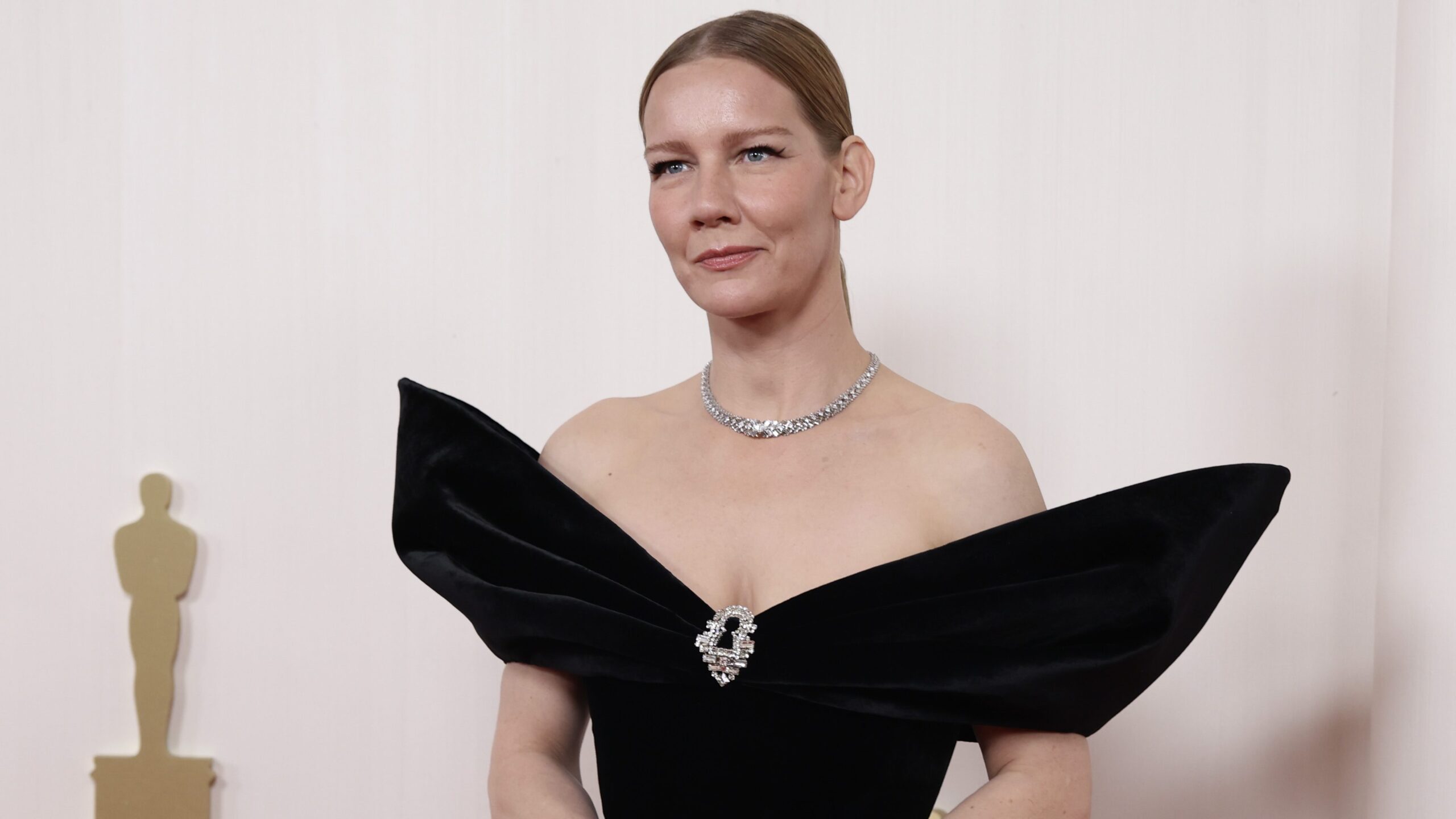
The international cinematic landscape is poised for a significant presence from Sandra Hüller, the acclaimed German actress who has garnered global recognition for her recent, critically lauded performances. Known for her powerful and nuanced portrayals in European arthouse cinema, Hüller is now drawing attention for her demanding role in Markus Schleinzer’s stark black-and-white period drama, Rose, where she tackles the complex challenge of playing a woman living as a man in post-war 17th-century Europe. This performance further cements her reputation for embodying characters pushed to extreme psychological and physical limits, a skill that is increasingly making her a sought-after talent in both independent and major studio productions.
Hüller’s ascent to international stardom has been swift and impactful, particularly following her Oscar nomination for Justine Triet’s Anatomy of a Fall and her compelling work in Jonathan Glazer’s Holocaust drama The Zone of Interest, both released in 2023. These roles captivated audiences and critics alike, showcasing her profound ability to inhabit morally ambiguous and deeply human characters. Her extensive European filmography also includes celebrated titles such as Maren Ade’s Toni Erdmann (2016) and Hans-Christian Schmid’s Requiem (2006), establishing her as a formidable presence long before her recent Hollywood breakthrough.
A Return to Arthouse Roots with Rose
Before fully immersing herself in high-profile Hollywood ventures, Hüller returns to the challenging terrain that has defined her career with Rose. The film, directed by Austrian filmmaker Markus Schleinzer, is set in the devastating aftermath of the Thirty Years’ War (1618-1648), a conflict that ravaged Central Europe and led to catastrophic demographic decline, with some regions of Germany experiencing death tolls exceeding 50 percent of their population. This historical backdrop provides a grim and perilous environment for Hüller’s character, a scarred and taciturn soldier who has long adopted a male identity to survive.
Hüller’s character arrives in a remote village, presenting herself as the long-lost son of a deceased farmer, seeking to claim an abandoned homestead. The deeply religious and suspicious villagers gradually, albeit cautiously, accept this diligent and seemingly pious man. However, the protagonist, known only as Rose, lives under constant duress, knowing that exposure of her true gender would carry potentially lethal consequences in such a rigid and unforgiving society. The narrative of Rose is inspired by real historical cases of women who adopted male identities for survival or opportunity in a patriarchal era, offering a poignant look into forgotten histories.
Markus Schleinzer, known for his incisive examinations of societal outsiders and moral complexities, directs Rose as his third feature film. His previous works, Michael (2011), which competed at Cannes, and Angelo (2018), which premiered in Toronto, both explored themes of isolation, identity, and the gaze of society on unconventional lives. Schleinzer’s consistent thematic focus on individuals navigating hostile environments makes him a natural fit to helm a story as profound and historically resonant as Rose.
The Genesis of a Demanding Role
Hüller recounted her initial engagement with Rose following an invitation from Schleinzer. She expressed immediate intrigue with the script, particularly the opportunity to portray such a complex figure and to contribute to a "monument" or "testament" to women who lived under similar circumstances. A significant personal motivation for Hüller was to test her own acting capabilities, to "pull it off," as she described the challenge of embodying a character whose very existence depended on maintaining a meticulous disguise. This was a departure from her previous experiences, demanding a unique blend of physical and mental immersion.

The historical period itself, the post-Thirty Years’ War era, also fascinated Hüller, an epoch she noted had not been extensively explored in her previous cinematic work. The sheer brutality and societal upheaval of the time offer a rich, albeit somber, canvas for storytelling, highlighting themes of survival, resilience, and the desperate measures individuals took to carve out a life amidst widespread desolation. The film’s world premiere in competition at the Berlin Film Festival underscores its significance within European cinema and its potential to spark widespread discussion.
Physicality and Psychological Depth in Character Building
Hüller has previously taken on male roles on stage, notably Hamlet, but she distinguished the challenges of Rose as fundamentally different due to the medium and stakes involved. On stage, the audience is implicitly aware of a female actor portraying a male character, allowing for a multi-layered, less literal interpretation. In Rose, however, the character’s life hangs in the balance, creating an intense, realistic tension that demanded a different approach to physical and mental transformation. The risk of exposure mandated an internal focus on concealment and an external presentation of unwavering masculinity.
The meticulousness of the film’s production design and costume work proved invaluable to Hüller’s process. Costume designer Doris Bartelt’s creations were described by Hüller as "incredibly precise and helpful," serving as an "armor" for the character. The ritual of donning multiple layers each morning, including chest binding, a penis prosthetic referred to as "the horn," and full-body padding, effectively erased any visible female form. This physical transformation, complemented by makeup artist Anette Keiser’s work on her face, was crucial for Hüller to embody the character authentically. Beyond the external, Hüller focused on cultivating an internal "stability, a different calm and focus" to mask the pervasive fear of discovery, making this internal work her primary challenge.
With minimal dialogue, much of Hüller’s performance in Rose relies on movement and subtle glances. She explained that the heavy, oversized costumes and shoes inherently dictated a slower, more deliberate gait. However, she consciously avoided stereotypical "male" movements, instead focusing on a general sense of calmness and thoughtfulness. This approach reflected Rose’s constant vigilance, her awareness of potential dangers, and the lingering trauma of war. Her portrayal aims to convey the quiet strength and internal struggle of a person constantly on guard, rather than a performative masculinity.
The Challenges of Production and Immersive Filmmaking
Hüller cited the film’s bifurcated shooting schedule—split between spring/summer and winter—as a significant technical hurdle. Maintaining an emotional connection to the character and narrative over an extended break, especially amidst varying weather conditions, proved difficult. Emotionally, the hardest aspect was portraying Rose’s internal world, her inability to express the depth of her experiences and fears. The character is "trapped" in her disguise, both literally and figuratively, demanding that Hüller hold immense emotional weight inward, allowing very little to surface.
Markus Schleinzer’s directorial philosophy strongly emphasized immersive, authentic environments. Hüller praised the production team for "building an entire world" on location in eastern Germany and Austria. Unlike studio sets, the houses were genuinely constructed, allowing actors to inhabit and utilize them fully. Schleinzer’s commitment extended to every detail, ensuring fields remained unharvested and landscapes minimally maintained to accurately reflect the 17th-century setting. The use of real animals and the insistence on authentic physical spaces were integral to his process, creating an environment where actors could truly feel transported to the period.
Hüller contrasted this experience with her work on The Zone of Interest, another film lauded for its authenticity. While The Zone of Interest employed an almost observational camera style, often leaving actors unbothered by its presence and relying solely on natural light, Rose required extensive artificial lighting due to its black-and-white cinematography. This meant longer preparation times for each take, a different rhythm of filmmaking, yet both productions shared a deep commitment to creating a believable historical world for the actors.

Historical Reinterpretation and Modern Resonance
Rose joins a growing trend in European cinema, alongside films like The Devil’s Bath (2024), that revisits historical narratives to unearth previously ignored facts and offer new interpretations of the past. Hüller emphasized that such films are not reinterpreting history but rather showcasing the diverse realities that existed. The documented cases of women living as men in 17th-century Germany and Austria reveal a far more complex societal fabric than often portrayed, highlighting individuals who adapted and survived outside conventional norms.
Hüller believes this historical perspective holds significant relevance for contemporary audiences. She argued that films like Rose are not made without reason in the present climate. With growing threats to the freedoms of individuals who do not conform to societal "molds," the film serves as a cautionary tale. It illustrates how 300 to 400 years ago, people were forced into hiding to survive or claim a right to their own lives. Hüller views this as a warning against the potential return of such constraints, advocating for universal human rights and the inherent place of every person in the world. She highlighted the film’s layered exploration of how individuals truly connect when they shed assumed identities, underscoring its profound and modern implications for human connection and acceptance.
Navigating Hollywood and Future Endeavors
Beyond Rose, Sandra Hüller’s burgeoning international career includes roles in highly anticipated Hollywood productions. She is set to star alongside Tom Cruise in Alejandro G. Iñárritu’s dramedy Digger and with Ryan Gosling in Phil Lord and Christopher Miller’s sci-fi feature Project Hail Mary. While unable to discuss specifics of these projects, Hüller shared personal insights into working on such large-scale productions.
She revealed that her primary learning experience was discovering her own ability to function effectively within these high-pressure, big-budget contexts. Dispelling any initial fears of being overwhelmed, starstruck, or unable to perform, Hüller found that she could indeed thrive. She also learned a valuable lesson about acting itself: that not every performance needs to be solely motivated by internal truth. Sometimes, simply asserting a character choice, or "performing," is sufficient if the director finds it credible, expanding her understanding of the craft. Her ability to operate under immense pressure, a trait she acknowledged knowing she possessed, was further validated.
Hüller maintains a consistent approach to project selection, prioritizing what genuinely interests her, irrespective of a project’s origin or scale. Despite her newfound international prominence, she remains grounded, continuing to reside in her home in Leipzig, Germany. While her professional life has seen unprecedented shifts and demands, she is actively working to re-establish a balance between her demanding career and her private life, indicating a thoughtful and deliberate approach to her continuing journey in cinema.