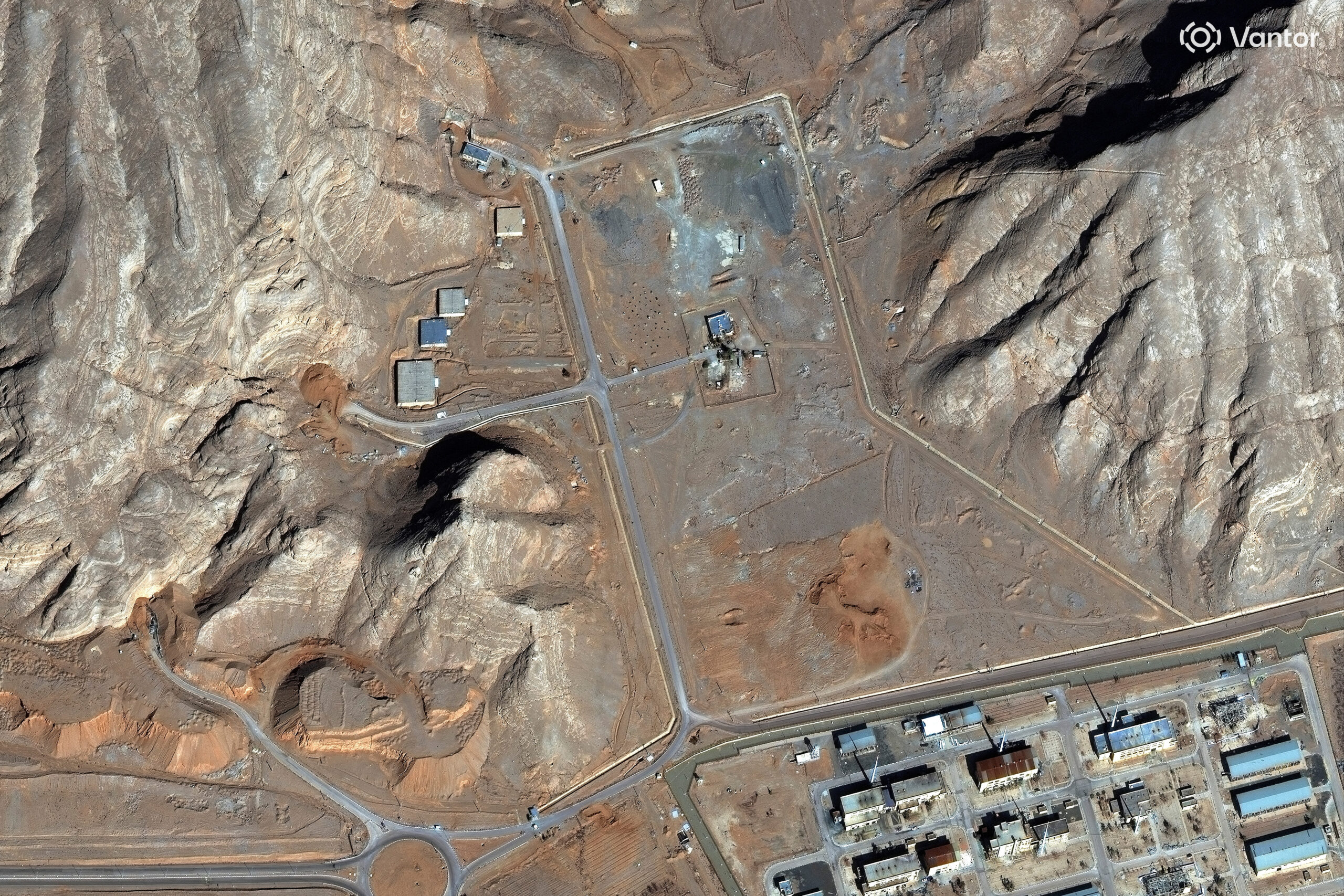
The United Nations nuclear watchdog has issued a stark warning, reporting that Iran has amassed the majority of its highly enriched uranium at an underground tunnel complex near its Isfahan facility, intensifying calls for immediate inspections as Tehran faces mounting international pressure over its nuclear program. The International Atomic Energy Agency (IAEA) revealed these critical findings in a report circulated to member states Friday, underscoring persistent concerns about Iran’s enrichment activities reaching nearly weapons-grade purity. This development arrives as the agency’s access to the Isfahan site, one of three facilities allegedly targeted by the United States during last year’s 12-day conflict, remains restricted.
Key IAEA Findings on Iran’s Uranium Stockpile
The IAEA report confirms that Iran continues to enrich uranium to 60 percent purity, a level significantly closer to the 90 percent threshold required for nuclear weapons than previously observed. This elevated enrichment level is a primary driver of international alarm, particularly given the IAEA’s diminished oversight capabilities. The report details that inspectors are currently unable to ascertain the exact location or operational status of a fourth uranium enrichment facility that Iran indicated it was establishing in Isfahan prior to the recent hostilities.
Satellite imagery has provided the IAEA with evidence of "regular vehicular activity around the entrance to the tunnel complex at Isfahan," where uranium enriched to both 20 percent and 60 percent U-235 is reportedly stored. The agency has emphasized the critical need for unfettered access to conduct inspections without further delay, a demand that Iran has largely resisted in recent months. The lack of direct comment from Tehran on these latest revelations further fuels speculation and concern among global powers.
Shifting Dynamics in US-Iran Nuclear Diplomacy
The IAEA’s report surfaces just one day after the conclusion of the third round of indirect talks between United States and Iranian negotiators, facilitated by Omani mediation in Geneva. These discussions, aimed at de-escalating nuclear tensions and potentially reviving aspects of the abandoned Joint Comprehensive Plan of Action (JCPOA), concluded without any significant breakthroughs. The protracted negotiations highlight the deep chasm that remains between the two nations on the scope and verification of Iran’s nuclear activities.
These critical issues are slated for discussion at the IAEA’s upcoming quarterly board meeting, scheduled to commence Monday in Vienna. This gathering will coincide with further technical meetings between Iranian representatives and international mediators, also in Vienna, underscoring the urgency and complexity of the ongoing diplomatic efforts. The fate of Iran’s substantial stockpile of 60 percent enriched uranium, estimated at over 400 kilograms (approximately 882 pounds) and last verified by inspectors in June, remains a central point of contention.
The Shadow of Recent Conflict on Nuclear Oversight
The current standoff over nuclear inspections is inextricably linked to the recent military engagements. Israel launched a series of strikes against Iran later in June, initiating a 12-day war in which the United States briefly participated by targeting Iranian nuclear sites. In the aftermath of these strikes, Tehran significantly curtailed its cooperation with the IAEA, restricting inspectors’ access to bombed facilities. Iran has accused the UN watchdog of bias and of failing to condemn the military actions, further complicating verification efforts.
Ali Hashem, an Al Jazeera correspondent, noted that the technical discussions in the Oman-mediated talks are expected to address the disposition of the 440.9 kilograms (972 pounds) of uranium enriched to up to 60 percent. The potential for this material to be diverted towards weapons development is a primary concern, driving the international community’s push for transparency and access. However, Hashem also pointed out a significant hurdle: the IAEA is aware that even Iranian authorities are struggling to access these heavily secured facilities.
"There’s been a lot of work around the facilities, at least this is what was shown in satellite imagery, but it doesn’t seem that the Iranians were able to get in," Hashem reported, indicating the scale of the challenge in assessing the current situation within these sensitive sites.
Sticking Points in US-Iran Negotiations
Reporting from Tehran, Al Jazeera’s Tohid Asadi identified the enriched uranium stockpile and the IAEA inspections as the paramount "sticking points" in the ongoing US-Iran discussions. Following the recent talks, Iranian Foreign Minister Abbas Araghchi urged the United States to cease its "excessive demands," though he did not specify their nature. For its part, the U.S. has consistently called for Iran to dismantle its nuclear infrastructure entirely, significantly curtail its ballistic missile program, and cease its support for regional allied groups.
Broader Implications for Regional Security and Global Non-Proliferation
The escalating concerns surrounding Iran’s nuclear program have profound implications for regional security and the global non-proliferation regime. The ability of the IAEA to conduct thorough and unimpeded inspections is fundamental to verifying compliance with international safeguards and ensuring that nuclear materials are not diverted for military purposes. The current lack of access to key facilities, particularly the Isfahan site, creates a significant information vacuum, fueling distrust and increasing the risk of miscalculation.
The United States and its allies have long viewed Iran’s enrichment activities as a direct threat to international peace and security. The proximity of Iran’s enriched uranium stockpile to weapons-grade purity, coupled with the restrictions on IAEA access, raises the specter of a potential breakout scenario. This situation has historically led to increased diplomatic pressure, economic sanctions, and, as recently demonstrated, military confrontation.
The Public and Political Impact of Nuclear Standoffs
For the public in Iran and across the Middle East, the ongoing nuclear standoff represents a source of persistent anxiety. The threat of renewed conflict, further economic hardship due to sanctions, and the potential for Iran to acquire nuclear weapons weigh heavily on the region’s stability. Domestically, the nuclear program has been a focal point of political debate in Iran, with different factions holding varying views on the pace of enrichment, the level of international cooperation, and the strategic implications of a nuclear capability.
Internationally, the developments underscore the fragility of the global non-proliferation treaty and the challenges inherent in managing the nuclear ambitions of states outside the established nuclear powers. The effectiveness of international organizations like the IAEA, and the willingness of member states to adhere to their mandates, are constantly tested in such high-stakes geopolitical environments.
Future Prospects: Diplomacy, Sanctions, or Escalation?
The path forward remains fraught with uncertainty. The upcoming IAEA board meeting and the continued mediation efforts present opportunities for dialogue and potential de-escalation. However, the entrenched positions of the United States and Iran, coupled with the technical complexities of verification, suggest that a swift resolution is unlikely.
The international community will be closely monitoring the IAEA’s ability to regain access to critical sites and to verify the nature and disposition of Iran’s enriched uranium stockpile. The outcome of these diplomatic endeavors will not only shape Iran’s nuclear future but will also have a significant impact on the broader geopolitical landscape of the Middle East and the global fight against nuclear proliferation. The coming weeks and months are critical in determining whether diplomacy can prevail over the specter of escalation.