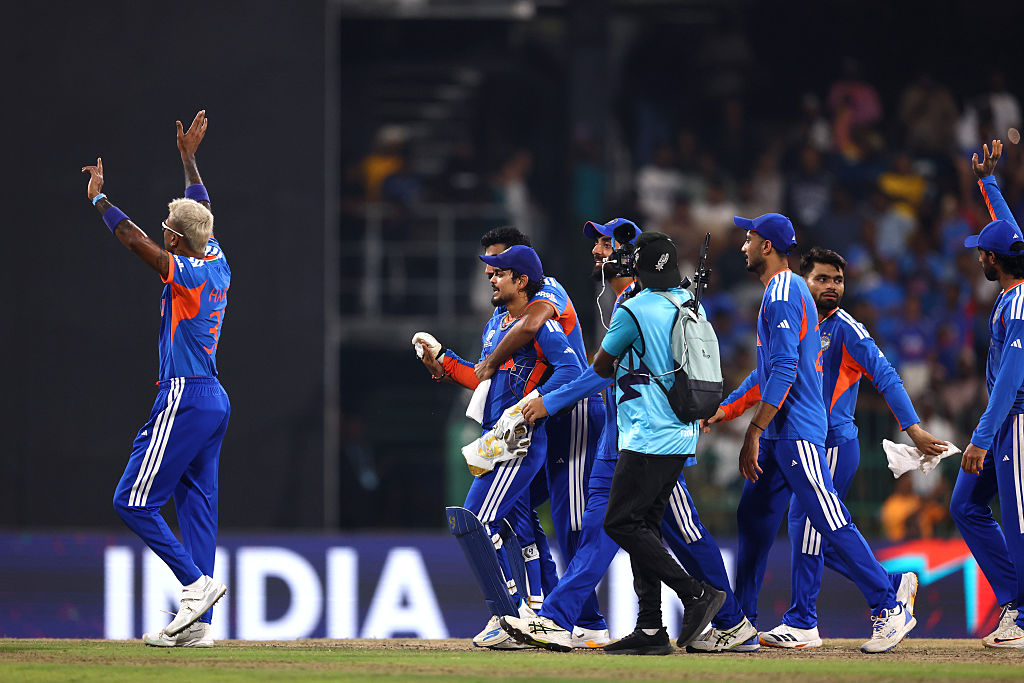
India solidified their position as a dominant force in the ongoing T20 World Cup, decisively defeating arch-rivals Pakistan by 61 runs to secure a coveted spot in the Super Eights stage of the tournament. The victory, achieved in a high-stakes Group A encounter on Sunday at the R Premadasa Stadium, marks India’s third consecutive win and underscores their championship aspirations.
The highly anticipated clash between the two cricketing titans unfolded amidst a charged atmosphere, with the outcome having significant implications for both teams’ progression. India, the reigning T20 World Cup champions, showcased their prowess with both bat and ball, overcoming a challenging pitch and a strategic Pakistani bowling attack. The win not only propels India into the next round but also extends their impressive unbeaten streak in this edition of the T20 World Cup.
Kishan’s Explosive Innings Powers India to a Commanding Total
The foundation of India’s formidable total was laid by a scintillating innings from opener Ishan Kishan. Facing a tricky Colombo pitch that offered assistance to the bowlers, Kishan displayed remarkable composure and aggressive intent, smashing a rapid 77 off just 40 deliveries. His fearless approach saw him reach his second consecutive half-century of the tournament in a mere 27 balls, dismantling the Pakistani bowling with a series of powerful strokes.
Kishan’s aggressive batting put the Pakistani spinners, who were deployed heavily in the initial powerplay, under immense pressure. While Pakistan’s spin-heavy attack managed to exert some control and slow down the scoring rate after Kishan’s departure, the damage had already been done. His explosive knock provided India with the crucial impetus needed to post a challenging total.
Pakistan’s Spin Strategy and India’s Resilience
Pakistan’s captain, Salman Ali Agha, opted for an unconventional strategy, opening the bowling attack himself with a spinner. This move initially paid dividends as he dismissed the highly-rated Abhishek Sharma, who was returning to the side after missing previous matches due to a stomach infection. Sharma, the reigning number one batter in T20 Internationals, was trapped lbw, marking a significant early breakthrough for Pakistan.
The Pakistani team deployed three spinners during the powerplay, aiming to stifle India’s boundary-hitting capabilities. This tactic appeared to have some success, as India’s score of 52-1 after the first six overs suggested a controlled start. However, Kishan’s brilliance transcended these defensive measures, as he consistently found the boundaries and kept the scoreboard ticking at a brisk pace.
Middle-Order Contributions and a Late Surge
Despite losing Kishan, India maintained their momentum, reaching 92-2 at the halfway mark of their innings. The dismissal of Kishan by Saim Ayub marked a turning point, as Ayub followed up by removing Tilak Varma (25) and Hardik Pandya in quick succession. This double strike threatened to derail India’s progress and re-ignited Pakistan’s hopes of restricting the opposition to a manageable total.
However, the Indian middle order rallied to ensure they remained on track for a substantial score. Suryakumar Yadav, playing a crucial anchoring role, contributed a valuable 32, while Shivam Dube provided crucial support with a quickfire 27. Their partnership helped India recover from the mini-collapse and pushed them towards a score that had once looked well within reach of crossing the 200-run mark. Ultimately, India finished their innings at 175-7, a total that proved more than adequate.
Pakistan’s Batting Collapse Under Indian Pressure
Chasing a steep target of 176, Pakistan’s batting lineup faltered under the relentless pressure exerted by the Indian bowlers. The tournament co-hosts, buoyed by their strong batting performance, unleashed a potent bowling attack that dismantled the Pakistani chase from the outset. Pakistan became the first team in the T20 World Cup to field six spinners in a single match, a testament to their tactical approach, but this strategy ultimately proved insufficient.
The Pakistani chase began disastrously, with the team slumping to a precarious 13-3 within the first two overs. Hardik Pandya struck early, removing the in-form opener Sahibzada Farhan for a golden duck. The formidable pace duo of Jasprit Bumrah and Arshdeep Singh then compounded Pakistan’s misery, with Bumrah claiming the wickets of Ayub and captain Salman Ali Agha in the same over. This devastating spell effectively pinned Pakistan back, leaving them gasping for breath.

Babar Azam’s Struggles and Khan’s Lone Battle
The early wickets continued to tumble, and Pakistan’s captain Babar Azam could only manage a brief stay at the crease, scoring just five runs before succumbing to the pressure. By the end of the powerplay overs, Pakistan found themselves in a dire situation at 38-4, with their chances of a victory rapidly diminishing.
Amidst the wreckage of the Pakistani innings, Usman Khan emerged as the lone fighter, offering some resistance with a determined knock of 44. He battled valiantly to keep Pakistan’s hopes alive, but the mounting pressure and the consistent fall of wickets at the other end proved too much to overcome. Ultimately, Axar Patel, bowling with precision, lured Khan out of his crease, and the wicketkeeper completed a smart stumping, effectively snuffing out any lingering hopes of an unlikely Pakistani comeback.
India’s Dominance and Super Eights Qualification
The comprehensive 61-run victory not only avenged past encounters against Pakistan but also secured India’s immediate passage to the Super Eights. This achievement underscores their consistent performance and strong form in the tournament. The Indian team has showcased a balanced approach, with their batting lineup firing on all cylinders and their bowling attack proving to be a formidable force.
The Super Eights stage promises tougher challenges, but India’s commanding performance against Pakistan provides a significant confidence boost. Their ability to adapt to different conditions and maintain pressure on their opponents will be crucial as they progress deeper into the T20 World Cup. The qualification also signifies the culmination of months of preparation and strategic planning by the Indian team management and players.
Broader Implications and Tournament Dynamics
This emphatic win has significant implications for the T20 World Cup’s narrative. India’s early qualification sets a strong precedent for other contenders and highlights the depth of talent within their squad. The performance against Pakistan, a team known for its unpredictable nature and passionate fanbase, adds an extra layer of prestige to the victory.
The match itself, despite the eventual one-sided nature of the scoreline, was preceded by some pre-match tension. Reports indicated that Pakistan captain Salman Ali Agha and his Indian counterpart Suryakumar Yadav did not shake hands at the toss, hinting at the underlying rivalry and competitive spirit that defines these encounters. The T20 World Cup, with its global appeal, often becomes a stage where geopolitical undercurrents are subtly present, making the sporting contests even more keenly observed.
Furthermore, the Pakistan Cricket Board’s earlier reversal of their decision to boycott the game, reportedly in solidarity with Bangladesh whose team refused to tour India over safety concerns, added another layer of intrigue to the build-up. The tournament’s organizers navigated these complexities to ensure the continuation of the highly anticipated fixture, demonstrating the global reach and importance of cricket.
Public Reaction and Future Prospects
The victory has been met with widespread jubilation across India, with fans celebrating the dominant performance and the crucial Super Eights qualification. Social media platforms have been abuzz with congratulatory messages and highlights of Kishan’s explosive innings. The win provides a significant morale boost to the nation, especially given the intense rivalry with Pakistan.
For Pakistan, the loss represents a significant setback, and they will need to regroup quickly to salvage their T20 World Cup campaign. Their bowling strategy, while innovative, failed to contain the Indian batting might, and their own batting lineup showed concerning fragility. The team will face intense scrutiny as they aim to make amends in their upcoming matches.
As India marches into the Super Eights, their focus will now shift to the next phase of the tournament. The team’s ability to maintain their winning momentum, adapt to different opposition strategies, and manage the increasing pressure will be key to their quest for a second T20 World Cup title. The T20 World Cup continues to deliver thrilling encounters, and India’s strong start positions them as firm favorites. The path ahead is challenging, but their performance against Pakistan has undoubtedly sent a strong message to their competitors.