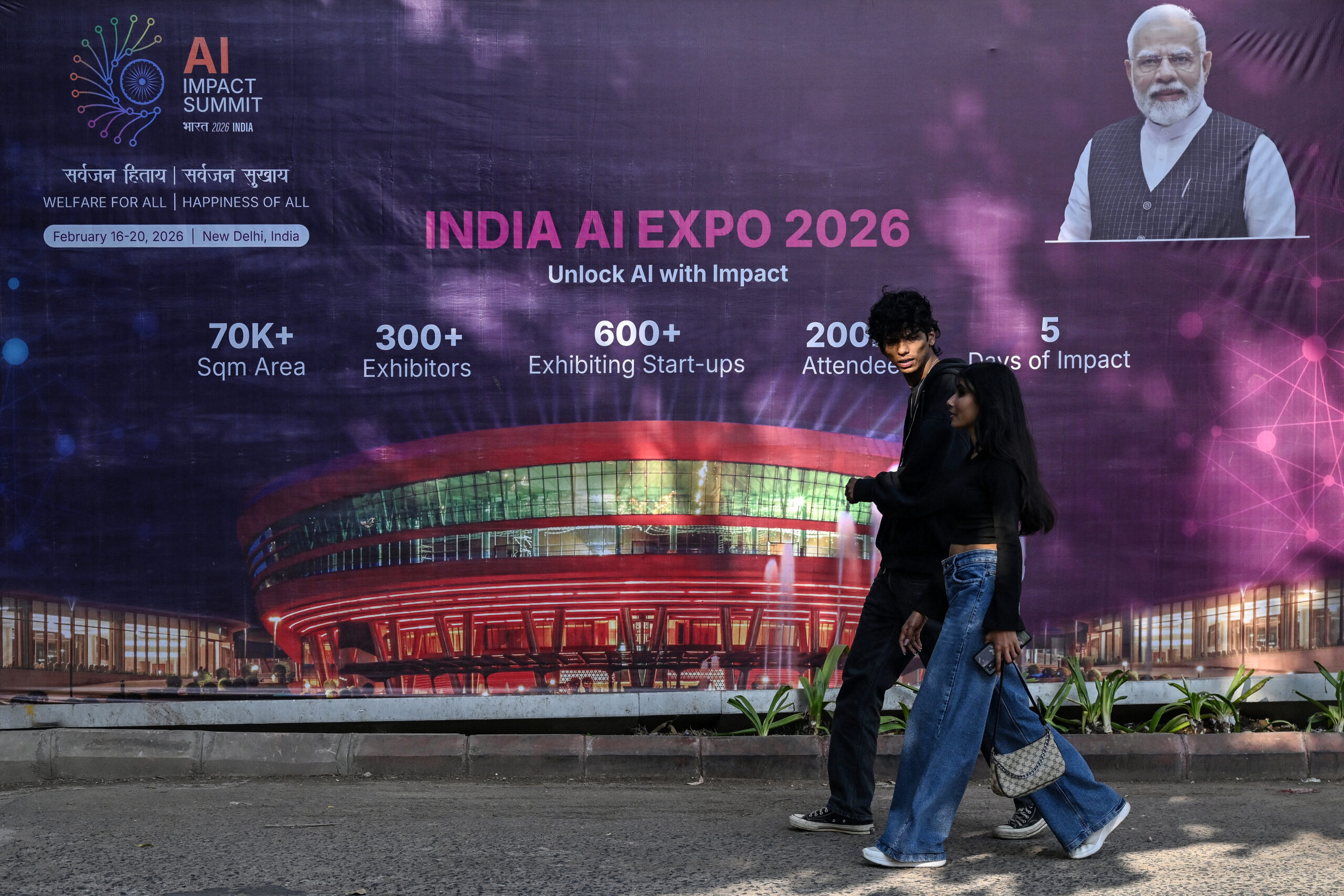
New Delhi, India – Leaders from across the globe and titans of the technology industry have converged in India’s capital for the AI Impact Summit, a pivotal five-day event designed to forge a unified vision for artificial intelligence governance and international cooperation. Prime Minister Narendra Modi inaugurated the summit, underscoring India’s ambition to be a leader in the rapidly evolving AI landscape and to showcase its technological prowess. The gathering addresses pressing global concerns, from the potential for AI to disrupt employment to critical issues surrounding child safety in the digital age.
This year’s summit is being touted as the most significant iteration to date, with Indian officials anticipating a turnout of approximately 250,000 attendees. The diverse group includes national leaders, ministerial delegations, and prominent figures from the tech sector, signaling the broad-reaching impact of AI across society. The event arrives at a critical juncture, as artificial intelligence continues its relentless integration into economies worldwide, reshaping labor markets and prompting urgent discussions about regulation, security, and ethical considerations.
The pervasive influence of AI, from generative tools capable of producing sophisticated text and imagery to advanced applications in defense, healthcare, and climate modeling, has elevated the technology to a central focus for governments and corporations globally. The AI Impact Summit, which has previously been hosted in France, the United Kingdom, and South Korea, has evolved from its origins as a forum primarily focused on the safety of cutting-edge AI systems to a comprehensive event encompassing trade, policy, and broader societal implications.
India’s Vision for AI Governance and Global Collaboration
India, now the world’s most populous nation and a burgeoning digital market, views the AI Impact Summit as a strategic platform to position itself as a crucial bridge between developed economies and the Global South. The nation’s experience in developing large-scale digital public infrastructure, including its pioneering digital identity and payment systems, is seen as a potential model for implementing AI solutions efficiently and affordably on a global scale.
The overarching objective, as articulated by India’s Minister for Electronics and Information Technology Ashwini Vaishnaw, is to ensure that "AI should be used for shaping humanity, inclusive growth and a sustainable future." This sentiment reflects a broader aspiration to harness AI’s transformative potential for positive societal advancement, moving beyond purely economic or technological considerations.
Among the distinguished global leaders attending the summit are French President Emmanuel Macron and Brazilian President Luiz Inacio Lula da Silva. Their presence underscores the international recognition of the summit’s importance in shaping the future trajectory of AI development and deployment. The summit also boasts an impressive roster of technology leaders, including Google CEO Sundar Pichai, Qualcomm CEO Cristiano Amon, OpenAI CEO Sam Altman, Microsoft President Brad Smith, and AMI Labs Executive Chairman Yann LeCun, highlighting the deep engagement of the private sector in these critical discussions.
The "Three Sutras" and the Path to a New Delhi Declaration
The summit’s proceedings are structured around three core themes: "people, progress, planet," which Indian officials have termed the "three sutras." This framework aims to guide discussions toward a balanced approach that considers the human, developmental, and environmental aspects of AI integration.
While previous AI summits have not resulted in legally binding political agreements, the expectation for the India AI Impact Summit is that it will culminate in a nonbinding pledge or declaration. This document is intended to outline shared goals and principles for the responsible development and deployment of artificial intelligence, offering a roadmap for future international collaboration.
The evolution of these summits reflects the rapidly changing landscape of AI. The Paris AI Action Summit in the previous year, for instance, was notably shaped by a speech from U.S. Vice President JD Vance, who cautioned against "excessive regulation" that could stifle the burgeoning AI industry, a perspective that sparked debate about the balance between innovation and risk mitigation.
The initial AI summit, held in November 2023, occurred shortly after the public launch of ChatGPT, an event that ignited both immense excitement and significant apprehension regarding the capabilities of generative AI. That inaugural meeting, convened at a former code-breaking facility north of London, focused primarily on ensuring the safety of AI systems and mitigating potentially catastrophic risks. It was attended by official delegations from 28 countries and the European Union, alongside a select group of AI executives and researchers.
Navigating the AI Frontier: Opportunities and Challenges
The current summit in New Delhi represents a significant expansion in scope and ambition compared to its predecessors. The focus has broadened considerably, encompassing not only safety but also the wider economic, social, and ethical implications of AI. This shift acknowledges that AI’s impact is no longer confined to niche technological concerns but is now a central driver of global change.
Experts suggest that discussions at the AI Impact Summit will likely revolve around the delicate balance of establishing governmental oversight without impeding the rapid advancement of AI technology. Seth Hays, author of the Asia AI Policy Monitor newsletter, noted that the conversation will probably center on "ensuring that governments put up some guardrails, but don’t throttle AI development."
There is also anticipation of potential announcements regarding increased state investment in AI research and development. However, Hays points out that for a nation like India, such domestic investments alone may not be sufficient to significantly alter the global landscape. "India needs partnerships to integrate on the international scene for AI," he told AFP news agency, highlighting the importance of collaborative efforts for sustained progress.
The Economic and Societal Ripple Effects of Artificial Intelligence
The accelerating pace of AI development presents both unprecedented opportunities and significant challenges for economies and societies worldwide. Generative AI tools, capable of creating human-like text, images, and even music, are already transforming creative industries, marketing, and content creation. Simultaneously, AI-powered systems are revolutionizing sectors such as healthcare, with advancements in diagnostics and drug discovery, and are playing a crucial role in climate modeling and environmental sustainability efforts.
However, the widespread adoption of AI also raises profound questions about the future of work. Automation driven by AI could displace workers in various sectors, necessitating proactive strategies for reskilling and upskilling the workforce. The equitable distribution of AI’s benefits and the mitigation of potential job losses are therefore central to the discussions at the AI Impact Summit.
Beyond employment, the ethical dimensions of AI are a critical concern. Issues such as algorithmic bias, data privacy, and the potential for AI to be used for malicious purposes require careful consideration and robust regulatory frameworks. The summit’s focus on child safety underscores the urgent need to protect vulnerable populations from the potential harms associated with AI technologies, including online exploitation and the spread of misinformation.
The Role of India in the Global AI Ecosystem
India’s positioning as host of the AI Impact Summit reflects its growing influence in the global technology arena. With a vast pool of skilled IT professionals and a rapidly expanding digital infrastructure, India is well-placed to contribute significantly to AI research, development, and deployment. The nation’s commitment to developing inclusive digital public goods, such as its Aadhaar digital identity system and unified payments interface (UPI), provides a tangible example of how technology can be leveraged to empower large populations.
The success of India’s digital initiatives offers a compelling narrative for how AI can be deployed at scale to address developmental challenges and promote economic growth. By sharing its experiences and expertise, India aims to foster a more inclusive and collaborative global AI ecosystem, ensuring that the benefits of this transformative technology are accessible to all nations, not just the most technologically advanced.
The AI Impact Summit serves as a critical platform for dialogue, knowledge exchange, and the forging of strategic alliances. The outcomes of this gathering, even if nonbinding, are expected to shape the global discourse on AI governance, influence national policies, and guide the trajectory of AI innovation for years to come. The world watches as India endeavors to lead the charge in defining a responsible and beneficial future for artificial intelligence.