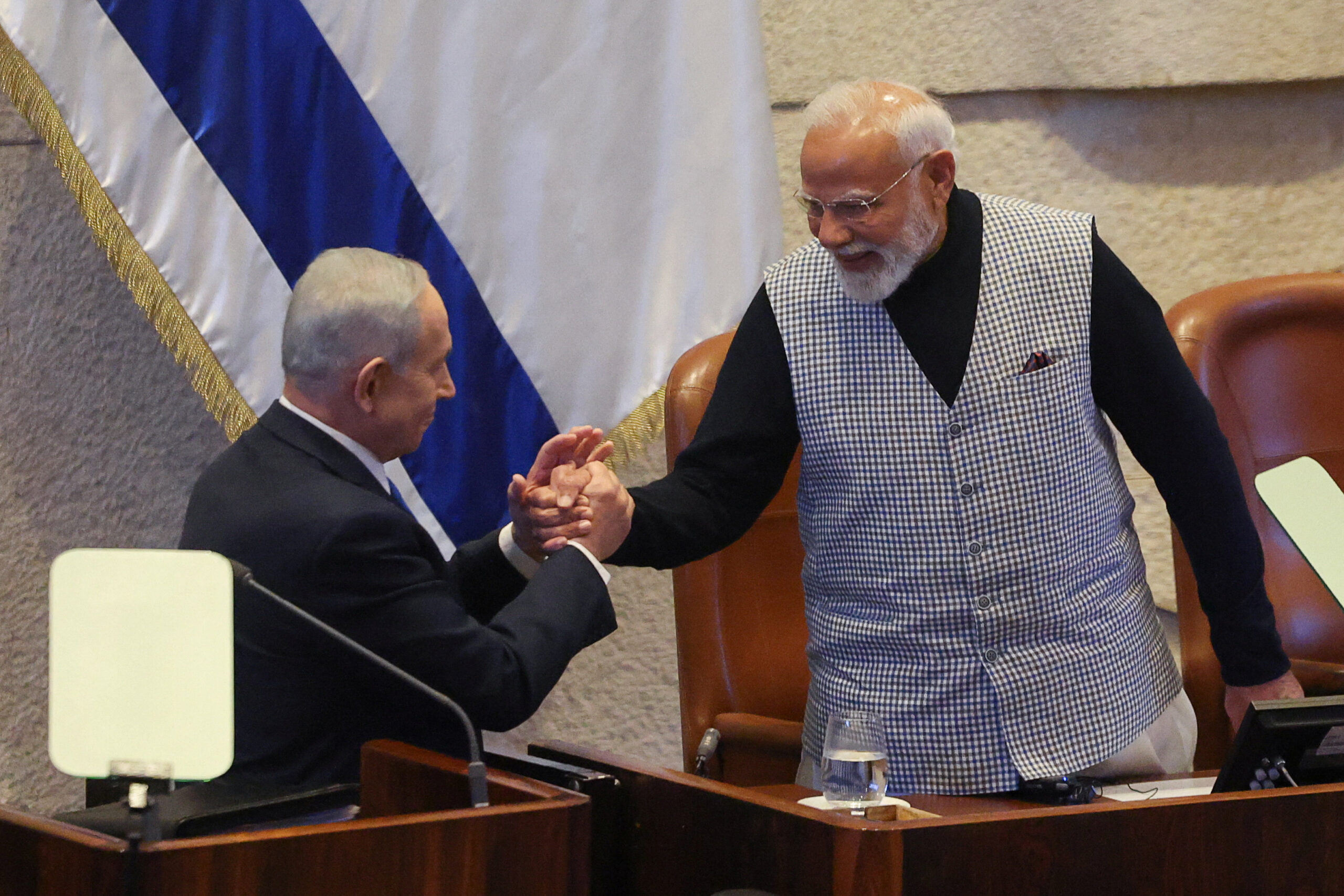
Indian Prime Minister Narendra Modi delivered a forceful address to Israel’s parliament, the Knesset, on Wednesday, affirming unwavering support for Israel and condemning the October 7th Hamas-led attacks as "barbaric," while simultaneously stating that "no cause can justify the murder of civilians." The visit, the first by an Indian leader to the Israeli legislature, marks a significant moment in bilateral relations, occurring amidst the ongoing and devastating conflict in Gaza. Modi’s pronouncements come as Israel faces intense international scrutiny and accusations of genocide stemming from its military operations in the Palestinian territory, a stance that has drawn criticism from various quarters within India and internationally.
Modi’s two-day visit began with a formal welcome ceremony at Ben Gurion International Airport, where he was greeted by Israeli Prime Minister Benjamin Netanyahu. The two leaders have cultivated a close personal and political relationship, with Netanyahu referring to Modi as "more than a friend, a brother." This sentiment underscores the strategic deepening of ties between India and Israel, which have transformed from nascent diplomatic relations into a robust partnership spanning defense, technology, and trade since Modi’s election in 2014.
During his address to the Knesset, Modi articulated India’s firm solidarity with Israel, stating, "India stands with Israel firmly, with full conviction, in this moment and beyond." He explicitly denounced the October 7th attacks as a brutal act of terrorism, a sentiment echoed by Israeli leadership. However, the Prime Minister’s remarks also carried a clear message regarding the conduct of war, asserting, "no cause can justify the murder of civilians." This nuanced statement seeks to balance India’s steadfast support for Israel’s security with a broader humanitarian concern for civilian lives affected by the conflict.
Deepening India-Israel Strategic Partnership
The burgeoning relationship between India and Israel has been a cornerstone of Modi’s foreign policy. India, a major buyer of Israeli defense equipment, has seen its trade with the nation surge, particularly in sectors like cybersecurity, artificial intelligence, and quantum technology. In September 2025, a Bilateral Investment Treaty was signed, further solidifying economic ties. This partnership is viewed by both nations as crucial for global stability and economic prosperity, fostering a sense of shared strategic interests in an increasingly complex geopolitical landscape.
Prime Minister Netanyahu lauded India’s support in the aftermath of the October 7th attacks, emphasizing the shared values and common interests that bind the two democracies. He highlighted the "synergy" between the two nations in cutting-edge technological fields, underscoring the forward-looking nature of their alliance. This strategic alignment is further cemented by frequent high-level exchanges, including Netanyahu’s visit to India in 2018, which followed Modi’s historic trip in 2017.
Navigating International Scrutiny and Humanitarian Concerns
Modi’s visit and his pronouncements come at a particularly sensitive time, with the International Court of Justice (ICJ) hearing South Africa’s allegations of genocide against Israel. While Modi expressed support for a UN Security Council-approved Gaza peace initiative, viewing it as a "pathway" to a "just and durable peace," his government’s stance on the broader conflict has faced internal dissent. Critics point to the significant Palestinian civilian casualties in Gaza, with official figures indicating tens of thousands killed and hundreds of thousands wounded.

The substantial human cost of the conflict in Gaza, with a significant number of deaths occurring even during a temporary ceasefire, has fueled international condemnation and calls for accountability. India, historically a proponent of the Palestinian cause, finds itself navigating a delicate diplomatic balance. Some Indian political figures have voiced concern that Modi’s unequivocal support for Israel could undermine India’s long-standing commitment to the self-determination of the Palestinian people, a position reaffirmed by UN resolutions that India has co-sponsored.
Imran Masood, a parliamentarian from India’s Congress party, urged Modi to prioritize the plight of children in Gaza during his visit, stating that "if there is any morality then he should talk about death of children in Gaza." Similarly, Marian Alexander Baby, leader of the Communist Party of India, characterized Modi’s embrace of Israel as a "betrayal of India’s anti-colonial legacy and our long-standing position in support of the right to self-determination of the Palestinian people."
India’s Role as a Global Player
Gideon Levy, a journalist with the Israeli newspaper Haaretz, commented that Modi’s visit "cannot be underestimated," particularly given that public opinion in India has shown significant criticism towards Israel’s actions in Gaza. Levy drew parallels between Modi and Netanyahu, describing both as "nationalist, populist in a way, quite conservative, and hawkish." He also noted that both nations carry historical "stains," referencing Kashmir in India and the occupied Palestinian territories for Israel, suggesting a shared understanding of complex domestic and international challenges.
India’s position as Israel’s largest arms buyer, with substantial defense spending between 2020 and 2024, highlights the economic and strategic interdependence between the two nations. The bilateral trade, largely centered on defense and security, stood at $3.9 billion in 2024, underscoring the commercial dimensions of their relationship. This economic leverage allows India to play a significant role in regional and global security dynamics.
Despite its condemnation of Israel’s recent moves to expand control over the occupied West Bank, India’s public stance on the Gaza conflict has been characterized by a strategic ambiguity that balances its commitment to its growing alliance with Israel against its historical ties and principles concerning Palestinian rights. Modi’s engagement with the Knesset and his dual messaging on civilian protection and unwavering support for Israel reflect the complex foreign policy challenges faced by India as it asserts its influence on the global stage.
Looking Ahead: Continued Engagement and Diplomacy
Prime Minister Modi’s visit to Israel is set to continue on Thursday, with further engagements planned that will likely focus on expanding bilateral cooperation and addressing regional security concerns. The outcomes of these discussions will be closely watched by the international community, particularly in the context of the ongoing conflict in Gaza and the broader implications for peace and stability in the Middle East. India’s ability to balance its strategic partnership with Israel with its commitment to humanitarian principles and international law will be a key determinant of its diplomatic standing in the region and globally.
The dynamics of the India-Israel relationship, particularly in the context of the Israeli-Palestinian conflict, remain a subject of intense observation. As the situation in Gaza continues to evolve, India’s diplomatic maneuvers and its articulation of principles regarding civilian protection and the pursuit of peace will be critical in shaping perceptions of its role in international affairs. The visit underscores the evolving geopolitical landscape and the intricate web of alliances and interests that define contemporary international relations.