Iranian authorities are increasingly relying on opaque, state-linked "trustees" to navigate the treacherous waters of international sanctions, a strategy fraught with potential for corruption and mismanagement as the nation braces for heightened conflict with the United States. This intricate network of intermediaries is tasked with the delicate and often clandestine export of Iranian petroleum and other sanctioned commodities, with billions of dollars in revenue reportedly unaccounted for, according to insights from oil executives, lawmakers, and judicial officials.
The judiciary chief, Gholam-Hossein Mohseni-Ejei, has publicly acknowledged the government’s pursuit of these unnamed trustees, demanding the repatriation of funds through financial authorities. His pointed questions directed at officials from the Central Bank and the Ministry of Economy underscore the internal scrutiny and growing unease surrounding the financial flows.
Billions in Limbo: The Shadowy World of Oil Revenue
For years, Iran has grappled with the challenge of repatriating foreign currency earned from its substantial oil exports. This persistent issue has exacerbated an already struggling economy, characterized by soaring inflation and a steadily depreciating national currency. The complexities are compounded by the ongoing strain of United States sanctions, which have significantly curtailed Iran’s ability to engage in conventional international trade and finance.
A senior former oil executive, speaking in mid-February, provided a stark account of a significant shift in how Iran’s oil revenue has been managed. Ali Akbar Pour Ebrahim, formerly the chief executive of Naftiran Intertrade Company (NICO), the primary entity responsible for selling Iran’s crude oil, revealed that the Ministry of Petroleum has been largely sidelined in the handling of these crucial funds. This change, he explained, began during the tenure of former President Hassan Rouhani, following the imposition of stringent "maximum pressure" sanctions by the Trump administration in 2018 after the U.S. withdrawal from the 2015 nuclear deal.
Pour Ebrahim detailed how, under his successor President Ebrahim Raisi, the ministry was compelled to cease its direct involvement with oil proceeds. Instead, the responsibility was transferred to "bank trustees" operating under the umbrella of the nation’s commercial banks, which in turn are overseen by the Central Bank. He expressed concerns that this new arrangement was inherently risky, with an estimated $11 billion failing to be returned to the country.

The Rise of the Trustees and Accusations of Misappropriation
According to Pour Ebrahim, these trustees proliferated after gaining control of the funds, allegedly utilizing nationals from neighboring Pakistan and Afghanistan to establish bank accounts in the United Arab Emirates. These accounts, he claimed, were then used to funnel funds through shell companies. He indicated that President Raisi had been investigating the matter prior to his death in a helicopter crash in 2024, and that the current President Masoud Pezeshkian had also been briefed and ordered a review, though a comprehensive investigation has yet to materialize.
"Through the country’s oil money, these people became Rolls-Royce owners in the UAE overnight and are now living in penthouses of expensive hotels there," Pour Ebrahim stated, painting a vivid picture of alleged illicit enrichment.
Hossein Samsami, a member of parliament’s economic commission, confirmed to state-affiliated media that some agent banks have been complicit with the trustees, falsely reporting the receipt of oil money to the Central Bank when no funds had actually been deposited.
Mahmood Khaghani, a seasoned oil official with extensive experience in the Petroleum Ministry, suggested that an independent audit would likely reveal misappropriated funds far exceeding the $11 billion figure. He posited that the trustee-based system was originally conceived approximately two decades ago, coinciding with the emergence of a "shadow government" amid growing international pressure over Iran’s nuclear program, which eventually led to UN sanctions. Khaghani asserted that experts within the Petroleum Ministry and other governmental bodies were sidelined in favor of individuals affiliated with the Islamic Revolutionary Guard Corps (IRGC) and other unelected state entities.
"In effect, a number of people in the parliament, judiciary, government, and security and intelligence apparatuses entered oil deals," Khaghani was quoted as saying by state media. "This did not remain limited to selling oil. … The mafia is not active exclusively in oil but everywhere."
Food Importers Re-routed to Oil Trade Amidst Economic Strain
The reliance on this nontransparent trustee model is seen by some as inherently corrupt, empowering powerful interest groups with substantial financial resources and minimal accountability. Economist Morteza Afghah told the reformist Shargh newspaper that the misappropriated funds could have been instrumental in stabilizing the country’s currency markets and alleviating the economic pressure on Iranians whose purchasing power is constantly diminishing.

"Allocating a strategic and complicated commodity to actors outside of their technical areas – under sanctions and faced with a currency crunch, without any transparent guarantees for the return of funds – appears neither logical nor low risk," Afghah commented.
Despite these concerns, the Iranian establishment appears poised to increase its dependence on these "trustees" as it prepares for potential military escalation. In a significant policy shift, the Ministry of Agriculture Jihad announced this month that importers of essential goods, including food, will now be officially allocated oil for sale. These importers will then be permitted to barter the oil for food supplies.
Agriculture Minister Gholamreza Nouri Ghezeljeh stated that starting from the next Iranian year (beginning in late March), importers of essential goods will be nominated by his ministry to the Petroleum Ministry to receive oil shipments. This new initiative is expected to facilitate barter deals totaling up to $1.5 billion.
This development follows closely on the heels of the Pezeshkian administration’s move to eliminate a preferential currency exchange rate for essential goods imports, a measure ostensibly aimed at curbing corruption. However, the new scheme for agriculture importers means those whose profits were reduced by the currency reform will now find new avenues for profit by becoming oil trustees. State-affiliated media have indicated that the Mostazafan Foundation of Islamic Revolution, a major state-run charitable trust, could be among the recipients of Iranian oil, though its head has denied receiving any shipments thus far.
In late January, President Pezeshkian convened governors of Iran’s border provinces, announcing on state television the delegation of certain authorities to them. Empowered governors will be permitted to import "all goods that are directly linked with the livelihoods of the people and the needs of the market" in the event of war. This includes the ability to import without utilizing foreign currency, engage in bartering, and allow sailors to bring in products under simplified customs regulations.
Navigating Sanctions: The Sale of Iranian Tankers
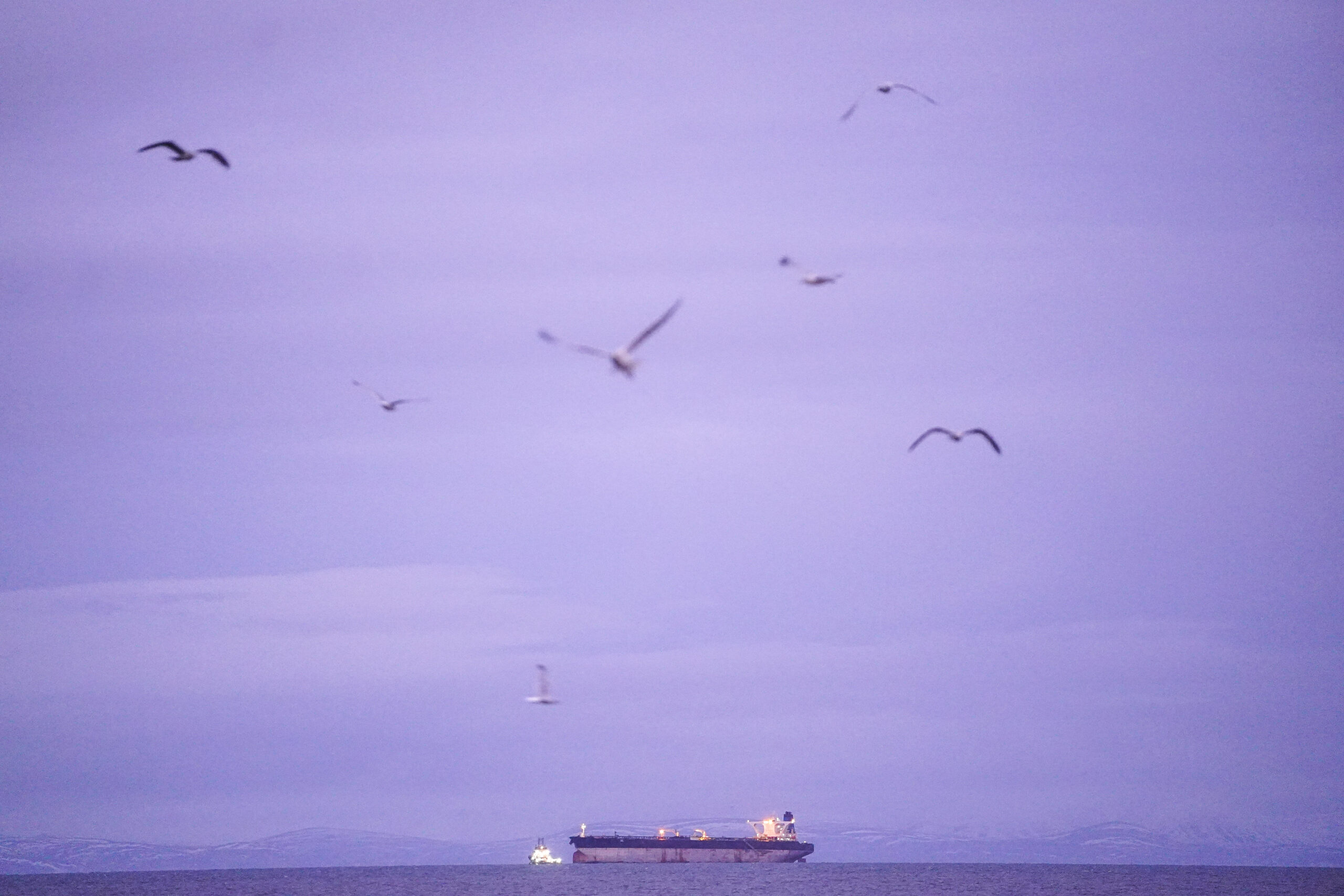
Adding another layer to Iran’s efforts to circumvent international sanctions, a new development emerged last week concerning the nation’s "shadow fleet" of tankers. These vessels are known to operate with their transponders turned off, conducting ship-to-ship transfers outside of official ports to facilitate oil sales.

A former official from the Ports and Maritime Organization, who now consults for NICO, revealed that senior leadership has approved a process to sell Iran’s sanctioned ships for scrap metal. The objective is to use the proceeds to acquire new vessels capable of evading sanctions. Majid Ali Nazi stated that NICO has already sold one sanctioned vessel for approximately $14 million, a price significantly lower than what a non-sanctioned tanker would command.
"It costs $8 million to rent non-sanctioned vessels from Singapore to China or Malaysia with a daily demurrage cost of $110,000 in addition to the issue of the shipment’s security," Nazi explained. "So if we purchase a non-sanctioned ship costing $70 million that can work for us for a year, it is undoubtedly worth it, and we can take care so it does not enter the sanctions list for a year."
Iranian authorities have not publicly commented on these claims regarding the sale of vessels. However, they maintain that oil sales remain robust, despite the stated U.S. objective to drive these sales to zero. The Trump administration has intensified its focus on intercepting tankers carrying Iranian oil and has exerted pressure on China through sanctions and threats to halt its purchases from Iran. This escalating pressure has, in turn, led to Iran’s threats to disrupt the vital Strait of Hormuz shipping lane. The intricate and often clandestine methods employed by Iran to sustain its oil exports underscore the nation’s determination to weather the storm of sanctions, even as internal concerns about corruption and the looming specter of war cast a long shadow.