Iran’s atomic energy chief has indicated a willingness to dilute its stockpiles of highly enriched uranium, a significant step that could pave the way for the United States to lift crippling sanctions. The proposal, presented as a potential quid pro quo, signals a degree of flexibility from Tehran amid ongoing, albeit indirect, diplomatic efforts aimed at de-escalating tensions and addressing concerns over Iran’s nuclear program.
The remarks by Mohammad Eslami, head of the Atomic Energy Organization of Iran, were made public on Monday, underscoring the delicate balance of negotiations. Eslami stated that the prospect of Iran reducing the enrichment level of its uranium would be contingent upon the complete cessation of all sanctions. This offer directly addresses a core demand from Washington, which has sought to curb Iran’s ability to enrich uranium to near weapons-grade levels.
While Eslami did not explicitly differentiate between sanctions imposed by the U.S. and those from other international bodies, the focus on U.S. sanctions relief appears to be a primary objective for Tehran. The move represents a potential compromise, as Iran has consistently defended its right to a peaceful nuclear program, a stance often at odds with international pressure.
Understanding Uranium Enrichment and Its Significance
Uranium enrichment is a critical process in nuclear technology. It involves increasing the concentration of the fissile isotope Uranium-235 within natural uranium. This process is essential for both civilian nuclear power generation and, controversially, for the development of nuclear weapons.
Iran’s current enrichment level stands at 60 percent, a threshold that places it remarkably close to the approximately 90 percent purity required for a nuclear weapon. According to the International Atomic Energy Agency (IAEA), Iran is the sole nation without nuclear weapons to enrich uranium to such a high level. This capability has been a major point of contention in international discussions, fueling concerns about proliferation.
Diluting uranium, as suggested by Eslami, involves mixing the enriched material with a less enriched substance, thereby reducing its overall fissile concentration. This action would effectively move the uranium further away from weapons-grade potential and could serve as a verifiable measure of Iran’s commitment to de-escalation.
A Shifting Diplomatic Landscape
Eslami’s comments arrive as Iran prepares for a crucial diplomatic engagement. Ali Larijani, the Secretary of Iran’s Supreme National Security Council, was scheduled to travel to Oman on Tuesday. Oman has emerged as a key mediator, facilitating indirect talks between Iran and the United States, fostering dialogue where direct communication has been challenging.
Larijani’s visit is widely expected to involve the conveyance of important messages related to the ongoing negotiations. These discussions are viewed as a critical juncture, with both sides seeking to navigate complex demands and build trust. The United States, under President Donald Trump, has historically pursued a policy of maximum pressure against Iran, demanding a complete halt to its enrichment activities.
This demand, however, has been a non-starter for Tehran, which views it as an infringement on its sovereign rights and a departure from the concessions made under the now-defunct Joint Comprehensive Plan of Action (JCPOA), the 2015 nuclear agreement. Iran asserts its right to a civilian nuclear program under the Nuclear Non-Proliferation Treaty (NPT), to which it is a signatory, along with 190 other nations.
Mixed Signals and Lingering Mistrust
Despite the potential for progress, the diplomatic process has been characterized by a series of mixed signals from both Washington and Tehran. Iranian Foreign Minister Abbas Araghchi has emphasized his government’s "very serious" commitment to negotiations, expressing a strong desire to "achieve results." However, he also articulated a deep-seated "wall of mistrust towards the United States," a sentiment he attributed to America’s past actions and policies.
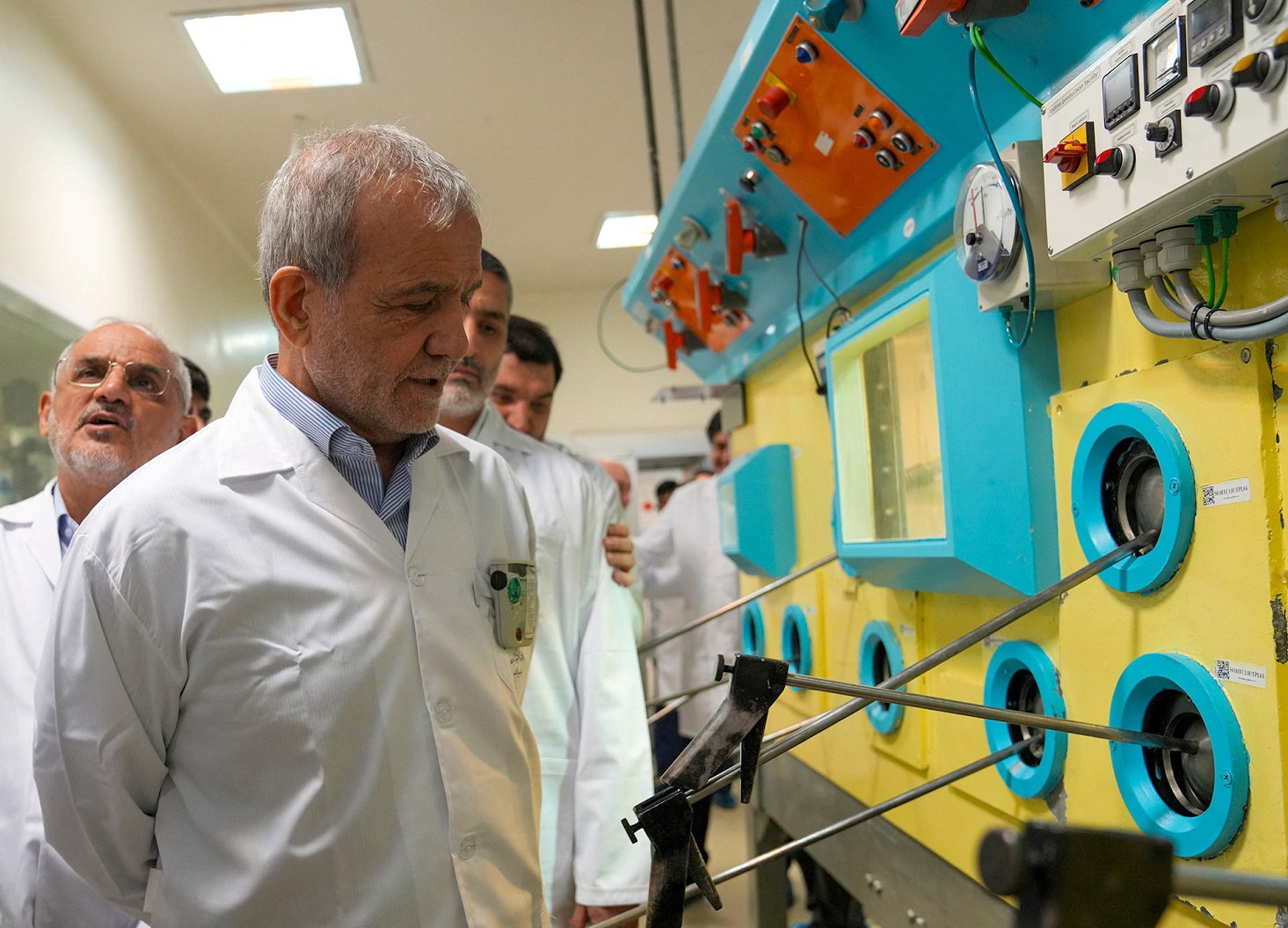
This sentiment was echoed by Iranian President Masoud Pezeshkian, who described the current negotiations as an "important opportunity to reach a fair and balanced solution." President Pezeshkian stressed that Iran seeks concrete guarantees for its nuclear rights and the unconditional lifting of what he termed "unjust sanctions."
On the American side, President Trump has offered cautious optimism, having previously described recent talks as "very good." Yet, he has consistently maintained the threat of "steep consequences" for Iran should a deal not materialize. His administration’s approach has oscillated between overtures for dialogue and a strong stance on enforcement, creating an atmosphere of uncertainty.
Escalating Tensions and Regional Dynamics
The diplomatic overtures are occurring against a backdrop of heightened regional tensions. Prior to the current round of talks, President Trump had repeatedly warned of potentially more severe military action against Iran than the U.S. strikes on three Iranian nuclear facilities during the intense 12-day conflict between Israel and Iran in June. The deployment of an aircraft carrier and accompanying warships to the Middle East by the U.S. has underscored the gravity of the situation and the potential for military escalation.
Adding another layer of complexity, President Trump is expected to meet with Israeli Prime Minister Benjamin Netanyahu. Netanyahu has been a vocal proponent of a hardline approach towards Iran, advocating for not only concessions on its nuclear program but also on its ballistic missile development and regional influence. This meeting highlights the significant influence of regional allies in shaping U.S. policy towards Iran.
Analysis: A Delicate Dance Towards a Potential Deal
Analysts suggest that despite the persistent risks of conflict, both the U.S. and Iran may be inching closer to a potential agreement than at any point in recent weeks. Andreas Krieg, an associate professor in security studies at King’s College London, posits that the U.S. military presence in the region, while intended as a coercive measure, may be proving effective in compelling Iran to make concessions.
Krieg noted that messaging from key regional players, including Qatar and Oman, as well as from the American administration itself, has been largely positive. This constructive atmosphere, coupled with Iran’s own reportedly positive feedback, suggests a tangible momentum in the strategic framework of the negotiations. However, the critical challenge, he observed, lies in translating this positive momentum into concrete details and verifiable agreements.
The current diplomatic push appears to be a strategic gamble for both sides. Iran, facing immense economic pressure from sanctions, may see this as a critical window to secure relief and reassert its regional standing. The United States, on the other hand, aims to curb Iran’s nuclear ambitions and address broader security concerns in the Middle East.
Broader Implications and Public Impact
The outcome of these negotiations carries profound implications, extending far beyond the immediate concerns of nuclear proliferation. A successful resolution could lead to a significant easing of global energy market volatility, as Iran’s oil exports could potentially increase. It could also reshape regional security dynamics, potentially reducing the likelihood of proxy conflicts and fostering greater stability in the Middle East.
For the Iranian population, the lifting of sanctions would represent a crucial economic lifeline, potentially alleviating hardship and opening avenues for international trade and investment. Conversely, a failure to reach an agreement could prolong economic suffering and increase the risk of further escalation, with potentially devastating consequences for the region and the global community.
The public impact of these developments is significant, as the threat of nuclear proliferation and regional conflict directly affects global security. International observers and citizens alike are closely watching the diplomatic maneuvers, hoping for a de-escalation that prioritizes peace and stability over confrontation.
The Path Forward: From Framework to Detail
The coming weeks are likely to be pivotal. The success of Larijani’s visit to Oman and the subsequent exchanges between Tehran and Washington will determine whether the current strategic framework can be translated into actionable steps. The "nitty-gritty of the details," as described by Krieg, will involve complex discussions on verification mechanisms, the phased lifting of sanctions, and the specific commitments each side will undertake.
The presence of Israeli Prime Minister Netanyahu in Washington further underscores the geopolitical stakes. His advocacy for a tougher stance could influence U.S. negotiating positions, potentially creating additional hurdles for a diplomatic breakthrough. The interplay between bilateral negotiations and regional pressures will be a crucial factor in determining the ultimate outcome.
Ultimately, the prospect of Iran diluting its highly enriched uranium for sanctions relief represents a tentative step towards dialogue in a region long defined by mistrust and tension. The success of this initiative hinges on the ability of both Iran and the United States to overcome deep-seated suspicions and find common ground, not just on nuclear issues, but on the broader security architecture of the Middle East. The world watches with bated breath, hoping that diplomacy, rather than conflict, will ultimately prevail.