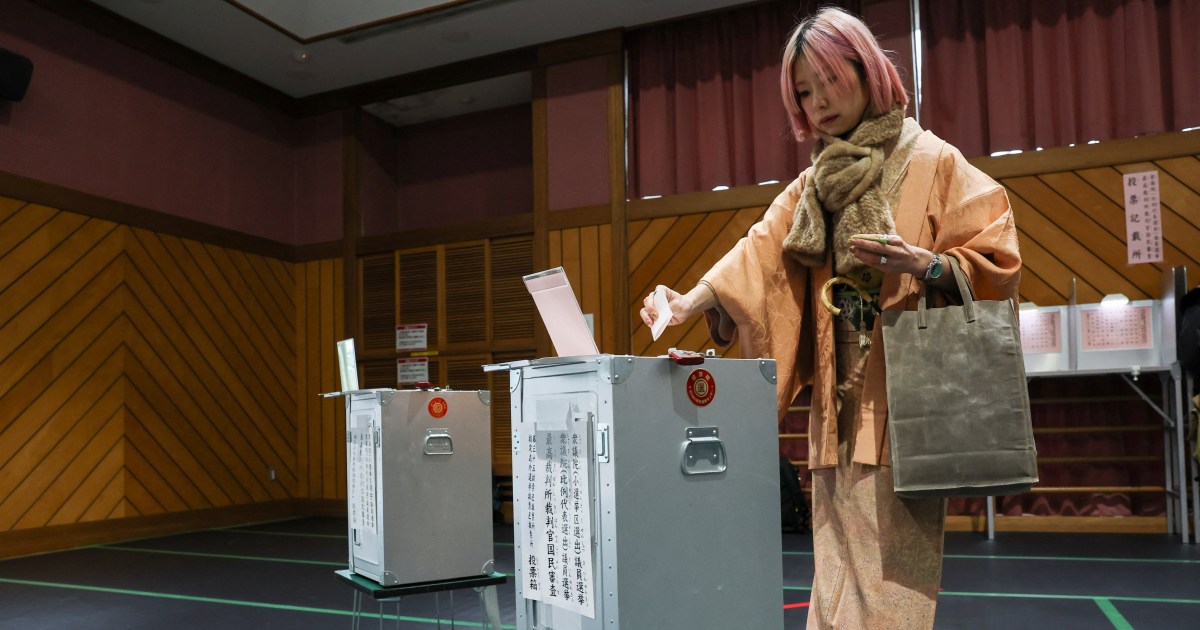
Polls are closing across Japan on February 8, 2026, with the ruling Liberal Democratic Party (LDP) under Prime Minister Sanae Takaichi anticipating a significant victory in the nation’s general election. The outcome, expected shortly after the 11:00 GMT close of voting, will shape the political landscape of the world’s third-largest economy and signal the public’s confidence in Takaichi’s leadership and her party’s agenda. This election is a crucial test for the LDP, which has dominated Japanese politics for much of the post-war era, and for Takaichi, who has steered the country through a period of economic uncertainty and evolving geopolitical challenges.
LDP’s Dominance and Takaichi’s Mandate
The Liberal Democratic Party, a conservative behemoth, has long been the default choice for many Japanese voters, offering a platform of stability, economic growth, and a strong national defense. Prime Minister Takaichi, a seasoned politician, took the helm with a promise to revitalize the Japanese economy, address demographic shifts, and enhance Japan’s security posture in an increasingly volatile Indo-Pacific region. Her government has emphasized policies aimed at boosting consumption, supporting small and medium-sized enterprises, and accelerating digital transformation.
The LDP’s expectation of a substantial win is rooted in several factors. Historically, the party benefits from a deeply ingrained voter loyalty and a well-oiled campaign machine. Furthermore, the opposition parties have struggled to present a united front or articulate a compelling alternative vision that resonates broadly with the electorate. Analysts suggest that a strong LDP victory would solidify Takaichi’s position as prime minister, granting her a robust mandate to pursue her policy objectives over the next term.
Key Issues Shaping the Election
Several critical issues have dominated the election campaign, influencing voter sentiment and party strategies. Economic revitalization has been paramount, with concerns over inflation, wage stagnation, and the rising cost of living weighing heavily on households. Prime Minister Takaichi’s administration has pledged continued fiscal stimulus and structural reforms to foster sustainable growth.
National security has also taken center stage, amplified by regional tensions and North Korea’s ongoing missile tests. The LDP has campaigned on a platform of strengthening Japan’s defense capabilities and deepening alliances, particularly with the United States. This stance appeals to a segment of the electorate concerned about external threats.
The country’s demographic challenges, including a rapidly aging population and a declining birthrate, present a long-term structural hurdle. While not always a decisive election issue, the parties have offered varying approaches to social security reform, healthcare, and measures to encourage family formation. Takaichi’s government has proposed initiatives to support childcare and promote female workforce participation as part of its broader demographic strategy.
The Opposition’s Challenge
The opposition parties, fragmented and often struggling for media attention, have faced an uphill battle to challenge the LDP’s entrenched power. The Constitutional Democratic Party of Japan (CDP), the largest opposition force, has focused on issues such as income inequality, environmental protection, and a more equitable distribution of wealth. However, its efforts to coalesce support have been hampered by internal divisions and a perceived lack of a charismatic leader to rival Takaichi.
Other smaller parties, including the Japan Innovation Party and the Japanese Communist Party, have also presented their platforms, but their electoral impact has historically been limited. Their ability to gain traction often depends on specific local races or the success of targeted issue advocacy. This election cycle has seen the opposition largely struggling to gain significant momentum against the LDP’s established narrative.

Pre-Election Analysis and Projections
Leading up to election day, opinion polls consistently indicated a strong performance for the LDP, projecting it to win a comfortable majority of seats in the House of Representatives. While the exact margin of victory remains to be seen, most analysts anticipated that the LDP would be able to form a stable government without needing to rely heavily on coalition partners, a scenario that would underscore Takaichi’s personal appeal and her party’s enduring strength.
However, elections in Japan can be subject to unexpected shifts in voter sentiment, particularly among undecided voters who often make their choices in the final days of the campaign. Turnout is another critical factor; lower participation rates can sometimes benefit established parties with dedicated bases, while higher turnout might indicate greater public engagement and a desire for change. The image of a voter in a traditional kimono casting a ballot at a Tokyo polling station on February 8, 2026, captured by Reuters photographer Kim Kyung-Hoon, symbolized the democratic process unfolding across the nation.
Implications of an LDP Victory
A decisive win for Prime Minister Takaichi’s LDP would have significant implications for Japan and its role in the world. Domestically, it would allow the government to accelerate its economic agenda, potentially leading to further deregulation, tax reforms, and investments in key sectors. It would also provide a strong mandate for Takaichi to pursue her security agenda, which includes increasing defense spending and potentially revising Japan’s pacifist constitution, a long-held ambition of some within the LDP.
Internationally, a stable LDP government would likely mean a continuation of Japan’s close alliance with the United States and its proactive engagement in regional security initiatives. This could involve further cooperation on issues such as countering China’s growing influence and addressing the threat posed by North Korea’s nuclear program. Japan’s economic diplomacy, including its participation in trade agreements and its role in global supply chains, would also continue under an LDP government.
The Path Forward After the Election
Once the election results are finalized, the focus will shift to the formation of the new government and the legislative agenda. If the LDP secures a clear majority, Prime Minister Takaichi is expected to continue in her role, leading a cabinet that will be tasked with implementing her campaign promises. The party will then begin the process of selecting its leadership and outlining its priorities for the coming parliamentary session.
The opposition, regardless of the outcome, will face the challenge of regrouping and strategizing for future elections. They will need to address internal weaknesses, forge stronger alliances, and develop policy proposals that resonate more effectively with the broader electorate. The performance of the LDP will also be closely scrutinized, with the party needing to deliver on its promises to maintain public trust and secure its position in future electoral contests.
Public Sentiment and Economic Outlook
The election outcome will offer a crucial barometer of public sentiment regarding the nation’s economic direction and the government’s handling of key challenges. Voters have expressed concerns about the rising cost of living and the impact of global economic headwinds on their daily lives. The LDP’s promises of economic stability and growth will be put to the test, and the government’s ability to translate these promises into tangible improvements for households will be critical for its long-term success.
Furthermore, the election will provide insights into how Japanese citizens perceive the nation’s security environment. A strong vote for parties advocating for a more robust defense posture would signal a public willingness to accept increased military spending and a more assertive foreign policy. Conversely, a more cautious approach from voters might suggest a preference for diplomatic solutions and a focus on domestic well-being.
Beyond the Ballot Box: A Nation’s Future
As Japan awaits the official results, the general election represents more than just a contest for political power. It is a moment of collective decision-making that will shape the nation’s trajectory for years to come. The policies enacted, the alliances strengthened, and the societal challenges addressed will all be influenced by the choices made by millions of voters. The LDP’s hopes for a significant win underscore the party’s enduring influence, but the ultimate verdict will come from the people of Japan, determining the direction of their country in a rapidly changing world.