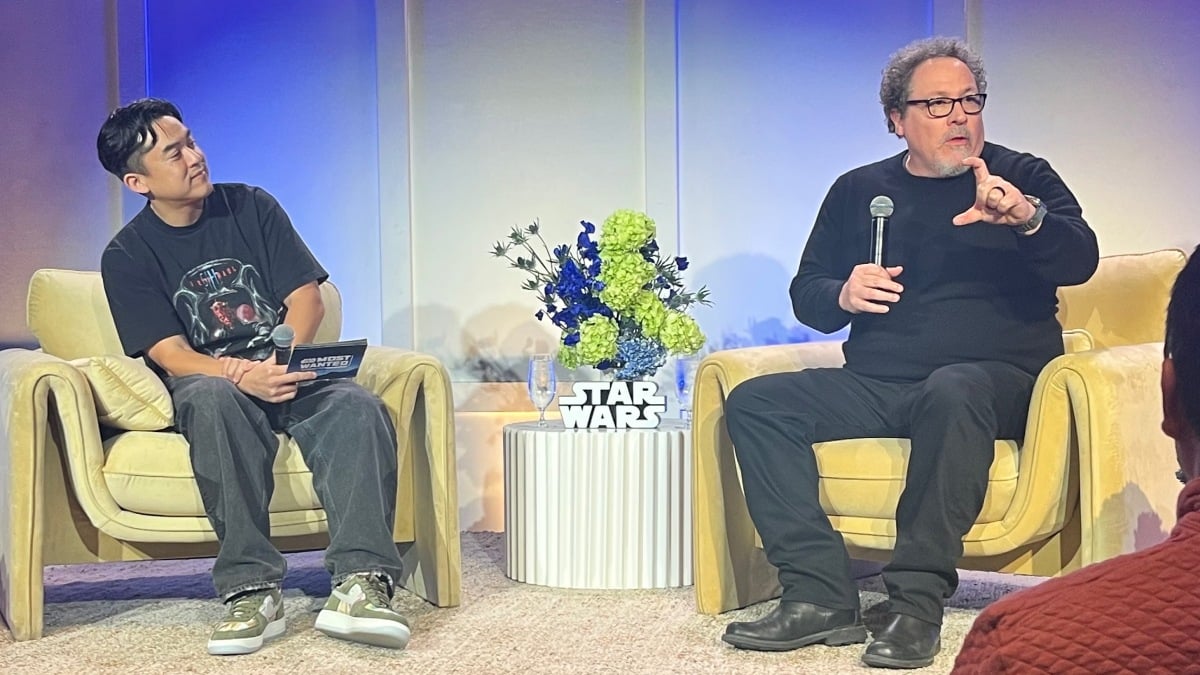
Jon Favreau appeared at the Star Wars: Most Wanted preview event this week to discuss the creative synergy between the upcoming theatrical film The Mandalorian and Grogu and the legacy of Star Wars merchandising. Speaking to a room of press and industry insiders, the filmmaker and showrunner outlined how the physical toys of the 1970s and 1980s are directly influencing the visual language and narrative choices of the new movie. The event served as a launchpad for a massive spring collection of products, including high-tech remote-control toys, intricate Lego sets, and high-end streetwear, all centered on the enduring popularity of the bounty hunter Din Djarin and his companion, Grogu.
The upcoming film, which marks the Star Wars franchise’s return to the silver screen after a multi-year hiatus, is a direct evolution of the hit Disney+ series The Mandalorian. Favreau, who serves as the director and co-writer of the project, emphasized that the transition from television to cinema will not abandon the "toy-centric" roots that defined the original trilogy. By bridging the gap between physical play and digital storytelling, the production team aims to tap into the deep-seated nostalgia of longtime fans while providing new spectacle for younger audiences.
Jon Favreau Teases ‘The Mandalorian and Grogu’ Details at Star Wars Toy Event and Explains the Kenner Influence
During his keynote address, Favreau reflected on his personal history with the franchise, dating back to the 1977 release of the original film. He noted that for his generation, the story did not end when the credits rolled in the theater; rather, it continued in living rooms and backyards through action figures. This "play-based" storytelling, he argued, is a fundamental component of the Star Wars DNA that he intends to honor in the new feature film.
The filmmaker specifically highlighted the role of Kenner, the original toy manufacturer for the franchise, in expanding the universe beyond what was seen on screen. Favreau explained that many items found in the toy aisles during the late 1970s and early 1980s never actually appeared in the films, yet they became canonical in the minds of children. By bringing these "toy-only" designs into the live-action world of The Mandalorian and Grogu, Favreau is attempting to reward the "deep-cut" knowledge of veteran collectors.
Integrating Vintage Toy Designs into the Official Star Wars Canon
A central theme of Favreau’s presentation was the deliberate inclusion of "silly-looking" vintage designs that have been reimagined for a modern cinematic context. One prominent example cited was the Imperial Troop Transport, a vehicle originally created by Kenner that did not appear in the original films. Favreau recounted the challenge of taking a plastic toy designed for playability and transforming it into a formidable, realistic military vehicle for the screen.
To achieve this, Favreau has leaned heavily on Doug Chiang, the Vice President and Executive Creative Director at Lucasfilm. Chiang, a legendary figure in the Star Wars art department since the prequel era, has been tasked with translating these nostalgic plastic shapes into high-fidelity digital and practical models. The goal is to maintain the recognizable silhouette of the classic toys while grounding them in the "used future" aesthetic that defines the franchise’s visual identity.
The Role of Doug Chiang and the Lucasfilm Art Department
The collaboration between Favreau and Doug Chiang has become a cornerstone of the modern Star Wars production pipeline. In his remarks at the Most Wanted event, Favreau credited the art department with finding the balance between whimsy and realism. The process involves creating detailed renderings that are then either built as physical sets or rendered through advanced computer-generated imagery (CGI).
According to Favreau, the upcoming film will feature several "nods" to old toys that have never before been seen on the big screen. These inclusions are described as a way of embracing "fan culture" and acknowledging that for many, the toys were just as important as the movies themselves. This strategy not only serves as fan service but also creates a cohesive ecosystem where the merchandise and the media reinforce one another.
Expanding the Mandalorian Universe from Streaming to Cinema
The move to bring The Mandalorian and Grogu to theaters represents a significant shift in strategy for Disney and Lucasfilm. After the conclusion of the Skywalker Saga in 2019, the franchise found a new home on Disney+, where The Mandalorian became a global phenomenon. The success of the show’s three seasons, along with spin-offs like The Book of Boba Fett and Ahsoka, has built a massive audience eager to see these characters on a larger scale.
Industry analysts suggest that the theatrical release is a move to re-establish Star Wars as a premier cinematic brand. By focusing on the popular duo of Din Djarin and Grogu, Lucasfilm is leveraging its most bankable current assets. The film is expected to serve as a bridge, potentially leading to a larger crossover event directed by Dave Filoni, which would tie together the various narrative threads of the "Mando-verse."
The Economic Impact of Star Wars Merchandising and Collector Culture
The Star Wars: Most Wanted event underscored the immense economic power of the franchise’s merchandise arm. The spring line includes a diverse array of products designed to appeal to multiple demographics. Lego sets continue to be a primary driver of revenue, with new kits allowing fans to recreate scenes from the upcoming movie. Meanwhile, the inclusion of streetwear and high-end collectibles targets the adult "kidult" market, which has seen explosive growth in recent years.
Merchandise sales have historically been the lifeblood of the Star Wars franchise, often eclipsing box office returns in terms of long-term profitability. By teasing The Mandalorian and Grogu details at a toy-focused event, Favreau and Disney are signaling that the consumer products division is not an afterthought, but a primary driver of the creative process. The "Most Wanted" preview highlighted how toys like plush Grogu figures and remote-controlled droids remain central to the brand’s cultural footprint.
Storytelling Through Play: Favreau’s Filmmaking Philosophy
In one of the more personal moments of his talk, Favreau described his job as a filmmaker as an extension of the way he played with toys as a child. He posited that acting out scenarios with action figures was his first lesson in narrative structure and character development. This philosophy has carried over into his professional work, where he prioritizes tactile, "toy-etic" elements that feel tangible and interactive.
This approach has resonated with audiences who felt that recent entries in the franchise had become too reliant on abstract concepts or purely digital environments. By returning to the "Kenner aesthetic," Favreau is grounding the high-stakes sci-fi of The Mandalorian and Grogu in a sense of physical reality. This methodology also simplifies the marketing process, as the vehicles and characters on screen are inherently designed to be translated into physical products.
Anticipation and Release Schedule for The Mandalorian and Grogu
The announcement that The Mandalorian and Grogu will open in theaters on May 22, 2026, has set a clear timeline for the next phase of the franchise. This date is significant, as May has traditionally been the "home" month for Star Wars releases, dating back to the 1977 original. The three-year gap between the third season of the television show and the movie’s release is intended to build anticipation and ensure that the production meets the visual standards of a blockbuster film.
As the production progresses, more details are expected to emerge regarding the plot and the returning cast. While Pedro Pascal is widely expected to continue his role as the voice of Din Djarin, questions remain about the extent of his physical presence on set versus his stunt doubles. Regardless of the casting specifics, the focus remains firmly on the relationship between the central pair and the "deep cut" references that Favreau has promised.
Conclusion: A New Era of Toy-Driven Cinema
The Star Wars: Most Wanted event has clarified the creative direction of the next theatrical chapter in the Star Wars saga. By blending high-concept filmmaking with a deep reverence for the toys of the past, Jon Favreau is attempting to recapture the magic that first launched the franchise nearly five decades ago. The integration of designs from the Kenner era into the official canon serves as a bridge between generations, uniting those who grew up with the original toys and those who discovered the universe through Disney+.
As the spring toy line hits shelves, the momentum for The Mandalorian and Grogu is expected to grow. The strategy of using merchandise as a storytelling tool remains a unique hallmark of the Star Wars brand, and Favreau’s latest comments suggest that this synergy will be more prominent than ever. Fans now look toward May 22, 2026, to see how these plastic-inspired "deep cuts" finally manifest on the big screen, marking a new milestone in the history of the galaxy far, far away.