British Prime Minister Keir Starmer issued a formal apology on Thursday to the victims of Jeffrey Epstein, admitting he was "conned" by longtime political figure Peter Mandelson regarding the true nature of Mandelson’s ties to the convicted sex offender. Speaking from Hastings, East Sussex, Starmer expressed deep regret for his decision to appoint Mandelson as the United Kingdom’s ambassador to the United States in late 2024, a role from which Mandelson was later fired as the scandal intensified. The Prime Minister’s admission comes amid a burgeoning political crisis that has seen his own members of Parliament warn that his leadership may be under threat as new documents and emails suggest a far more intimate relationship between Mandelson and Epstein than was previously disclosed.
During his address, Starmer maintained that while the public was aware of a baseline acquaintance between the two men, the "depth and darkness" of the association remained hidden from the government during the initial vetting process. The Prime Minister told the gathered audience and press that he felt a personal sense of betrayal, stating that he had been directly lied to by Mandelson during the background checks conducted prior to the high-profile diplomatic appointment. The fallout has paralyzed the government’s legislative agenda, overshadowing major policy announcements and fueling a narrative of incompetence that opposition leaders have been quick to exploit.
The "Depth and Darkness" of the Epstein Connection
The controversy centers on the timeline and frequency of interactions between Peter Mandelson and Jeffrey Epstein, particularly following Epstein’s 2008 conviction for soliciting a minor for prostitution. Starmer revealed on Thursday that Mandelson was asked specific, pointed questions about his relationship with Epstein before being sent to Washington D.C. According to the Prime Minister, Mandelson denied staying at Epstein’s properties post-conviction and claimed he had not accepted significant gifts or hospitality.
"The information now available makes clear that the answers he gave were lies," Starmer said. "He portrayed Epstein as someone he barely knew, and when it became clear that it was not true, I sacked him." The Prime Minister’s comments refer to the abrupt dismissal of Mandelson at 5:00 a.m. several months ago, a move that Starmer characterized as a decisive action taken the moment the scale of the deception became apparent. However, the release of a massive tranche of emails and documents this week has suggested that the government’s vetting process may have ignored red flags that were visible even at the time of the appointment.
Starmer’s apology to Epstein’s victims was notably somber, reflecting the gravity of the allegations. "I want to say this. I am sorry—sorry for what was done to you, sorry that so many people with power failed you," Starmer said. He specifically noted the pain caused by the government’s failure to properly scrutinize Mandelson, adding that he was "sorry for having believed Mandelson’s lies and appointed him."
Vetting Failures and the Role of Morgan McSweeney
The scandal has turned inward, with much of the frustration within the Labour Party directed at Morgan McSweeney, Starmer’s powerful chief of staff. Reports from within the party suggest that McSweeney was a primary advocate for Mandelson’s appointment, viewing the former cabinet minister as a seasoned hand capable of navigating the complex relationship between London and Washington. As the scandal has widened, backbench Labour MPs have grown increasingly vocal, with some suggesting that McSweeney’s position is no longer tenable.
Karl Turner, the MP for Kingston upon Hull East, told reporters that the mood among the party’s rank-and-file is the angriest he has witnessed in his 16-year career. Turner argued that if the Prime Minister continues to be "surrounded by advisers who give him shoddy advice," his future as leader will be in jeopardy. Despite this, Housing Secretary Steve Reed defended both Starmer and McSweeney in a series of media appearances on Thursday morning, insisting that Mandelson had "conned everybody," including the media and the civil service.
The Intelligence and Security Committee (ISC) has now launched a formal inquiry into the vetting process. Lord Beamish, the chair of the ISC, emphasized the need for "maximum transparency" regarding what the government knew and when. Beamish stated that the committee would not hesitate to publish documents that might be embarrassing to the Prime Minister’s office, provided they do not compromise national security. The focus of the ISC will be to determine if the security services provided warnings that were ultimately overruled or ignored by political appointees in Downing Street.

Keir Starmer ‘sorry for having believed Mandelson’s lies’ amid Parliamentary Revolt
The pressure on the Prime Minister reached a fever pitch in the House of Commons on Wednesday night. A potential government defeat was only narrowly avoided after a last-minute amendment was brokered by senior figures, including Angela Rayner, to force the release of all internal documents related to Mandelson’s appointment. This move, while intended to show transparency, has effectively set a countdown for the Prime Minister’s leadership. Several Labour MPs have indicated that if the documents reveal that Starmer or his team were warned about Mandelson’s ties and chose to proceed anyway, a confidence vote could be imminent.
"Trust is finite," one anonymous Labour MP noted. "I’m personally not sure I could trust myself to back the Prime Minister in a confidence vote right now." Another member of the 2024 intake of MPs described the mood as "terminal," even among the party’s traditionally most loyal supporters. The Prime Minister, when asked by ITV’s Robert Peston if he would contest a leadership challenge, pivoted to his government’s economic record, citing falling inflation and interest rate cuts. He admitted, however, to being "frustrated" that his policy goals are being drowned out by the "misbehaviour and deceit of other people."
The police have also played a role in the unfolding drama, advising the government against the immediate release of certain files to avoid prejudicing potential future legal proceedings or investigations. This delay has only added to the public’s suspicion, with many interpreting the caution as a tactical move to buy the government time. Starmer addressed this on Thursday, stating he shared the public’s anger but had to respect the advice of law enforcement.
Opposition Leaders Decry "The Biggest Scandal in a Century"
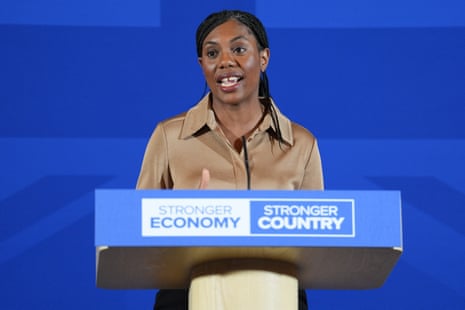
The political opposition has wasted no time in capitalizing on the government’s vulnerability. Kemi Badenoch, the leader of the Conservative Party, held a press conference in central London where she accused Starmer of being blinded by his own "self-righteousness." Badenoch argued that the Prime Minister should not be apologizing for being "conned," but rather for ignoring clear security advice that she claims existed at the time of the appointment.
"What he should apologize for is ignoring security advice and vetting that showed him Mandelson should never have been appointed in the first place," Badenoch said. She characterized the Prime Minister’s defense as an attempt to shift blame onto others while refusing to take responsibility for his own lack of judgment.
Nigel Farage, the leader of Reform UK, went even further, describing the Mandelson-Epstein scandal as the most significant political crisis in British history since the early 20th century. Speaking in Newport, Farage compared the situation to the Profumo scandal of the 1960s but argued that this was "far bigger" because it involved international finance, the royal family, and potential breaches of the Official Secrets Act. Farage’s rhetoric reflects a broader effort by his party to position itself as the only alternative to a "corrupt" established order, a message that Starmer warned would lead to "toxic division."
Impact on Public Trust and Government Stability
The long-term consequences of the scandal for the British public are profound. At a time when the government is attempting to promote its "Pride in Place" program—a major initiative aimed at revitalizing local communities—the national conversation is instead dominated by associations with a convicted sex offender and allegations of high-level deceit. Starmer lamented that every minute spent discussing Mandelson is a "minute wasted" in the fight to stabilize the economy and address the cost-of-living crisis.
Public trust in political institutions is at a historic low, and the Mandelson affair threatens to deepen the cynicism. The revelation that market-sensitive information may have been leaked during the recovery from the 2008 financial crash—an additional detail Starmer mentioned during his Hastings speech—adds a layer of financial impropriety to the already explosive mix of sex and power. This indicates that the investigation into Mandelson may extend far beyond his relationship with Epstein and into his conduct during his years in various government roles.
As the Intelligence and Security Committee prepares to review the vetting files, the Starmer administration remains in a defensive crouch. The Prime Minister’s strategy of portraying himself as a victim of Mandelson’s "lies" is a high-stakes gamble; it depends entirely on the upcoming document release proving that his team was truly in the dark. If any evidence emerges that the warning signs were seen and dismissed for the sake of political expediency, the "depth and darkness" Starmer spoke of may well come to define his own premiership.