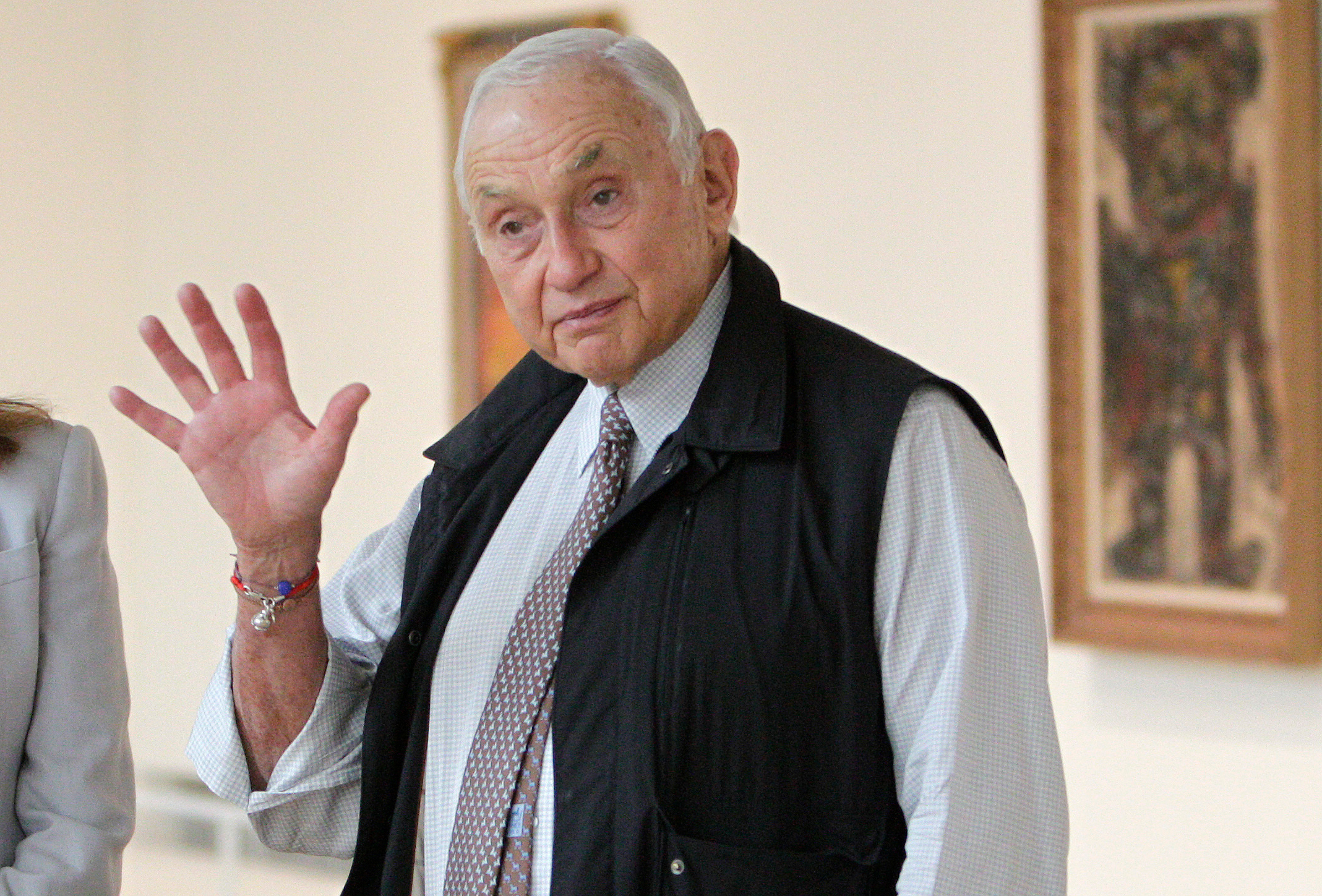
Billionaire Les Wexner faced pointed questions from U.S. lawmakers at his Ohio home regarding Jeffrey Epstein’s ascent to wealth and influence, and the extent of his own role in facilitating that trajectory. The deposition, conducted behind closed doors, saw five members of the House Oversight Committee travel to New Albany, Ohio, to question the 88-year-old retail magnate. The inquiry stems from recent releases of documents by the U.S. Department of Justice, which have repeatedly placed Wexner’s name, both redacted and unredacted, in communications and financial records connected to the disgraced financier.
The latest batch of documents, unsealed by the Justice Department on January 30, 2026, is part of an extensive collection amassed during federal investigations into Epstein. Epstein, who pleaded guilty in 2008 to charges involving the procurement of a minor for prostitution, was later indicted in 2019 on charges of sex trafficking of minors. His death by suicide in federal custody in August 2019 cast a long shadow, prompting ongoing scrutiny of his financial dealings and associations.
In a statement released prior to his deposition, Wexner acknowledged a degree of misplaced trust, stating, "I was naive, foolish, and gullible to put any trust in Jeffrey Epstein. He was a con man. And while I was conned, I have done nothing wrong and have nothing to hide." This assertion comes as new details emerge about the deep financial and philanthropic entanglement that propelled Epstein from an obscure money manager to a figure of considerable global stature.
For decades, Epstein meticulously cultivated relationships with influential figures across business, politics, and academia. Among his most significant connections was Les Wexner, the founder of L Brands, the retail empire that once encompassed iconic brands such as Victoria’s Secret, Bath & Body Works, and The Limited. Wexner’s immense fortune and business acumen provided Epstein with a crucial foundation, granting him access to a network of global elites, including prominent figures like former Israeli Prime Minister Ehud Barak.
The newly released Justice Department records offer a granular view of how Epstein became deeply embedded within Wexner’s financial and philanthropic ecosystem. This relationship proved to be a pivotal catalyst, transforming Epstein from a low-profile financial advisor into an individual wielding extraordinary wealth and influence on the international stage. The depth of this connection is underscored by documents detailing asset transfers and the formal delegation of significant authority from Wexner to Epstein.
The Genesis of a Partnership: Epstein and Wexner’s Early Ties
Jeffrey Epstein’s introduction to Les Wexner occurred in the mid-1980s. At that juncture, Epstein was a college dropout who had briefly taught at the prestigious Dalton School in Manhattan, reportedly after embellishing his academic credentials. He had also spent time at the investment bank Bear Stearns under the tutelage of executive Alan "Ace" Greenberg before establishing his own advisory firm.
By 1986, Epstein had made contact with Wexner. The relationship quickly deepened, and within five years, the retail billionaire had bestowed upon Epstein full power of attorney. This was an exceptionally broad delegation of authority, empowering Epstein to sign checks, hire staff, secure loans, and transact property on Wexner’s behalf. This level of trust and control laid the groundwork for Epstein’s subsequent rise.
Al Jazeera has reviewed Justice Department records, including a 1998 purchase and sale agreement, along with a related promissory note and guaranty. These documents meticulously detail the mechanics of how assets were transferred between Wexner and Epstein. One significant transaction involved the formalization of control over Wexner’s Manhattan townhouse, located at 9 East 71st Street.
The property’s ownership structure was solidified through a complex transaction that included a $10 million promissory note and a personal guaranty signed by Epstein. This townhouse ultimately became Epstein’s primary New York residence and a tangible symbol of his escalating status and access to the city’s elite circles.
Institutional Legitimacy: Epstein’s Roles Within the Wexner Empire
By the early 1990s, Epstein had become an integral figure within Wexner’s corporate and philanthropic structures. He served as a trustee for the Wexner Foundation and held the position of president for several Wexner-affiliated property management companies. This period also saw Epstein relocate his firm to the U.S. Virgin Islands, strategically positioning himself as an offshore financier and further enhancing his financial maneuverability.

The extensive authority Wexner granted Epstein over his assets, philanthropic endeavors, and properties did more than simply enhance his social standing. It conferred upon him a crucial measure of institutional legitimacy. By wielding control over substantial wealth and occupying formal roles within a respected foundation, Epstein could credibly present himself as a seasoned financier with access to significant capital and expansive global networks. This cultivated image was instrumental in attracting other high-profile individuals and investors.
The Wexner Foundation and its Ties to Israeli Politics
A significant thread connecting Epstein’s rise to power runs through his relationship with former Israeli Prime Minister Ehud Barak. Epstein was introduced to Barak by former Israeli President Shimon Peres in 2003 at a high-profile event in Washington D.C. This introduction marked the beginning of a multifaceted relationship that would draw in Wexner’s philanthropic arm.
Between 2004 and 2006, the Wexner Foundation disbursed approximately $2.3 million to Ehud Barak for two commissioned research studies. One study focused on leadership, and the other addressed the complex Israeli-Palestinian conflict. The foundation later stated that only one paper was completed, but maintained that the work undertaken justified the substantial payment. Barak, who served as Israel’s prime minister from 1999 to 2001 and later as defense minister from 2007 to 2013, continued to maintain contact with Epstein for several years.
The intricate web of associations has come under renewed scrutiny following the release of court filings in the Epstein case. A filing includes allegations from prominent victim Virginia Giuffre, who claimed that Wexner and Barak were among the individuals to whom Epstein trafficked her. It is crucial to note that these filings do not present supporting evidence for Giuffre’s claims, and neither Wexner nor Barak have been charged with any wrongdoing in connection with Epstein’s crimes.
In February of this year, Barak addressed criticism regarding his close ties to Epstein in an interview with Israel’s Channel 12. He stated that he had been unaware of the full extent of Epstein’s criminal activities and expressed regret over ever meeting the financier. Wexner, for his part, has stated that he severed all ties with Epstein around 2007, after discovering that Epstein had "misappropriated vast sums of money from me and my family." However, the financial and institutional credibility that Epstein amassed during his years managing Wexner’s wealth did not simply vanish upon the dissolution of their relationship.
Post-Wexner Era: Epstein’s Continued Influence and Political Engagements
Even after his alleged relationship with Wexner ended, Epstein leveraged the social prestige and financial resources he had accumulated to forge new connections with powerful decision-makers. Newly released emails, reviewed by Al Jazeera, illustrate Epstein’s continued engagement with influential figures, particularly in the political sphere.
In October 2014, Nili Priel, the wife of Ehud Barak, communicated with Epstein regarding travel plans to New York. She inquired about potential meeting dates when Barak would be in the city, seeking to arrange a rendezvous. Days later, Priel forwarded Epstein a draft opinion piece, requesting his feedback and remarks.
Epstein responded by providing what he termed "beginning edits," returning a revised version of the unpublished article. The draft reflected Barak’s political voice and included a passage referencing his meetings with then-U.S. President Barack Obama in his capacity as Israel’s Minister of Defense. The article also articulated arguments concerning the viability of a "two states solution" versus a "one state solution" for the Israeli-Palestinian conflict.
This period also saw Epstein invest in Reporty Homeland Security, later rebranded as Carbyne. This startup was chaired by Ehud Barak and specialized in advanced emergency communications technology. This venture further solidified the intersection of their political connections and commercial interests.
The leadership of Carbyne included CEO Amir Elichai, a former special forces officer, and director Pinhas Buchris, a former director-general of the Israeli Defense Ministry and former commander of Unit 8200, the Israeli military’s elite cyber intelligence unit. Reports from between 2012 and 2014 indicate that Epstein also assisted Barak in exploring security-related business opportunities with African leaders. These documents collectively illustrate how Epstein adeptly converted financial credibility into political access, subsequently reinforcing these relationships through shared commercial enterprises.
Barak has publicly stated, "I am responsible for all my actions and decisions. There is room to question whether I should have investigated more thoroughly. I regret not doing so." Les Wexner, while never charged with a crime and maintaining his ignorance of Epstein’s criminal conduct, remains a central figure in the narrative of Epstein’s rise. His name appears repeatedly throughout the newly released files, a stark reminder of the profound and foundational role his association played in the financier’s ascent. The ongoing scrutiny of these relationships highlights the complex interplay between wealth, power, and influence, and the potential for abuse when ethical boundaries are blurred.