The digital landscape in early 2026 is currently dominated by a resurgence in personalized artificial intelligence content, specifically a viral trend involving ChatGPT caricatures that has captured the attention of millions across social media platforms. Following the wide release of advanced image generation tools to free users in March 2025, OpenAI’s ecosystem has seen a steady stream of creative movements, ranging from the initial Studio Ghibli animation craze to the current obsession with stylized self-portraits. This latest phenomenon relies on a sophisticated interaction between the user’s chat history and the DALL-E 3 engine, often initiated by the prompt: "Create a caricature of me based on everything you know about me."
The trend has saturated feeds on TikTok, Instagram, X, and Reddit, as users share "cute" or "cartoonish" versions of themselves that reflect their hobbies, personality traits, and professional backgrounds. This surge in activity comes at a time of intense competition in the generative AI sector, where ChatGPT remains a market leader despite significant pressure from Google’s Nano Banana image generator. Industry analysts note that the ease of use provided by natural language processing has lowered the barrier to entry for digital art, allowing non-technical users to produce complex visual assets through simple conversational cues.

The Evolution of Generative Image Technology
The current state of image generation in 2026 is categorized into three primary functional pillars: text-to-image generation, image transformation, and targeted editing. Text-to-image allows for the creation of visuals from purely descriptive language, while transformation involves uploading an existing file for the AI to reinterpret in a new style. The third category, targeted editing, allows for granular changes to specific elements within a photograph, such as changing a background or adding a specific object.
While the "caricature" trend is the most visible manifestation of these tools, power users are exploring more intricate prompts to maximize the utility of the model. These prompts often require a high degree of specificity to avoid common AI artifacts or "hallucinations" in the visual output. As the technology matures, the focus has shifted from mere novelty to the creation of cohesive, themed digital assets that can be used for social media branding, personal commemoration, or satirical commentary.
Transforming Personal History into Fantasy Trading Cards
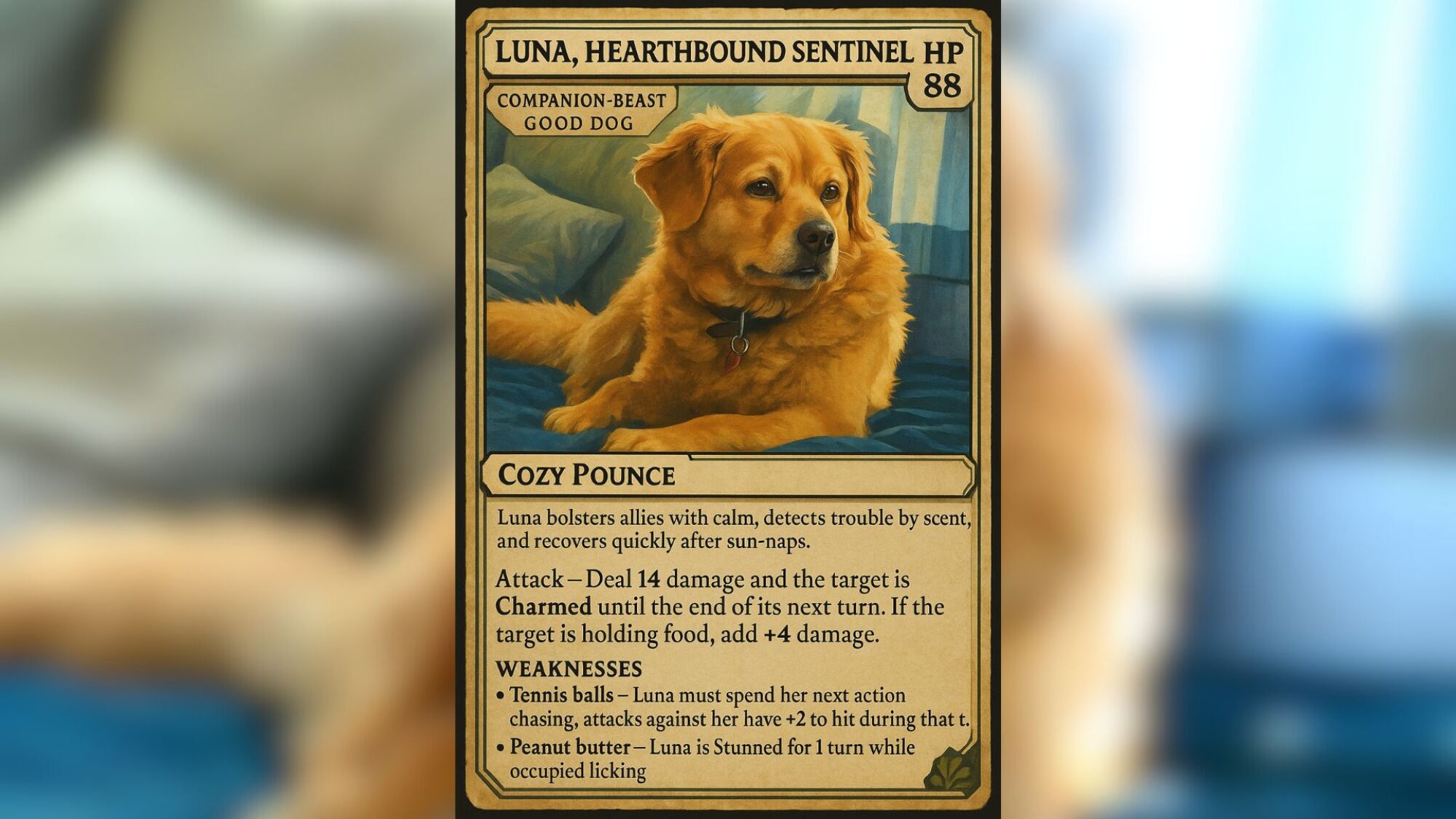
One of the most popular emerging uses for ChatGPT image prompts involves the conversion of personal subjects—both human and animal—into collectible trading cards. This trend mimics the aesthetic of fantasy role-playing games or classic sports cards, complete with statistical data and character descriptions. By uploading a photograph of a pet or a friend, users can instruct the AI to generate a card featuring specific attributes like "HP," "Attack Power," and "Special Abilities."

Technical experts recommend prompts that include instructions for text verification to ensure the AI does not produce the garbled lettering often associated with earlier generative models. A successful prompt in this category might look like: "Create a playing card for an imaginary fantasy game featuring this subject. Include details on HP, weaknesses, and a brief description of abilities, ensuring all text is legible and free of typos." This application has seen significant uptake among pet owners seeking to create digital memorials or whimsical tributes to their animals.
Advanced Image Blending and Composition
Beyond simple transformations, ChatGPT has become an effective tool for blending disparate images into a single, cohesive composition. This process requires the user to upload two or more images with specific instructions on how they should be merged. Common examples include placing a person’s likeness into a different environment or combining a headshot with a completely different body or creature.
However, users have reported that this process often requires iterative prompting. Initial results may produce surreal or "floating" elements, such as a head without shoulders, necessitating follow-up instructions for anatomical corrections. Despite these occasional glitches, the ability to synthesize multiple visual inputs into a singular narrative frame is considered a major milestone in the 2026 AI feature set, rivaling professional-grade editing software in its conceptual execution.

Environmental Enhancement and "In-Painting" Techniques
The ability to add atmospheric details to existing photographs has transformed how casual photographers approach their galleries. This technique, often referred to as "in-painting," allows users to take a standard suburban or urban photo and inject dramatic elements like the Aurora Borealis, specific weather patterns, or wildlife. During the atmospheric events of 2025, where northern lights were visible at lower latitudes, many users utilized AI to enhance the vibrancy of their low-light captures.
For these prompts, specificity regarding lighting and color tones is vital. Analysts suggest that the most realistic results occur when the user asks the AI to match the existing light source of the original photograph. This prevents the "pasted-on" look that can occur when the AI generates elements with conflicting shadows or saturation levels.
The Rise of Aesthetic Conversions: Claymation and Building Blocks
A significant segment of the 2026 AI art movement is dedicated to "nostalgia aesthetics," specifically styles reminiscent of claymation, plastic building blocks, and puppets. The "claymation" prompt, which produces images resembling stop-motion animation films like Wallace & Gromit or Robot Chicken, has become a staple for users looking to create unique profile pictures.

Similarly, the "Lego-style" transformation remains a consistent favorite, where users turn their homes, vehicles, or themselves into block-based constructions. These prompts typically emphasize "vivid lighting," "HD quality," and "bright colors" to mimic the look of professional commercial photography. The success of these styles is attributed to the AI’s ability to recognize and replicate the specific textures of plastic, clay, and fabric.
Anthropomorphism and the "Uncanny Valley"
A more controversial but widely shared trend involves the anthropomorphism of pets—turning dogs, cats, and other animals into human versions of themselves. This trend sits at the intersection of creative expression and the "uncanny valley," a psychological phenomenon where humanoid objects that appear almost, but not exactly, like real human beings elicit feelings of eeriness.
Users can prompt the AI to "Imagine my pet as a human," often adding details about clothing or professional settings. While some results are praised for their creativity, others have been described as unsettling. This trend has flourished on decentralized social networks like BlueSky and Threads, where users debate the ethical and aesthetic implications of AI-generated humanoids based on animal likenesses.

Recursive Generation and Visual Entropy
For the more technically inclined, a trend known as "100x replication" has gained traction. This involves asking the AI to create an "exact replica" of an image and then feeding the result back into the generator repeatedly. Because AI models introduce minute changes with every generation, the image eventually undergoes a process of visual entropy.
One famous 2026 example involved running a celebrity’s portrait through the loop 101 times, resulting in a final image that resembled a cubist nightmare rather than a human face. This trend highlights the "hallucinatory" nature of generative models and provides insight into how these systems interpret and degrade visual data over time. Accessing this level of replication often requires use of OpenAI’s API, as the standard consumer chatbot may occasionally refuse repetitive tasks to conserve server bandwidth.
Commercial Satire: Action Figures and Username Visualizations
The "AI action figure" trend allows users to see themselves as packaged consumer goods. These prompts instruct the AI to generate not just a character, but the surrounding plastic "blister pack," cardboard backing, and accessories. This has become a popular way for users to satirize their own lives or create "merchandise" for their online personas.

Furthermore, the Reddit community has pioneered "username visualizations," where users ask ChatGPT to create an image based solely on their digital handle. For users with literal names like "BeachedWhiteMale" or "SpaceCat," the results are straightforward, but for those with abstract or nonsensical handles, the AI’s interpretations offer a fascinating look at its associative logic.
Market Competition and Legal Challenges
The dominance of ChatGPT in the image generation space is not without its hurdles. Google’s Nano Banana has been lauded as a superior image editor, offering more precise control over individual pixels and layers compared to ChatGPT’s more conceptual approach. This rivalry has pushed both companies to release weekly updates, further accelerating the capabilities of their respective models.
However, the rapid advancement of these tools has also led to significant legal friction. In April 2026, Ziff Davis, the parent company of Mashable, filed a lawsuit against OpenAI. The litigation alleges that OpenAI infringed upon copyrights by using protected content to train and operate its AI systems. This case is seen as a potential bellwether for the future of intellectual property in the age of generative AI, as courts struggle to balance the rights of creators with the technological leaps of the 21st century.

Impact on Digital Culture and Future Outlook
As 2026 progresses, the proliferation of ChatGPT caricatures and advanced image prompts is fundamentally altering digital identity. Visual content that once required professional graphic design skills can now be generated in seconds, leading to a "democratization of creativity" that is both celebrated and scrutinized. The ease with which users can manipulate their own likeness or create entirely new realities has profound implications for digital authenticity.
While the "caricature" may eventually be replaced by the next viral prompt, the underlying technology continues to integrate deeper into the daily workflows of social media users and professional creators alike. The ongoing evolution of these tools suggests that the boundary between human-captured photography and AI-generated art will continue to blur, necessitating new standards for transparency and digital literacy in the years to come.