The Australian government has officially distanced itself from recent military actions in the Middle East, confirming that the nation played no role in the latest round of US and Israeli strikes against Iranian targets. Deputy Prime Minister and Defense Minister Richard Marles stated on Monday that while Canberra remains a steadfast ally of Washington, it was neither involved in the operations nor provided with prior notification of the attacks. The confirmation comes as Foreign Minister Penny Wong issued an urgent warning to the approximately 115,000 Australian citizens currently in the region, noting that escalating hostilities have led to widespread airspace closures and the cancellation of major international flight routes.
The strikes, aimed at degrading Iran’s nuclear capabilities and military infrastructure, have sent shockwaves through global capitals. Minister Marles, speaking during a series of media appearances on Monday morning, emphasized that Australia supports the international objective of preventing Tehran from acquiring a nuclear weapon. However, he clarified that no Australian assets or personnel were utilized in the offensive. This includes the high-tech joint defense facility at Pine Gap in the Northern Territory, which has historically been a point of contention regarding Australia’s role in US-led military operations.
Marles told reporters that the legality of the strikes is a matter for the United States and Israel to justify under international law. "We weren’t advised of this before it happened, but we wouldn’t have expected to be either," Marles said. He noted that the United Nations Security Council has long sought to curb Iran’s nuclear ambitions and that Australia remains aligned with those non-proliferation goals. The Defense Minister’s comments reflect a delicate balancing act for the Albanese government, which seeks to maintain its primary security alliance while avoiding direct entanglement in a rapidly widening regional conflict.

Consular Crisis as 115,000 Australians Face Region-Wide Flight Cancellations
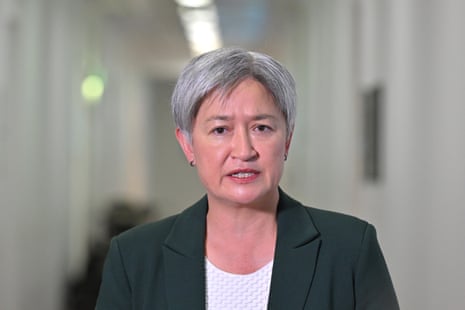
The Department of Foreign Affairs and Trade (DFAT) has moved its travel advisories to the highest levels of caution as the security situation deteriorates. Foreign Minister Penny Wong revealed that the scale of the consular challenge is immense, with roughly 115,000 Australians currently situated across the Middle East. Of that number, approximately 11,000 are regular travelers who move frequently through major transit hubs like Dubai and Doha via carriers such as Emirates, Etihad, and Qatar Airways.
With airspace closures affecting Iran, Iraq, Israel, and several neighboring states, Wong warned that "serious travel disruptions" are now inevitable. The Foreign Minister noted that many Australians are currently unable to leave the region due to the abrupt cessation of commercial aviation services. While calls for government-led repatriation flights have begun to surface, Wong indicated that the fastest way home for most citizens remains the resumption of commercial services once airspace is deemed safe.
"The Albanese government’s priority is the safety and security of Australians," Wong said in a formal statement. "We will continue to support Australians to navigate the disruption ahead, providing regular travel advice updates and consular assistance where we can, noting there are limits to what any government can do in a fast-moving and uncertain environment." Smartraveller has updated its list of "Do Not Travel" countries to include Bahrain, Iran, Iraq, Israel, Kuwait, Lebanon, Palestine, Qatar, Syria, the United Arab Emirates, and Yemen.
Marles Confirms Australia Not Involved in Iran Strikes Amid Regional Personnel Concerns
The safety of Australian government personnel and military members remains a primary concern for the Ministry of Defense. Richard Marles confirmed that more than 100 Australian defense personnel are currently stationed in the Middle East, including a significant contingent at the Al Minhad Air Base near Dubai. Following a recent strike on a US army base in Kuwait that resulted in the deaths of three American soldiers, the Australian government has conducted a full accounting of its staff in the region.
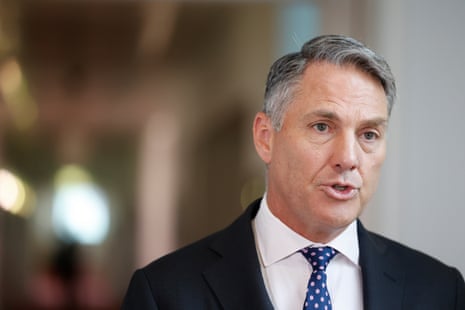
Marles stated that all Australian personnel have been accounted for and that security protocols have been heightened. "We’ve taken measures in respect of the safety of all of those Australian personnel, and all of them are accounted for," Marles said. He added that the government had begun moving dependents of diplomatic staff out of the region days prior to the strikes, anticipating the escalation of hostilities. The Defense Minister described the government as being "concerned but confident" regarding the wellbeing of those serving abroad.
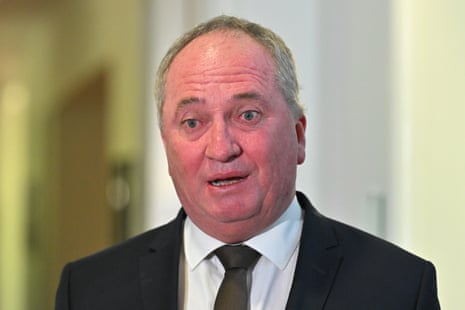
The conflict has also reignited a fierce domestic debate over Australia’s fuel security. One Nation MP Barnaby Joyce, speaking on a televised panel, warned that the Middle East crisis would almost certainly lead to a spike in petrol prices for Australian consumers. Joyce criticized the current administration for allowing the nation’s fuel reserves to dwindle, citing reports that Australia may have as little as 28 days of fuel supply on hand—well below the 90-day reserve recommended by the International Energy Agency.
Fuel Security and Economic Volatility
The potential for a prolonged conflict in the Middle East poses a significant threat to global energy markets. Minister Marles acknowledged that while Australia sources crude oil from various global markets, a disruption in the Middle East would have an undeniable impact on the domestic economy. Environment Minister Tanya Plibersek countered Joyce’s criticisms by arguing that the volatility of the oil market serves as a compelling case for Australia to accelerate its transition toward energy independence through renewables and electric vehicles.
"This is an area where a lot of our global oil and petrol, ultimately, is impacted by what’s being produced in the Middle East," Plibersek said. "It is a very good argument for Australia to have energy security and energy independence." The debate highlights the broader economic anxieties facing the Albanese government as it navigates the fallout of international instability while managing domestic cost-of-living pressures.
The return of Federal Parliament this week also marks a significant milestone for Prime Minister Anthony Albanese, who is celebrating 30 years in politics. However, the celebratory mood is tempered by the presence of a revamped opposition bench. Angus Taylor is marking his first week as the Leader of the Opposition following the departure of Sussan Ley. The Coalition is expected to use the current sitting to pressure the government on several fronts, including the repatriation of women and children from Syrian refugee camps and rumored changes to capital gains tax policies on investment properties.
Two-Speed Property Market: Sydney and Melbourne Flatline
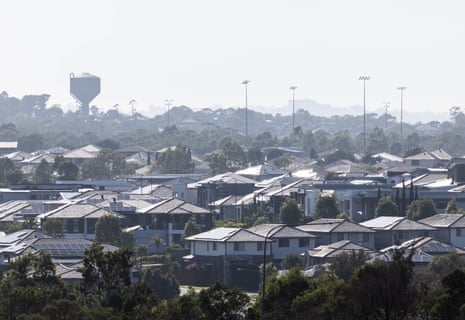
While international crises dominate the headlines, new data from the property sector suggests a growing divide in the Australian economy. According to the latest Home Value Index from Cotality, home values in Sydney and Melbourne have effectively flatlined over the past month. This stagnation stands in stark contrast to mid-sized capital cities, which continue to see robust growth. Perth remains the country’s strongest performer, with property prices surging by a staggering 27.1% over the past year.
Cotality Research Director Tim Lawless described the current environment as a "two-speed" property market. In February alone, dwelling values in Perth climbed by 2.3%, adding more than $22,500 to the median home price. Brisbane and Adelaide also posted gains of 1.6% and 1.3%, respectively. Conversely, the major markets of Sydney and Melbourne saw zero growth, concluding a quarter defined by mild declines and buyer hesitation.
Lawless attributed the divergence to a combination of tight supply in mid-sized cities and high demand driven by interstate migration. In the larger capitals, high interest rates and affordability constraints have finally begun to cap price growth. The "extraordinary" gap between the performance of major and mid-sized capitals suggests that the national property market is becoming increasingly fragmented, with local supply-demand dynamics outweighing broader national economic trends.
NSW Hospital Infrastructure Crisis and Public Health Review
On the state level, New South Wales is facing a burgeoning crisis in its healthcare infrastructure. State Health Minister Ryan Park has ordered a "snap review" of what he termed "serious hospital maintenance issues" following reports of unsanitary conditions across the state’s public health system. The review has already identified 112 "non-routine" issues, ranging from structural failures to pest infestations.
The audit was triggered by disturbing reports of cockroaches, flies, mosquitoes, and even possums found within hospital wards. More alarmingly, the review confirmed instances of toxic mould, asbestos exposure, and leaking roofs in several facilities. Shadow Health Minister Sarah Mitchell slammed the government’s handling of the situation, describing the current findings as "the tip of the iceberg."
"Patients go to hospital for treatment and care, not to be put in further danger due to toxic mould or conditions caused by bird droppings," Mitchell said in a statement. The NSW government is expected to face intense questioning during upcoming budget estimates as the public demands answers regarding the neglect of essential hospital maintenance.
Regional Outlook and Diplomatic Strategy
As the Australian government monitors the situation in Iran, the diplomatic focus remains on de-escalation. Foreign Minister Wong noted that the International Atomic Energy Agency (IAEA) has provided clear evidence of Iran’s nuclear enrichment progress and its refusal to comply with international inspection regimes. While Australia supports the pressure being applied to Tehran, Wong emphasized that the future of the Iranian government must ultimately be decided by its own citizens.

"The future of Iran is in the hands of the Iranian people," Wong said, addressing calls from some US officials for "regime change" following the death of Ayatollah Ali Khamenei. "What we do know from history is that regime change is not something that can sustainably be externally imposed."
The coming days will be critical for the thousands of Australians stranded in the Middle East. With commercial airlines waiting for security clearances to resume flights, the Australian government remains in a holding pattern, providing consular support while preparing for the possibility of a more direct intervention if the conflict continues to widen. For now, the focus in Canberra remains on ensuring that the nation’s security interests are protected without being drawn further into a volatile regional war.