NASA has officially announced a fundamental restructuring of its Artemis program, delaying the first crewed lunar landing in over half a century to a later mission in favor of an accelerated launch schedule and orbital rehearsals. The strategic pivot, unveiled during a high-level news briefing on Friday, transforms Artemis III from a historic moon-landing attempt into a critical flight in low-Earth orbit. This mission will now serve as a rigorous testbed for crewed operations, allowing astronauts to practice complex rendezvous and docking procedures with lunar landers currently being developed by private partners SpaceX and Blue Origin.
Under the revised roadmap, the first "boots on the ground" moment has been reassigned to Artemis IV. NASA Administrator Jared Isaacman characterized the overhaul as a necessary return to a "step-by-step" testing philosophy, reminiscent of the incremental successes achieved during the 1960s. By shifting the landing to a later flight, the agency aims to increase the frequency of its Space Launch System (SLS) launches, targeting a cadence of one mission approximately every ten months to ensure operational safety and hardware reliability.
Strategic Shift: Why the Artemis III Moon Landing Was Swapped
The decision to modify the Artemis III mission profile marks one of the most significant policy shifts in the history of the "Moon-to-Mars" initiative. Originally intended to return humans to the lunar south pole, Artemis III will now focus on the logistical challenges of deep-space travel while remaining closer to home. In low-Earth orbit, crews will evaluate how the Orion spacecraft interfaces with the Human Landing System (HLS) vehicles. This rehearsal is designed to uncover potential technical glitches in life-support systems and docking mechanisms before a crew is committed to a 240,000-mile journey.
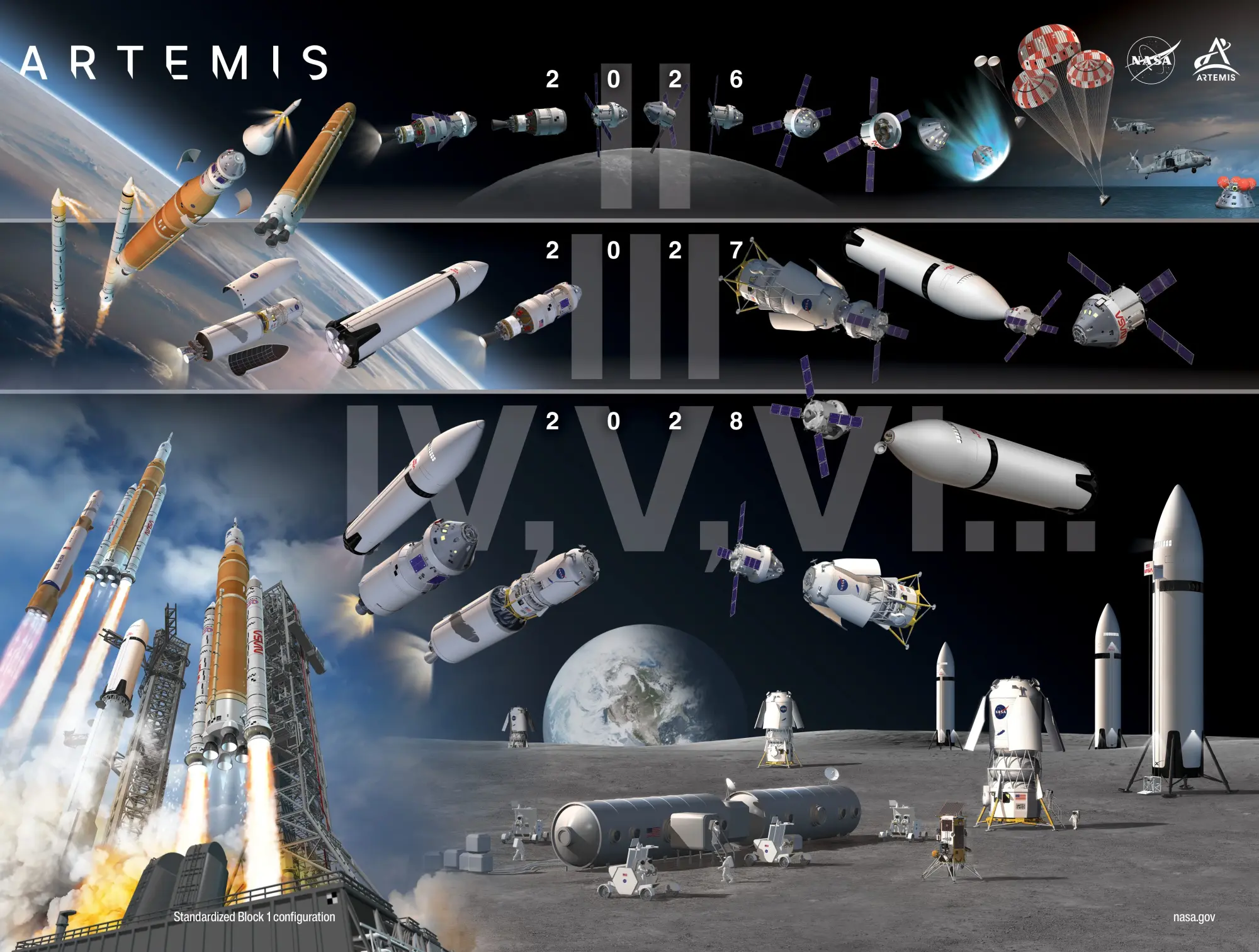
By moving the lunar landing to Artemis IV, NASA expects to create a more sustainable pipeline for future exploration. The new timeline projects the revised Artemis III flight for mid-2027, followed rapidly by Artemis IV at the beginning of 2028 and Artemis V by the end of that same year. This "back-to-back" scheduling is intended to prove that the United States can maintain a permanent and frequent presence in space, rather than conducting sporadic missions separated by years of inactivity.
Addressing the "Muscle Memory" Gap in Launch Operations
Central to the Artemis shakeup is a candid admission from NASA leadership regarding the agency’s current launch tempo. Administrator Isaacman noted that the three-year gap between Artemis I and the upcoming Artemis II mission has hindered the development of "muscle memory" among ground crews and engineers. When launches occur infrequently, the routine, hands-on experience required to manage the world’s most powerful rocket begins to atrophy, leading to the repetition of technical errors and avoidable delays.

Isaacman pointed to specific recurring issues, such as the hydrogen leaks encountered during the Artemis I countdown and recent helium flow problems identified during Artemis II preparations. "We should not be comfortable with the current cadence," Isaacman stated, emphasizing that the Apollo program succeeded because it launched missions every few months. The new goal is to standardize the SLS rocket configuration, treating it less like a bespoke experimental vehicle and more like a repeatable, industrial-grade transport system.
Technical Hurdles: Artemis II and the Helium Flow Problem
The urgency of the Artemis shakeup is underscored by ongoing repairs to the Artemis II hardware. As the first crewed mission of the program, Artemis II is slated to carry four astronauts on a 10-day lunar flyby. However, recent "wet dress rehearsal" tests—where the rocket is filled with super-cold propellant—revealed that helium was not flowing correctly into the engines of the rocket’s upper stage. Helium is a critical component used to pressurize fuel tanks; without it, the engines cannot ignite or maintain steady thrust.
Because the upper stage is difficult to access while the rocket is on the launchpad, NASA was forced to roll the entire SLS stack back to the Vehicle Assembly Building (VAB). Inside the massive hangar, technicians are currently working to replace faulty helium system components and update flight termination system batteries. This rollback has placed immense pressure on the schedule, with NASA eyeing a series of narrow launch windows in April. Despite the technical setbacks, officials remain committed to the April target, viewing it as the first step in establishing the new, faster launch rhythm.
Rebuilding In-House Expertise and Standardizing the SLS
A major pillar of the revised Artemis strategy involves a shift in how NASA manages its workforce and hardware. For decades, the agency has relied heavily on external contractors, who currently comprise roughly 75 percent of the program’s technical labor. The new plan seeks to bring key roles back in-house, empowering NASA civil servants to take a more direct role in launch preparations and hardware oversight. This move is intended to mirror the organizational structure of the Apollo and Space Shuttle eras, providing the agency with greater control over its own destiny.
Furthermore, NASA will halt plans to frequently evolve the SLS design in the near term. Instead of introducing complex upgrades with every flight, the agency will standardize the current "Block 1" configuration. By flying a consistent version of the rocket, NASA and its industrial partners can streamline the manufacturing process and reduce the time required for safety certifications. This "back to basics" approach is expected to lower costs and ensure that the hardware is ready for the ambitious 10-month launch cycle.
Geopolitical Stakes: The Race Against China’s 2030 Goal
The timing of the Artemis shakeup is also influenced by the accelerating lunar ambitions of the People’s Republic of China. Beijing has publicly stated its intention to land taikonauts on the lunar surface before 2030. With the U.S. having not sent humans to the moon since Apollo 17 in 1972, the pressure to maintain a competitive edge is palpable. NASA leadership acknowledged that while the 1960s featured a significant schedule margin, the current timeline is "very, very close."

The shift to a more frequent launch schedule is seen as a strategic necessity to ensure the United States arrives at the lunar south pole first. By utilizing Artemis III as a rehearsal in 2027, NASA hopes to clear the path for a flawless landing in 2028. This would provide a two-year buffer before China’s projected arrival. Officials noted that while international cooperation remains a hallmark of the Artemis Accords, the reality of a new space race is a primary driver behind the agency’s move toward a more aggressive operational tempo.
Impact on the Lunar Gateway and Future Infrastructure
While the moon landing has been swapped to a later mission, NASA clarified that other long-term goals remain intact, albeit with adjusted priorities. The Lunar Gateway—a planned space station that will orbit the moon—remains a vital part of the architecture for later missions like Artemis V and beyond. However, the agency has made it clear that getting flights off the ground and landing astronauts on the surface takes precedence over the immediate expansion of the orbital outpost.
This prioritization ensures that the core elements of the program—the SLS rocket, the Orion capsule, and the new Axiom-built spacesuits—are fully flight-proven before they are integrated with the more complex Gateway station. Engineers may even utilize the revised Artemis III mission to test the new spacesuits in the weightlessness of Earth orbit, providing invaluable data on mobility and life-support performance before they are used in the rugged terrain of the lunar south pole.
Public Perception and the Path Forward
As NASA moves toward the April launch of Artemis II, the agency faces the challenge of re-engaging a public that has not seen human deep-space exploration in over half a century. Administrator Isaacman noted that in the modern era of fragmented media, capturing national attention is more difficult than it was during the three-channel era of the 1960s. Nevertheless, the agency believes that the sight of a crewed rocket ascending toward the moon will serve as a powerful catalyst for public interest.
The Artemis shakeup represents a calculated risk: delaying the immediate gratification of a moon landing in exchange for a more robust, repeatable, and safer program in the long run. By focusing on launch cadence, standardizing hardware, and conducting rigorous orbital rehearsals, NASA aims to ensure that when American astronauts finally return to the lunar surface, they do so as part of a permanent, sustainable era of exploration. The coming months will be a defining period for the agency as it works to resolve the technical issues of Artemis II and prepares for the high-stakes transition to its new mission roadmap.