The European Union’s efforts to finalize a landmark 20th package of sanctions against Moscow have reached a diplomatic impasse as Hungary continues to exercise its veto power just 24 hours before the fourth anniversary of the full-scale invasion of Ukraine. The stalemate in Brussels has cast a shadow over planned commemorations in Kyiv, where high-ranking officials, including European Commission President Ursula von der Leyen, are expected to gather to demonstrate Western unity. The deadlock underscores the deepening internal fissures within the 27-member bloc, specifically regarding energy security and the principle of unanimous decision-making.
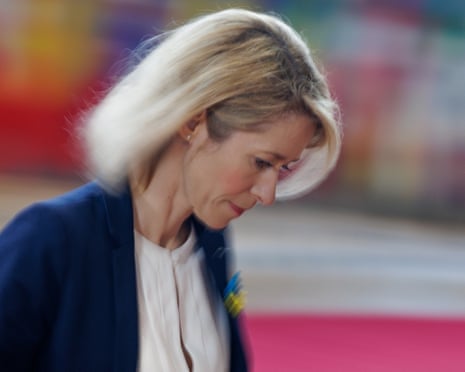
EU foreign policy chief Kaja Kallas confirmed on Monday morning that a breakthrough is unlikely to occur during the current session of the Foreign Affairs Council. Addressing reporters in Brussels, Kallas noted that despite exhaustive efforts to reach a consensus, the "strong statements" emanating from Budapest suggest a rigid stance that shows no immediate signs of softening. The failure to adopt the measures before the February 24 anniversary represents a significant political setback for the EU, which had hoped to use the date to signal renewed resolve against Russian aggression.

The Druzhba Pipeline Dispute and the Stalled €90 Billion Loan
At the heart of the current crisis is an escalating row between Budapest and Kyiv over the transit of Russian crude oil. Hungary, along with Slovakia, remains heavily dependent on the Druzhba pipeline, which traverses Ukrainian territory. Hungarian Foreign Minister Péter Szijjártó stated categorically on Sunday that his government would not permit "decisions important to Kyiv" to proceed until Ukraine restores the full flow of oil deliveries. Budapest has accused Ukraine of using energy supplies as a tool of political blackmail, an allegation that Kyiv and several EU partners have dismissed.
In addition to the sanctions, Hungary is also blocking a critical €90 billion loan intended to stabilize the Ukrainian economy. The European Commission has reacted sharply to this obstruction, with chief spokesperson Paula Pinho noting that the loan had already been signed off by the European Council. Pinho characterized the continued hold as a "breach of loyal cooperation," a legal and political principle that binds member states to act in good faith toward the union’s collective objectives. The commission emphasized that the only condition for the loan—that three specific member states would not participate financially—had already been met.
The energy dispute has further complicated the EU’s broader strategy of decoupling from Russian fossil fuels. While most of the bloc has successfully pivoted to alternative suppliers, Hungary’s landlocked geography and historical infrastructure have made it a persistent outlier. Energy spokesperson Anna-Kaisa Itkonen pointed out that the Druzhba pipeline has suffered damage from Russian military strikes, suggesting that Ukraine cannot be held solely responsible for technical disruptions. Nevertheless, Budapest remains firm, linking its national energy sovereignty directly to its support for EU-wide initiatives.

New Russia Sanctions on Hold as Hungary Blocks EU Package Amid Election Tensions
The timing of Hungary’s veto is inextricably linked to the country’s internal political climate. Prime Minister Viktor Orbán is facing the most significant challenge to his 16-year rule as a key parliamentary election approaches in six weeks. Recent polling shows Orbán trailing by approximately 10 points behind Péter Magyar, the leader of the opposition Tisza party. Magyar, a former insider turned critic, has successfully tapped into public frustration over corruption and the country’s perceived isolation within Europe.
To galvanize his base, Orbán has increasingly leaned into anti-Ukrainian and anti-Brussels rhetoric. He has frequently alleged, without evidence, that there is a coordinated conspiracy between the EU and the Ukrainian government to orchestrate his removal from power. By positioning himself as a defender against the "risk of war expansion," Orbán seeks to portray the opposition as a group that would sacrifice Hungarian lives for foreign interests. This domestic posturing has direct consequences for European foreign policy, as the requirement for unanimity allows a single member state to paralyze the entire union’s geopolitical agenda.
The frustration among other EU members is palpable. Polish Foreign Minister Radosław Sikorski described Hungary’s position as "shocking," citing the nation’s own history of resistance against Soviet intervention in the 20th century. Similarly, Lithuanian Foreign Minister Kęstutis Budrys suggested that the EU might need to reconsider its decision-making processes. Budrys raised the possibility of invoking Article 7 of the Treaty on European Union, a move that could eventually lead to the suspension of Hungary’s voting rights if it is found to be persistently breaching the union’s fundamental values.
Transatlantic Trade Uncertainties and the Impact of Trump Tariffs
While Brussels grapples with internal dissent, a secondary crisis is brewing across the Atlantic. Transatlantic trade relations have entered a period of profound uncertainty following a U.S. Supreme Court ruling that has complicated the implementation of trade agreements. The European Parliament is expected to pause the ratification process of a major trade deal with the United States as it seeks clarity on the new 15% tariff rate announced by the Trump administration.
EU trade spokesperson Olof Gill stated on Monday that "full clarity" is the absolute minimum required for the bloc to make a "clear-eyed assessment" of the situation. The confusion centers on whether the new 15% tariffs, which flow from powers in the 1974 Trade Act, will override previous bilateral agreements struck between the U.S. and its partners. While U.S. Trade Representative Jamieson Greer has offered assurances that existing deals will be honored, business leaders in both the UK and Germany remain skeptical.
Andy Haldane, president of the British Chambers of Commerce, warned that the tariffs could kick in as early as Tuesday, potentially placing the UK at a competitive disadvantage. In Germany, the BDI confederation of businesses has called for the EU and the German government to "quickly approach the U.S." to establish reliable trading conditions. German Chancellor Friedrich Merz has expressed hope that the U.S. will respect the agreements reached last July, emphasizing that "a deal is a deal." The potential for a trade war adds another layer of complexity to an already volatile global economic environment.
Shifting Leadership and the Future of Modern Warfare
Amid these diplomatic and economic storms, several European nations are undergoing significant leadership transitions. In the Netherlands, 38-year-old Rob Jetten has been sworn in as the youngest prime minister in the country’s history. Jetten leads a three-party minority administration that holds only 66 seats in the 150-seat House of Representatives. His government will be forced to seek support from opposition lawmakers to pass legislation, a challenge that will test the stability of the Dutch political system as it navigates EU-wide crises.
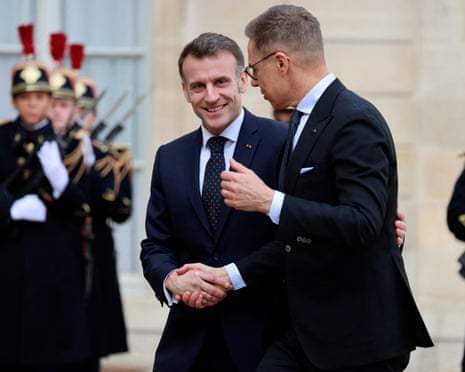
In Paris, Finnish President Alexander Stubb met with French President Emmanuel Macron to discuss Arctic security and the continued support for Ukraine. Stubb, speaking in fluent French, characterized the war as an "unmitigated disaster" for Russia, noting that President Vladimir Putin is neither winning the conflict nor ready to seek peace. Both leaders emphasized the need for the EU to invest more heavily in its own defense capabilities and to reform its competitiveness to withstand external pressures from both the East and the West.
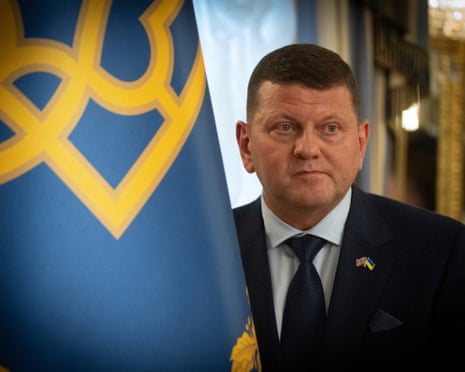
The changing nature of the conflict itself was highlighted in London by General Valerii Zaluzhnyi, the former Commander-in-Chief of the Armed Forces of Ukraine and current ambassador to the UK. Speaking at Chatham House, Zaluzhnyi offered a sobering assessment of modern warfare, which he described as being driven by "robotic kill zones," distributed sensor networks, and artificial intelligence. Zaluzhnyi argued that the integration of unmanned systems and electromagnetic solutions has fundamentally altered traditional concepts of troop mobilization and logistics.

Strategic Implications for the European Union
The current impasse over the 20th sanctions package highlights a fundamental vulnerability in the European Union’s structure. As long as the principle of unanimity remains in place for foreign policy and security matters, individual member states can use their veto as leverage for domestic political gains or unrelated bilateral disputes. This "exploitation of unanimity," as described by Lithuania’s Budrys, is increasingly viewed as a threat to the bloc’s ability to act as a cohesive global power.
For Ukraine, the delay is more than a matter of political optics. The stalled €90 billion loan is essential for maintaining basic state functions and funding the defense effort as the war enters its fifth year. The failure of the EU to deliver on its promises ahead of a major anniversary provides a symbolic victory for the Kremlin, suggesting that Western fatigue and internal divisions are beginning to take a toll. Estonian Foreign Minister Margus Tsahkna noted that any inability to project strength only serves to make Russia "happy."
As the February 24 deadline passes without a finalized agreement, the focus will likely shift to the upcoming G7 trade ministers’ meeting and further discussions within the European Parliament. The intersection of Hungarian domestic politics, transatlantic trade volatility, and the evolving technological landscape of the war ensures that the coming weeks will be a period of intense and difficult diplomacy. The ability of the EU to overcome these hurdles will determine not only the success of its support for Ukraine but also the future viability of its collective decision-making framework.