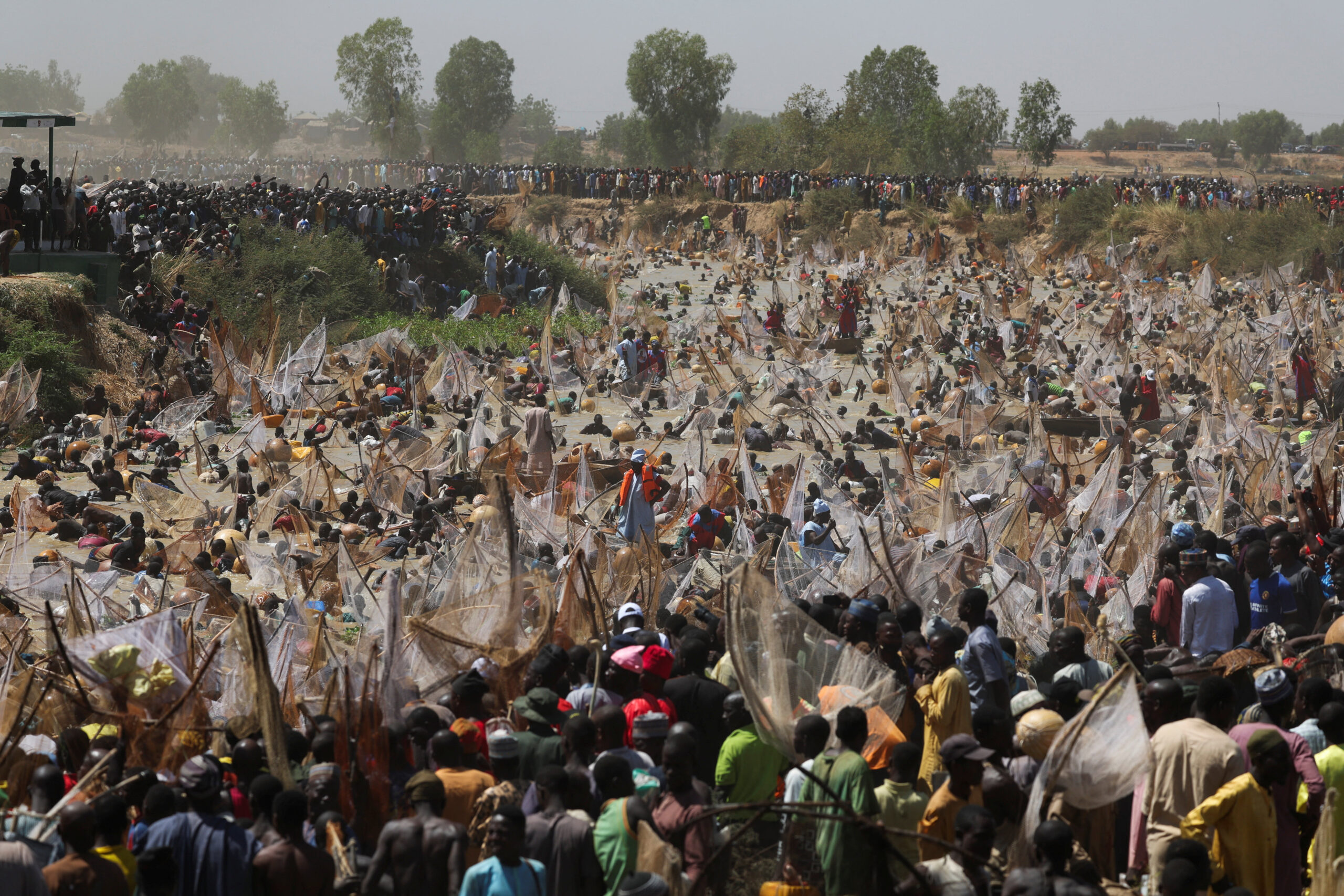
Thousands of fishermen, their canoes dotting the milky waters of the Matan Fadan River, converged Saturday for the highly anticipated return of Nigeria’s Argungu fishing contest, a UNESCO heritage site nestled within the verdant landscapes of northwestern Nigeria’s Argungu emirate. President Bola Tinubu was among the thousands of spectators who gathered to witness the spectacle, a testament to the enduring cultural significance of this historic event, even as lingering security concerns tempered full attendance. The contest, a vibrant display of traditional skill and community spirit, marks a crucial moment for the region, signaling a step toward normalcy and economic revival after years of disruption.
The air buzzed with anticipation as competitors, armed with only time-honored implements, launched themselves into the river. Traditional hand-woven nets, intricately crafted calabash gourds, and the sheer prowess of bare hands were the tools of the trade. The Kebbi State waterway transformed into a dynamic tableau of human endeavor, alive with the rustle of nets and the rhythmic dip of paddles from countless canoes. This year’s competition showcased the raw talent and deep-rooted traditions that have defined the Argungu fishing contest for generations, drawing participants and onlookers alike to this unique cultural confluence.
At the heart of the day’s excitement was the pursuit of the elusive, prize-winning catch. This year, the coveted title of champion was claimed by a fisherman who landed a colossal croaker fish weighing an impressive 59 kilograms (130 pounds). Beyond the glory and the accompanying cash prize, the contest serves as a vital economic engine for the local community. Many participants, whether victorious or not, sell their bountiful catches, injecting much-needed revenue into the local economy and supporting livelihoods. The economic ripple effect of such events underscores their importance far beyond mere sport.
The Matan Fadan River, a vital artery of life and culture, operates under a unique stewardship. For the rest of the year, it remains a protected sanctuary, its waters meticulously overseen by a titled authority known as Sarkin Ruwa, the esteemed water chief. This traditional governance ensures the sustainability of the river’s ecosystem and preserves the traditional fishing practices that are central to the annual festival. The river’s careful management is as integral to the contest’s legacy as the fishing itself, reflecting a deep respect for natural resources.
The culmination of the annual international fishing festival, the Argungu fishing contest represents the pinnacle of a week-long celebration. The festival transcends the competitive fishing, offering a rich tapestry of cultural displays. Traditional wrestling matches, known as ‘Gada’, drew enthusiastic crowds, while vibrant musical performances filled the air with the sounds of Northern Nigeria. These elements combine to create an immersive cultural experience, celebrating the heritage and unity of the Argungu people and showcasing their traditions to a wider audience.
For participants like Aliyu Muhammadu, a 63-year-old fisherman, the return of the contest was a deeply emotional and satisfying experience. "I thank God that I got something to take home to my family to eat," he told The Associated Press news agency, his voice reflecting a profound sense of relief and joy. "I am very happy that I came." His sentiment echoed the feelings of many who saw the festival’s revival as a personal and communal victory, a return to cherished traditions and a source of sustenance and pride.
The origins of the Argungu fishing festival are deeply entwined with the history of peace and reconciliation in the region. The festival first originated in 1934, marking a significant moment of accord between the expansive Sokoto Caliphate – a vast 19th-century Islamic empire that once stretched across swathes of modern-day Nigeria and parts of Burkina Faso – and the previously resistant Argungu emirate. This historical foundation imbues the festival with a profound symbolism of unity, a powerful reminder of how past conflicts can be resolved through shared celebration and mutual respect.
For decades, the festival ran uninterrupted, fostering a sense of continuity and shared identity. However, a confluence of challenges brought its long-standing tradition to a halt. By 2010, deteriorating infrastructure and a worsening climate of insecurity in northern Nigeria made the event unsustainable. The festival saw a brief resurgence in 2020, offering a glimmer of hope, but was once again forced into a hiatus until its triumphant return this year. This cyclical pattern highlights the persistent vulnerabilities faced by large-scale cultural events in the region.
Nigeria, particularly its northern territories, has grappled with complex and persistent security challenges. Years of insurgency and banditry have resulted in thousands of lives lost and have profoundly impacted communities, disrupting daily life and hindering economic development. These security issues have often cast a shadow over public gatherings and have been a significant factor in the intermittent suspension of events like the Argungu festival, underscoring the delicate balance between cultural expression and public safety.
President Bola Tinubu characterized the festival’s return as a positive indicator of improving stability within the nation. His presence and endorsement underscored the federal government’s recognition of the event’s symbolic importance. For many attending, however, the significance extended beyond national stability, representing a restoration of community pride and a defiant assertion of cultural resilience in the face of adversity. The sight of thousands gathered signifies a collective reclaiming of public spaces and traditions.
Despite the optimism surrounding the festival’s revival, the persistent specter of insecurity remains a significant concern. Hussein Mukwashe, the Sarkin Ruwa of Argungu, voiced this apprehension, stating, "Our challenge now is that people are scared of coming. A lot of people don’t attend the event like before because of insecurity." This sentiment highlights the ongoing struggle to rebuild trust and confidence among potential attendees, emphasizing that while the festival has returned, its full vibrancy is still contingent on a sustained improvement in the security landscape.
The Argungu fishing contest, beyond its immediate economic and cultural impact, serves as a powerful symbol of resilience and hope for northern Nigeria. Its return after a prolonged pause, driven by security concerns and logistical hurdles, speaks volumes about the community’s determination to preserve its heritage and foster unity. The event provides a crucial platform for economic activity, cultural exchange, and the reaffirmation of shared identity, offering a much-needed boost to local morale and national pride.
Historical Roots of the Argungu Fishing Contest
The annual Argungu fishing contest is more than just a sporting event; it is a historical testament to peace and cultural exchange. Its inception in 1934 was not arbitrary but rather a deliberate act to solidify a lasting peace treaty. This treaty brought an end to historical animosities between the formidable Sokoto Caliphate, a dominant political and religious entity in the 19th century, and the Argungu emirate, which had historically resisted its authority. The festival’s establishment served as a vibrant, public ritual to cement this newfound harmony.
The Socio-Economic Significance of the Festival
The festival’s economic impact reverberates through the Argungu community and beyond. The influx of visitors generates significant revenue through accommodation, food, and local crafts. Furthermore, the direct sale of fish caught during the competition provides an immediate financial boost to the participating fishermen and their families, contributing to local commerce and livelihoods. This economic stimulus is particularly vital in regions that may face developmental challenges, making the festival a crucial event for regional prosperity.
The Environmental Stewardship of the Matan Fadan River
The Matan Fadan River, a key component of the Argungu cultural landscape, is recognized not only for its heritage status but also for its ecological importance. The traditional practice of closing the river for most of the year, under the watchful eye of the Sarkin Ruwa, demonstrates a commitment to sustainable resource management. This conservation approach ensures the river’s health and the continued viability of traditional fishing methods, preserving a vital ecosystem for future generations and reinforcing the cultural narrative tied to its preservation.
Navigating Security Challenges and Restoring Confidence
The intermittent suspension of the Argungu fishing contest underscores the broader security challenges that have plagued northern Nigeria. The years of instability have eroded public confidence, making large gatherings a difficult proposition. The successful staging of the festival this year, despite lingering concerns, represents a significant step toward rebuilding that confidence. However, the comments from local leaders highlight the ongoing need for sustained efforts to ensure lasting peace and security, which are prerequisites for the full revival of such cultural events.
Cultural Expressions Beyond the Fishing Competition
The Argungu international fishing festival is a multifaceted celebration that extends far beyond the main fishing event. It serves as a vital platform for showcasing the rich cultural heritage of the region. Traditional sports like wrestling, known locally as ‘Gada,’ draw immense crowds and highlight the physical prowess and competitive spirit of the local youth. Complementing these athletic displays are vibrant musical performances, featuring traditional instruments and rhythms that resonate with the history and identity of the people, creating a holistic cultural experience.
The Champion’s Triumph and Community Impact
The crowning of the champion fisherman, who successfully landed a 59-kilogram croaker, is a moment of immense pride for the individual and the community. This achievement not only brings personal recognition and a financial reward but also serves as inspiration for aspiring fishermen. The sale of catches by numerous participants directly contributes to the local economy, fostering a sense of shared prosperity and reinforcing the deep connection between the community, the river, and their traditional practices.
A Symbol of Unity and Resilience
The Argungu fishing contest, with its roots in a historic peace accord, continues to serve as a powerful symbol of unity and reconciliation. Its revival after years of disruption is a testament to the resilience of the Nigerian spirit and the enduring importance of cultural heritage. The festival’s ability to bring together thousands of people, despite challenges, underscores its role in fostering social cohesion and national identity, offering a beacon of hope and a celebration of shared traditions.