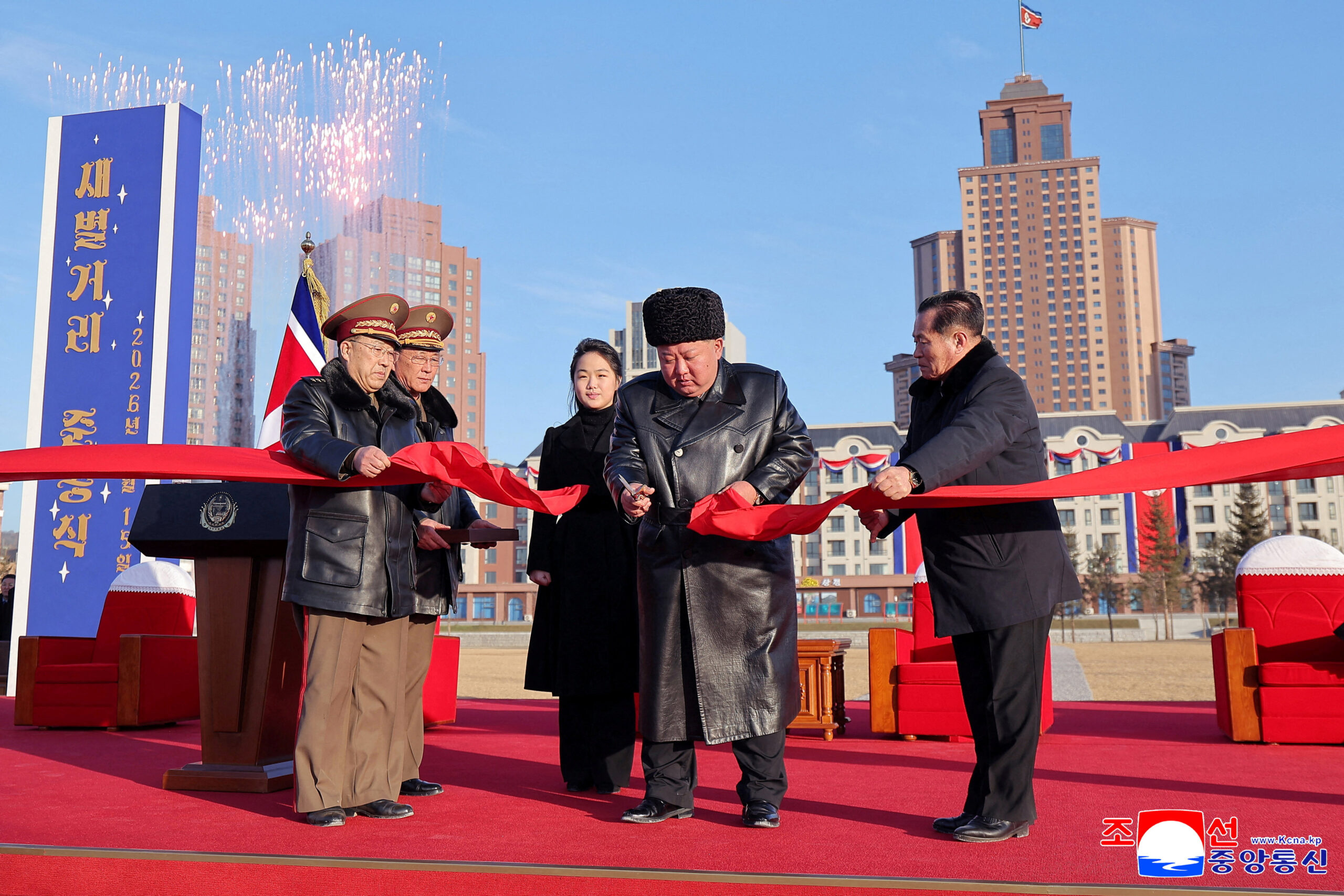
North Korean leader Kim Jong Un has inaugurated a new residential district in Pyongyang specifically designed for the families of soldiers who perished in overseas military operations, a move that underscores Pyongyang’s deepening military ties with Russia amidst the ongoing conflict in Ukraine. The opening of Saeppyol Street, as it has been named, was heralded by state media as a significant honor for the nation and a source of pride for its capital.
A Symbol of National Gratitude and Strategic Alignment
The unveiling of the Saeppyol Street housing complex represents a poignant gesture by the North Korean leadership towards those who have made the ultimate sacrifice in service to the state. State newspaper Rodong Sinmun described the street as "a source of honour for our generation and a pride of Pyongyang and our state," emphasizing the perceived heroism of the fallen soldiers. Leader Kim Jong Un reportedly offered prayers for the "immortality of the martyrs," suggesting a solemn ceremony aimed at cementing their legacy in national history.
While the official reports from Pyongyang did not explicitly link the housing project to the conflict in Ukraine, the timing is highly significant. Just last week, Kim Jong Un reaffirmed his commitment to "unconditionally support" all policies and decisions of Russian President Vladimir Putin. This pledge of unwavering backing comes as intelligence from South Korea, Ukraine, and Western nations suggests that North Korea has dispatched thousands of its soldiers to aid Russia’s war efforts in Ukraine since 2024, operating under a mutual defense pact.
The newly constructed housing district is intended to provide comfort and security to the surviving families, a tangible expression of the state’s gratitude. According to the Korean Central News Agency (KCNA), Kim Jong Un expressed his desire to expedite the project, hoping it would offer "some small comfort" to the bereaved families. Photographs released by KCNA depicted Kim, accompanied by his daughter Kim Ju Ae, engaging with the families, offering condolences, and touring their new residences, highlighting a carefully curated display of leadership empathy and national solidarity.

The Shadow of the Ukraine War
The opening of this housing development casts a stark light on the human cost of North Korea’s increasingly active role in global military conflicts. South Korea’s National Intelligence Service (NIS) has estimated that as many as 6,000 North Korean soldiers may have been killed or wounded during their deployment in Ukraine. While the agency has not provided a specific breakdown of casualties, this figure underscores the scale of North Korea’s alleged involvement and the potential toll on its military personnel and their families.
The strategic implications of North Korea’s engagement in the Ukraine war extend beyond the immediate deployment of troops. The NIS has also warned that North Korean forces are gaining invaluable modern combat experience through their participation in the conflict. Furthermore, the agency suggests that Pyongyang is benefiting from Russian technical assistance, which could significantly enhance the capabilities of its own burgeoning weapons systems.
A Reciprocal Relationship: Arms for Technology
The burgeoning military alliance between North Korea and Russia appears to be a mutually beneficial arrangement, driven by shared strategic interests and a mutual desire to challenge the international order. In addition to deploying its personnel, North Korea is widely believed to be supplying Moscow with substantial quantities of artillery shells, ballistic missiles, and long-range rocket systems. In return, Russia is reportedly providing Pyongyang with crucial resources such as cash, advanced military technology, and vital food and energy shipments.
This exchange of matériel and expertise is not merely a transactional relationship; it is shaping the geopolitical landscape. North Korea’s growing military prowess, bolstered by Russian support and combat experience, poses a significant concern for regional stability, particularly for South Korea and its allies. The potential for Pyongyang to leverage this enhanced capacity to further its own nuclear and missile programs adds another layer of complexity to an already tense security environment.
Honoring the Fallen: A National Campaign
The inauguration of the Saeppyol Street housing project is part of a broader pattern of public ceremonies and state-sponsored initiatives aimed at commemorating North Korea’s war dead. In recent months, the regime has orchestrated multiple public events to honor fallen soldiers, including the unveiling of a new memorial complex in Pyongyang. These displays are designed to reinforce nationalistic sentiment, legitimize the sacrifices made by its citizens, and project an image of a strong and unified state unwavering in its commitment to its soldiers and its allies.

The emphasis on honoring the military dead also serves as a potent propaganda tool, designed to rally public support and underscore the perceived righteousness of the state’s foreign policy objectives. By highlighting the sacrifices of its soldiers, Pyongyang seeks to cultivate a sense of national pride and collective purpose, even as its citizens endure significant economic hardship.
Political Undercurrents and Future Trajectories
The timing of the housing project’s completion also aligns with significant upcoming political events in North Korea. The opening occurs shortly before the regime’s most important political gathering, the party congress, which is scheduled to take place later this month, although the exact date remains undisclosed. Such events often serve as platforms for Kim Jong Un to announce new policy directions, reaffirm ideological tenets, and consolidate his leadership.
The visible presence of Kim Ju Ae alongside her father at these high-profile events continues to fuel speculation about her potential succession. Her prominent role in ceremonies honoring the military, including the unveiling of the housing complex, suggests that she is being groomed for a significant leadership position in the future. This ongoing process of succession planning is a critical element of North Korea’s long-term stability and its approach to both domestic and international affairs.
Broader Implications for Regional Security
The deepening military cooperation between North Korea and Russia, exemplified by the symbolic gesture of providing housing for fallen soldiers’ families, has far-reaching implications for global security. It signals a growing defiance of international sanctions and a willingness by both nations to pursue their strategic objectives outside the established norms of international diplomacy. The potential for North Korea to further develop its military capabilities, coupled with its willingness to engage in proxy conflicts, presents a formidable challenge for the United States, South Korea, Japan, and other regional powers.
The continued flow of military supplies from North Korea to Russia, and the reciprocal transfer of technology and resources to Pyongyang, is likely to persist. This symbiotic relationship not only strengthens the military capacity of both nations but also complicates efforts to de-escalate conflicts and promote denuclearization on the Korean Peninsula. The international community faces the challenge of developing effective strategies to counter this expanding axis of cooperation while avoiding further escalation. The housing project for fallen soldiers, while presented as a humanitarian gesture, is undeniably interwoven with the complex geopolitical realities of the 21st century.